


Upregulation of Apoptosis Related Genes in Clinically Normal Tongue Contralateral to Squamous Cell Carcinoma of the Oral Tongue, an Effort to Maintain Tissue Homeostasis
- PMID: 39348078
- PMCID: PMC11442960
- DOI: 10.1007/s12105-024-01695-6
Upregulation of Apoptosis Related Genes in Clinically Normal Tongue Contralateral to Squamous Cell Carcinoma of the Oral Tongue, an Effort to Maintain Tissue Homeostasis
Abstract
Purpose: The field cancerization concept indicates the presence of pre-cancerous changes in clinically normal tissue surrounding the tumor. In squamous cell carcinoma of the oral tongue (SCCOT) which is infrequently linked to human papillomavirus infection, we have previously reported that clinically normal tongue contralateral to tumor (NTCT) is molecularly abnormal. Here, combining our transcriptomic and genomic data, we aimed to investigate the contribution of molecular changes in NTCT to cancer development.
Methods: Microarray gene expression data of 14 healthy controls, 23 NTCT and 29 SCCOT samples were investigated to characterize transcriptional profiles in NTCT. Whole exome sequencing and RNA-sequencing data of paired NTCT and tumor samples from 15 SCCOT patients were used to study correlation between copy number variation and differential gene expression.
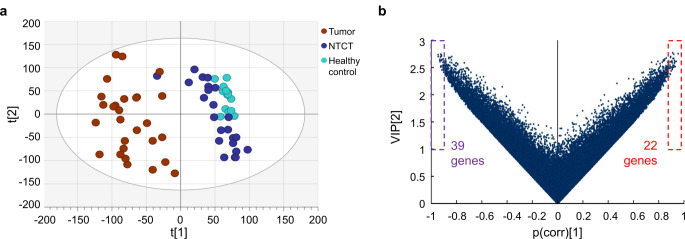
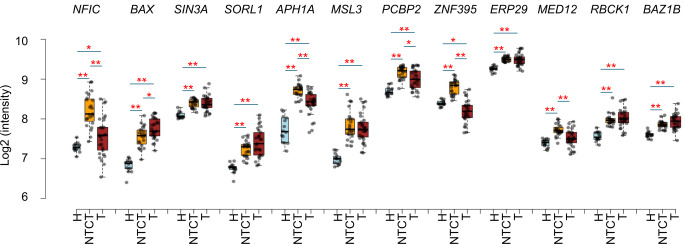
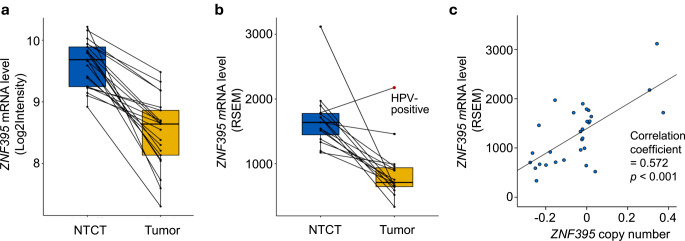
Results: Using supervised multivariate partial least squares discriminant analysis, a total of 61 mRNAs that distinguish NTCT from healthy tongue were selected. Functional enrichment analysis of the 22 upregulated genes showed increased "positive regulation of nitrogen compound metabolic process" in NTCT. All 12 genes involved in this process have roles in apoptosis (anti- and/or pro-apoptotic). Compared to healthy controls, Zinc Finger Protein 395 (ZNF395), a pro-apoptotic tumor suppressor located on chromosome 8p, was the only gene showing increased mRNA level in NTCT whereas decreased in SCCOT. Given the frequent loss of chromosome 8p in SCCOT, the impact of ZNF395 copy number variation on gene expression was further examined, revealing a positive correlation between copy number and mRNA level (correlation coefficient = 0.572, p < 0.001).
Conclusion: NTCT is susceptible to malignant transformation, where tissue homeostasis is maintained at least partly through regulation of apoptosis. Loss of the pro-apoptotic gene ZNF395 could thus initiate cancer development.
Keywords: ZNF395; Apoptosis; Etiologic field effect; Field cancerization; SCCOT.
© 2024. The Author(s).
Conflict of interest statement
The authors declare no competing interests.
Figures
References
-
- Global Cancer Observatory [cited 2024 February 13]; https://gco.iarc.fr/en
MeSH terms
LinkOut - more resources
Full Text Sources
