


Pupillometry reveals effects of pitch manipulation within and across words on listening effort and short-term memory
- PMID: 39349635
- PMCID: PMC11442447
- DOI: 10.1038/s41598-024-73320-z
Pupillometry reveals effects of pitch manipulation within and across words on listening effort and short-term memory
Abstract
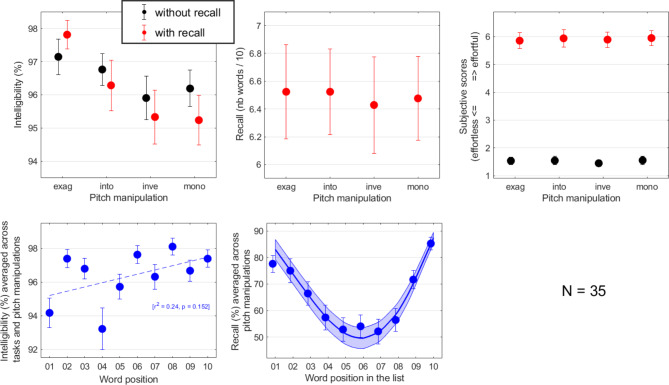
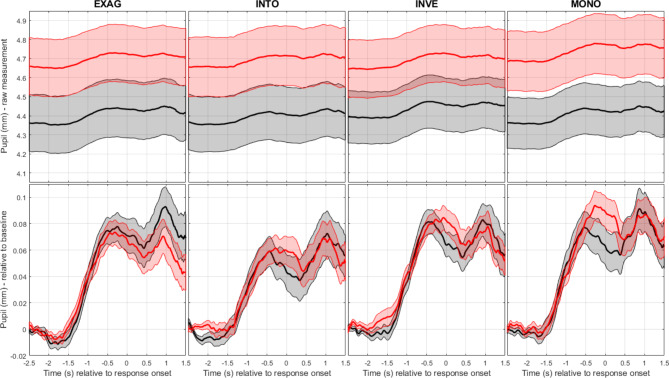
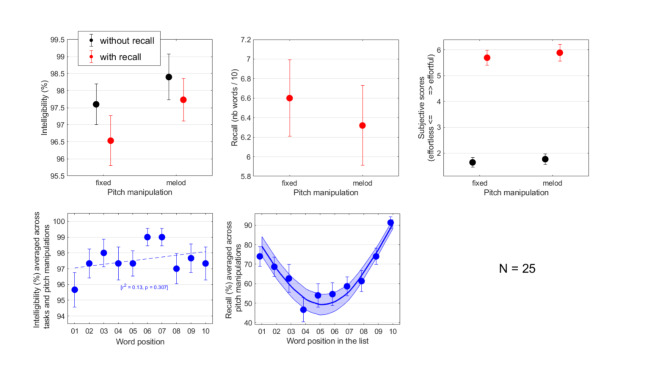
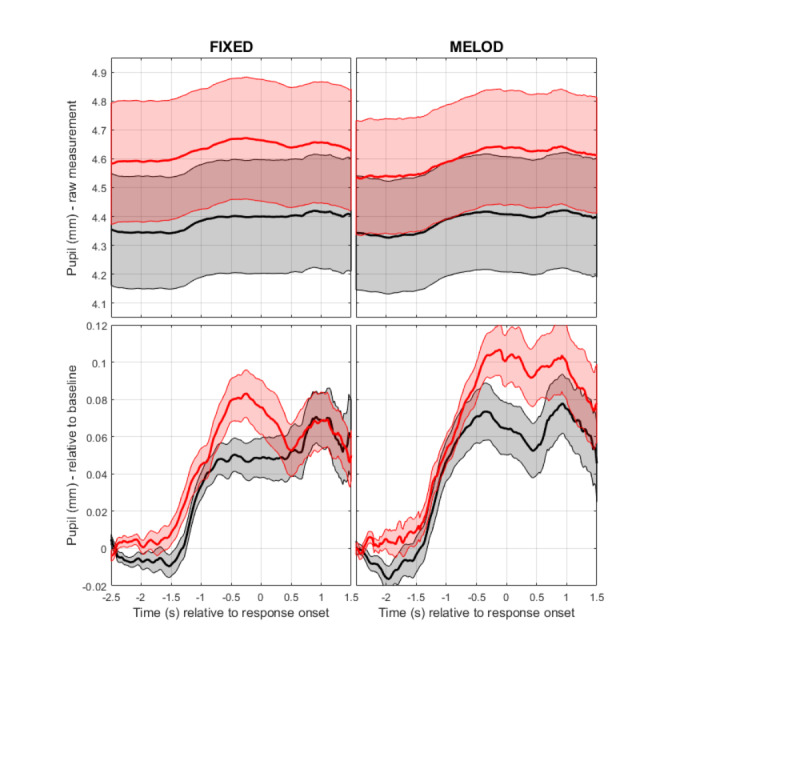
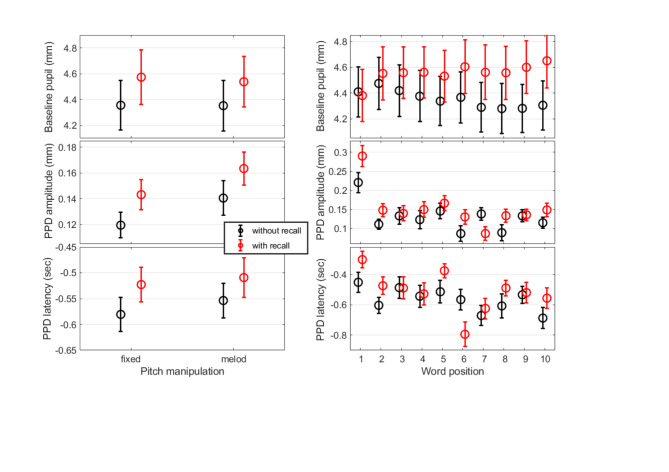
For individuals with hearing loss, even successful speech communication comes at a cost. Cochlear implants transmit degraded information, specifically for voice pitch, which demands extra and sustained listening effort. The current study hypothesized that abnormal pitch patterns contribute to the additional listening effort, even in non-tonal language native speaking normally hearing listeners. We manipulated the fundamental frequency (F0) within and across words, while participants listen and repeat (simple intelligibility task), or listen, repeat, and later recall (concurrent encoding task) the words. In both experiments, the F0 manipulations resulted in small changes in intelligibility but no difference in free recall or subjective effort ratings. Pupillary metrics were yet sensitive to these manipulations: pupil dilations were larger when words were monotonized (flat contour) or inverted (the natural contour flipped upside-down), and larger when successive words were organized into a melodic pattern. The most likely interpretation is that the natural or expected F0 contour of a word contributes to its identity and facilitate its matching and retrieval from the phonological representation stored in long-term memory. Consequently, degrading words' F0 contour can result in extra listening effort. Our results call for solutions to improve pitch saliency and naturalness in future development of cochlear implants' signal processing strategies, even for non-tonal languages.
© 2024. The Author(s).
Conflict of interest statement
This research was supported by a grant from the Quebec government (Mitacs Accelerate https://www.mitacs.ca/en/programs/accelerate) in collaboration with an industrial partner Oticon Medical Canada (https://www.oticonmedical.com/) [grant number IT10517]. The funding was issued to Dr. Alexandre Lehmann and Dr. Mickael Deroche, for the postdoctoral work of Dr. Yue Zhang. The funders had no role in study design, data collection and analysis, decision to publish, or preparation of the manuscript. The rest of authors declare that no competing interests exist.
Figures
References
-
- World Health Organization. Challenges facing ear and hearing care. World Rep. Hear. 139–198 (2021).
-
- Livingston, G. et al. Dementia prevention, intervention, and care. Lancet. 390, 2673–2734 (2017). - PubMed
-
- Blamey, P. et al. Factors affecting auditory performance of Postlinguistically Deaf adults using cochlear implants: An update with 2251 patients. Audiol. Neurotol. 18, 36–47 (2012). - PubMed
MeSH terms
Grants and funding
LinkOut - more resources
Full Text Sources
Miscellaneous
