


Assessment of care provision integration in a community-based mental health system: balanced care model implementation in Andalusia (Spain)
- PMID: 39350100
- PMCID: PMC11440898
- DOI: 10.1186/s12889-024-20169-6
Assessment of care provision integration in a community-based mental health system: balanced care model implementation in Andalusia (Spain)
Abstract
Background: Andalusia is the second largest region in Spain, and it has developed a comprehensive mental health (MH) plan that encourages the consolidation of the balanced care model. However, its geographical and socioeconomic disparity is a great challenge for a community-based MH system. Both the assessment of the implementation of the MH plan and the development of new tools to support decision-making can be considered critical.
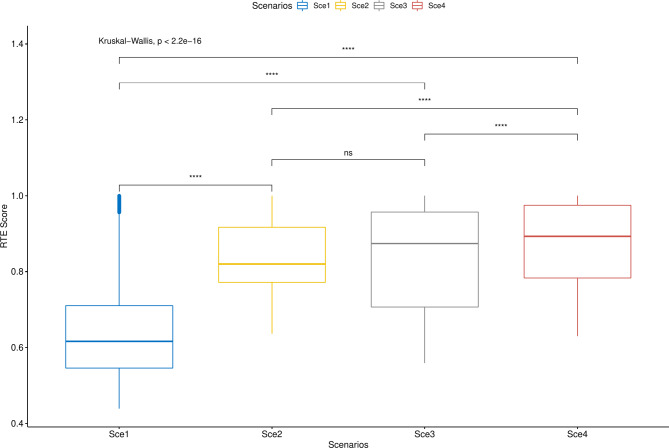
Objectives: The present study aims (i) to assess how the integration of different types of MH care may influence system performance and (ii) to check the performance evolution of the integration process geographically regarding the small MH areas of Andalusia.
Methods: The performance of the Andalusian MH system was assessed by combining Monte Carlo simulation, fuzzy inference and data envelopment analysis. The relative technical efficiency was the main performance indicator.
Results: A correct integration of appropriate types of MH care, according to population needs, increases the performance of the Andalusian MH system both from global and regional perspectives. The spatial representation (based on small MH areas) of the results highlights how the performance depends on specific geographical characteristics. By analyzing the identified spatial clusters, defined by different management patterns depending on user and socioeconomic characteristics, benchmark areas and areas for improvement can be studied to design evidence-informed policies and interventions.
Conclusions: A global analysis of MH system performance was carried out, including both the successive integration of different types of care and its spatial evolution. Although an appropriate integration of different types of MH care has a positive effect on the Andalusian MH system, this process has different profiles depending on specific geographically based user and socioeconomic characteristics. The balanced care model can be considered the paradigm for assessing the performance of a large and populated territory such as Andalusia, which has a community-based MH system. This methodological approach (performance assessment and spatial analysis) may be used as a guide for developing future evidence-informed policies and managerial interventions.
Keywords: Balanced care model; Cartographic representation; Decision support system; Health care system assessment; Mental health services; Relative technical efficiency.
© 2024. The Author(s).
Conflict of interest statement
The authors declare no competing interests.
Figures


References
-
- World Health Organization. World mental health report: transforming mental health for all: executive summary [Internet]. World Health Organization. 2022. https://iris.who.int/handle/10665/356115
-
- WHO Regional Office for Europe. WHO European Framework for Action on Mental Health 2021–2025 [Internet]. Copenhagen. 2022. https://apps.who.int/iris/rest/bitstreams/1414471/retrieve
-
- Vollset SE, Ababneh HS, Abate YH, Abbafati C, Abbasgholizadeh R, Abbasian M et al. Burden of disease scenarios for 204 countries and territories, 2022–2050: a forecasting analysis for the Global Burden of Disease Study 2021. Lancet [Internet]. 2024;403(10440):2204–56. https://linkinghub.elsevier.com/retrieve/pii/S0140673624006858 - PMC - PubMed
-
- Saxena S, Thornicroft G, Knapp M, Whiteford H. Resources for mental health: scarcity, inequity, and inefficiency. Lancet. 2007;370(9590):878–89. - PubMed
Publication types
MeSH terms
Grants and funding
LinkOut - more resources
Full Text Sources
