


In-depth cerebrovascular lipidomics profiling for discovering novel biomarkers and mechanisms in moyamoya and intracranial atherosclerotic disease
- PMID: 39352103
- PMCID: PMC11745776
- DOI: 10.1097/JS9.0000000000002092
In-depth cerebrovascular lipidomics profiling for discovering novel biomarkers and mechanisms in moyamoya and intracranial atherosclerotic disease
Abstract
Background: Despite considerable research efforts, the precise etiology and underlying pathways contributing to moyamoya disease (MMD) remain poorly understood. Moreover, the overlapping vascular pathologies shared between MMD and intracranial atherosclerotic disease (ICAD) pose challenges in clinical differentiation, even with gold-standard cerebral angiography. An in-depth exploration of lipidomic alterations in cerebral intracranial MMD vessels could offer valuable insights into the pathogenesis of MMD-related mechanisms, encompassing MMD and ICAD, and unveil novel biomarkers and potential therapeutic targets. However, to date, comprehensive lipidomic profiling has been lacking.
Materials and methods: To discover novel biomarkers and unravel the pathophysiological mechanisms underlying MMD, we conducted a lipidomics analysis to characterize various lipid species in matched human extracranial and intracranial artery tissues from patients diagnosed with MMD ( n =99) and ICAD ( n =12).
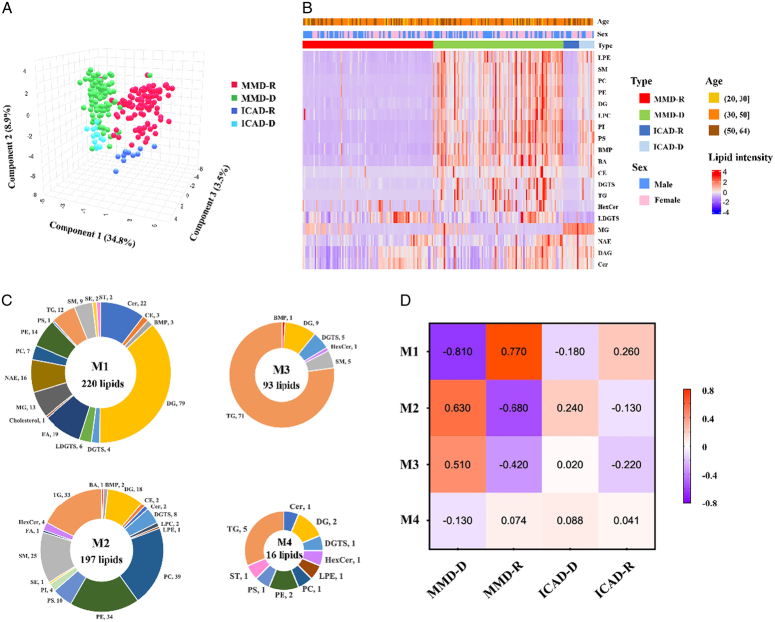
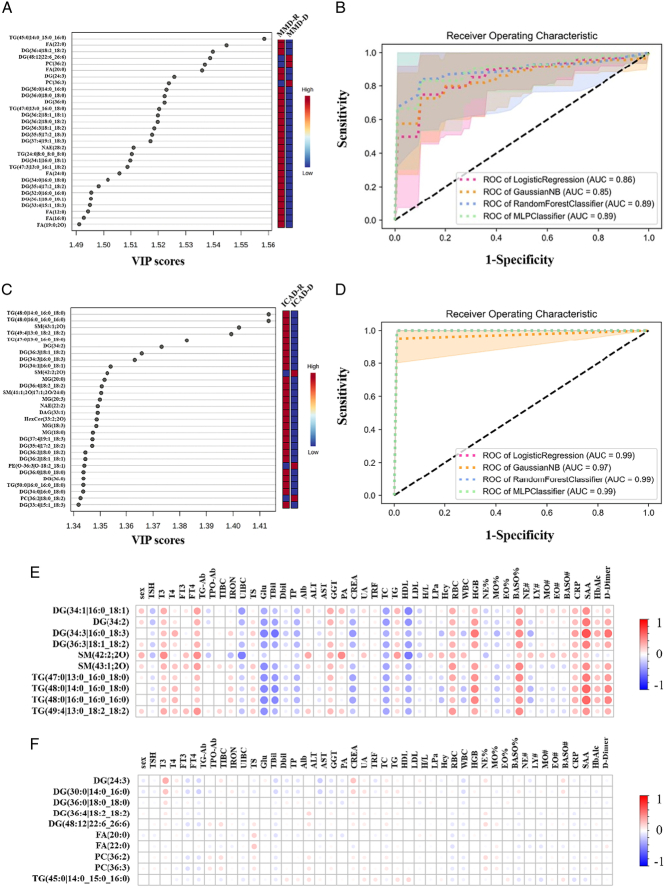
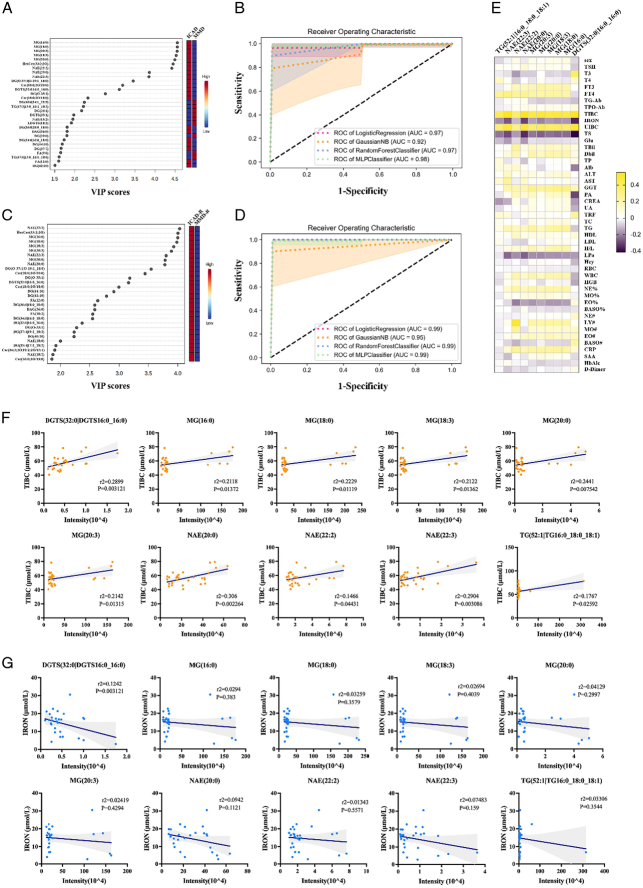
Results: Our analysis identified 569 lipid species and delineated a robust panel of lipidomic biomarkers capable of effectively distinguishing MMD from ICAD (area under curve=0.98), as determined by receiver operating characteristic curve analysis. Notably, we observed a significantly more pronounced positive correlation of diacylglycerols and a negative association of triglycerides in intracranial artery tissues of MMD patients compared to those with ICAD, suggesting a potential role of dysregulated diacylglycerol-induced signaling in MMD pathogenesis. Furthermore, our investigation into the correlations of critical differential intracranial artery vessel lipid species between MMD and ICAD and clinical parameters revealed negative associations with plasma iron levels, implying a potential link between plasma iron metabolism and artery lipid homeostasis during MMD pathogenesis.
Conclusion: These findings offer promising prospects for advancing clinical diagnosis for enhanced differentiation between the two disease conditions. Additionally, they shed light on the fundamental mechanisms implicated in MMD pathogenesis and suggest potential therapeutic avenues through targeting artery vessel lipids or plasma iron levels.
Copyright © 2024 The Author(s). Published by Wolters Kluwer Health, Inc.
Conflict of interest statement
The authors report no conflicts of interest.
Sponsorships or competing interests that may be relevant to content are disclosed at the end of this article.
Figures
References
-
- Scott RM, Smith ER. Moyamoya disease and moyamoya syndrome. N Engl J Med 2009;360:1226–1237. - PubMed
-
- Asselman C, Hemelsoet D, Eggermont D, et al. . Moyamoya disease emerging as an immune-related angiopathy. Trends Mol Med 2022;28:939–950. - PubMed
-
- Oichi Y, Mineharu Y, Agawa Y, et al. . Characterization of moyamoya and middle cerebral artery diseases by carotid canal diameter and RNF213 p.R4810K genotype. J Stroke Cerebrovasc Dis 2022;31:106481. - PubMed
-
- Fukui M, Kono S, Sueishi K, et al. . Moyamoya disease. Neuropathology 2000;20(suppl):S61–S64. - PubMed
MeSH terms
Substances
LinkOut - more resources
Full Text Sources
