


Deep Sequencing and Phenotyping in an Australian Tuberous Sclerosis Complex "No Mutations Identified" Cohort
- PMID: 39352229
- PMCID: PMC11443604
- DOI: 10.1002/mgg3.70017
Deep Sequencing and Phenotyping in an Australian Tuberous Sclerosis Complex "No Mutations Identified" Cohort
Abstract
Tuberous sclerosis complex (TSC) is a variable multisystem disorder. The "no mutations identified" (NMI) group are reportedly phenotypically milder than those with an identified molecular cause, and often have mosaic or intronic variants not detected by standard sequencing methods.
Methods: We describe the phenotypes in an Australian TSC NMI group (n = 18) and a molecular testing strategy implementable in a diagnostic laboratory. Massively parallel sequencing (MPS) of the whole genomic regions of TSC1 and TSC2 was performed using DNA extracted from multiple tissue samples per participant.
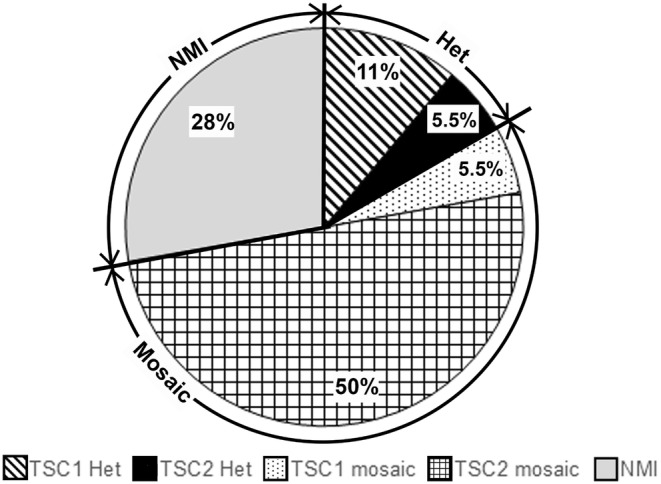
Results: Our study showed that the phenotype in TSC NMI individuals can be similar to those with heterozygous, particularly TSC1, variants. Although neurodevelopmental outcomes can be less severe, the number of organ systems involved was similar to the non-mosaic groups. A diagnostic yield of 72% (13/18) was achieved, with the majority (10/13) being mosaic variants and the remainder heterozygous variants missed on previous testing.
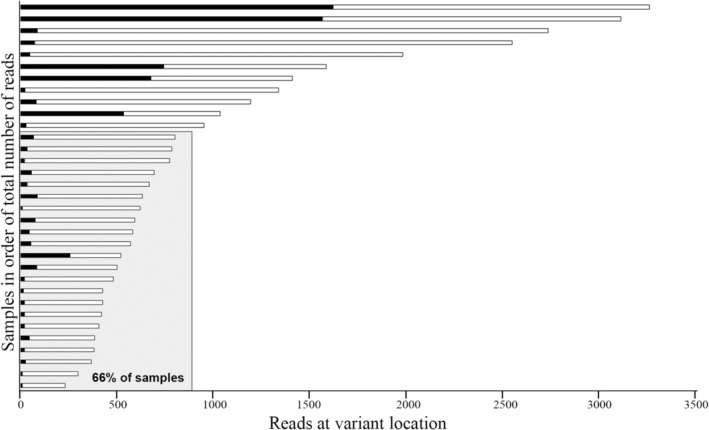
Conclusion: Testing DNA from multiple tissue samples allowed for validation of otherwise discarded low-level mosaic variants and detection of mosaic variants by MPS without excessive cost or the need for specialised techniques. Implementing this approach in a diagnostic setting is viable and allows optimal clinical care of patients with NMI TSC.
Keywords: deep sequencing; genotype/phenotype comparison; mosaicism; tuberous sclerosis complex.
© 2024 The Author(s). Molecular Genetics & Genomic Medicine published by Wiley Periodicals LLC.
Conflict of interest statement
The authors declare no conflicts of interest.
Figures
References
-
- Au, K. S. , Williams A. T., Roach E. S., et al. 2007. “Genotype/Phenotype Correlation in 325 Individuals Referred for a diagnosis of Tuberous Sclerosis Complex in the United States.” Genetics in Medicine 9: 88–100. - PubMed
-
- Bissler, J. J. , Kingswood J. C., Radzikowska E., et al. 2013. “Everolimus for Angiomyolipoma Associated With Tuberous Sclerosis Complex or Sporadic Lymphangioleiomyomatosis (EXIST‐2): A Multicentre, Randomised, Double‐Blind, Placebo‐Controlled Trial.” Lancet 381: 817–824. - PubMed
-
- Bournazos, A. M. , Riley L. G., Bommireddipalli S., et al. 2022. “Standardized Practices for RNA Diagnostics Using Clinically Accessible Specimens Reclassifies 75% of Putative Splicing Variants.” Genetics in Medicine 24: 130–145. - PubMed
-
- Chung, C. W. T. , Lawson J. A., Sarkozy V., et al. 2017. “Early Detection of Tuberous Sclerosis Complex: An Opportunity for Improved Neurodevelopmental Outcome.” Pediatric Neurology 76: 20–26. - PubMed
MeSH terms
Substances
LinkOut - more resources
Full Text Sources
Medical
