


Impact of non-traditional lipid profiles on 1-year vascular outcomes in ischemic stroke patients with prior statin therapy and LDL-C < 100 mg/dL
- PMID: 39354143
- PMCID: PMC11448496
- DOI: 10.1038/s41598-024-73851-5
Impact of non-traditional lipid profiles on 1-year vascular outcomes in ischemic stroke patients with prior statin therapy and LDL-C < 100 mg/dL
Abstract
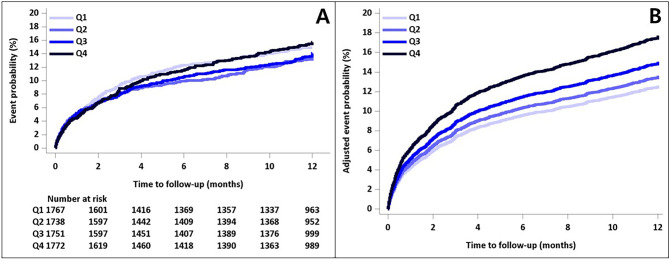
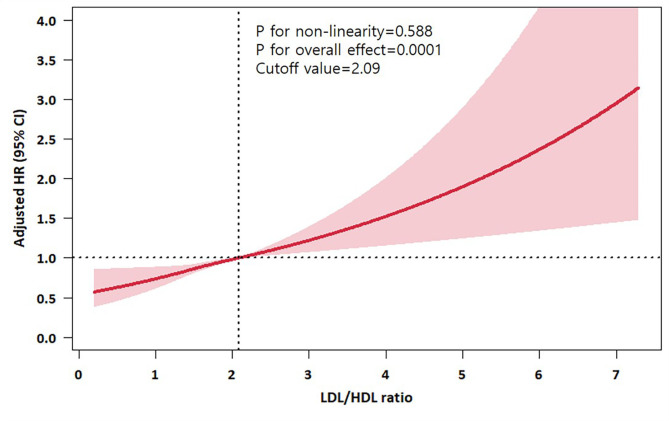
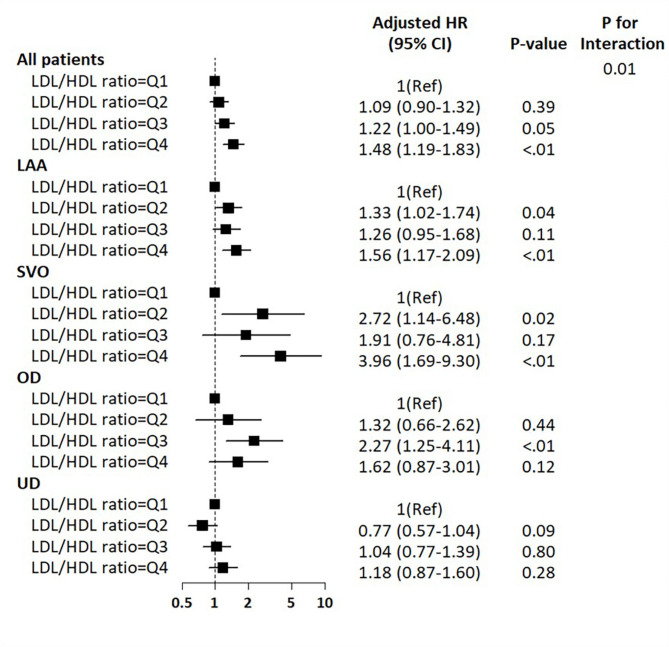
This study aimed to investigate the association between non-traditional lipid profiles and the risk of 1-year vascular events in patients who were already using statins before stroke and had admission LDL-C < 100 mg/dL. This study was an analysis of a prospective, multicenter, nationwide registry of consecutive patients with acute ischemic stroke patients who treated with statin before index stroke and LDL-C < 100 mg/dL on admission. Non-traditional lipid profiles including non-HDL, TC/HDL ratio, LDL/HDL ratio, and TG/HDL ratio were analyzed as a continuous or categorical variable. The primary vascular outcome within one year was a composite of recurrent stroke (either hemorrhagic or ischemic), myocardial infarction (MI) and all-cause mortality. Hazard ratios (95% Cis) for 1-year vascular outcomes were analyzed using the Cox PH model for each non-traditional lipid profiles groups. A total of 7028 patients (age 70.3 ± 10.8years, male 59.8%) were finally analyzed for the study. In unadjusted analysis, no significant associations were observed in the quartiles of LDL/HDL ratio and 1-year primary outcome. However, after adjustment of relevant variables, compared with Q1 of the LDL/HDL ratio, Q4 was significantly associated with increasing the risk of 1-year primary outcome (HR 1.48 [1.19-1.83]). For the LDL/HDL ratio, a linear relationship was observed (P for linearity < 0.001). Higher quartiles of the LDL/HDL ratio were significantly and linearly associated with increasing the risk of 1-year primary vascular outcomes. These findings suggest that even during statin therapy with LDL-C < 100 mg/dl on admission, there should be consideration for residual risk based on the LDL/HDL ratio, following stroke.
Keywords: Acute ischemic stroke; LDL-cholesterol; LDL/HDL ratio; Lipid ratio; Non-traditional lipid profiles; Residual cardiovascular risk; Vascular outcome.
© 2024. The Author(s).
Conflict of interest statement
The authors declare no competing interests.
Figures
References
-
- Amarenco, P. et al. High-dose atorvastatin after stroke or transient ischemic attack. N. Engl. J. Med. 355, 549–559. 10.1056/NEJMoa061894 (2006). - PubMed
-
- Amarenco, P. et al. A comparison of two LDL cholesterol targets after ischemic stroke. N. Engl. J. Med. 382, 9. 10.1056/NEJMoa1910355 (2020). - PubMed
-
- Nesto, R. W. Beyond low-density lipoprotein: addressing the atherogenic lipid triad in type 2 diabetes mellitus and the metabolic syndrome. Am. J. Cardiovasc. Drugs 5, 379–387. 2005/11/02 (2005). - PubMed
-
- Di Giorgi, N. et al. A specific plasma lipid signature associated with high triglycerides and low HDL cholesterol identifies residual CAD risk in patients with chronic coronary syndrome. Atherosclerosis 339, 1–11. 10.1016/j.atherosclerosis.2021.11.013 (2021). - PubMed
Publication types
MeSH terms
Substances
Grants and funding
LinkOut - more resources
Full Text Sources
Medical
Miscellaneous
