


Perfusion Bioreactor Conditioning of Small-diameter Plant-based Vascular Grafts
- PMID: 39354262
- PMCID: PMC11589060
- DOI: 10.1007/s13770-024-00670-0
Perfusion Bioreactor Conditioning of Small-diameter Plant-based Vascular Grafts
Abstract
Background: Vascular grafts are mainly composed of synthetic materials, but are prone to thrombosis and intimal hyperplasia at small diameters. Decellularized plant scaffolds have emerged that provide promising alternatives for tissue engineering. We previously developed robust, endothelialized small-diameter vessels from decellularized leatherleaf viburnum. This is the first study to precondition and analyze plant-based vessels under physiological fluid flow and pressure waveforms. Using decellularized leatherleaf viburnum as tissue-engineered grafts for implantation can have profound impacts on healthcare due to their biocompatibility and cost-effective production.
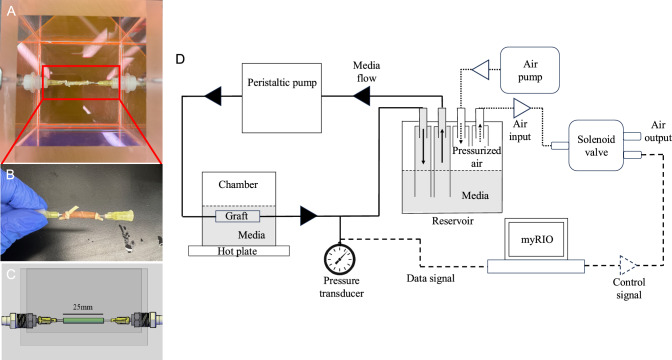
Methods: A novel perfusion bioreactor was designed, capable of accurately controlling fluid flow rate and pressure waveforms for preconditioning of small-diameter vascular grafts. A closed-loop system controlled pressure waveforms, mimicking physiological values of 50-120 mmHg at a frequency of 8.75 Hz for fluid flow reaching 5 mL/min. Plant-based vascular grafts were recellularized with endothelial and vascular smooth muscle cells and cultured for up to 3 weeks in this bioreactor. Cell density, scaffold structure and mechanics, thrombogenicity, and immunogenicity of grafts were evaluated.
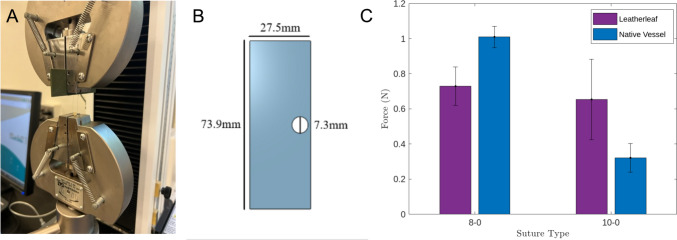
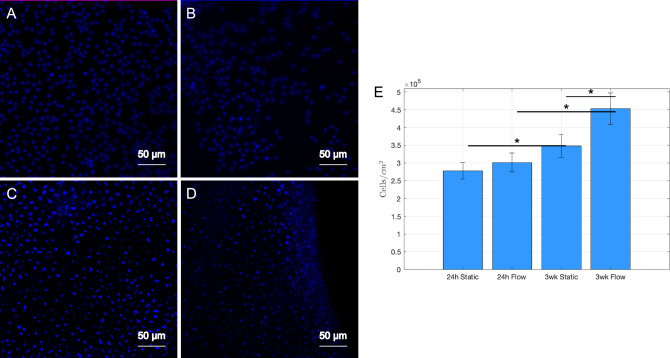
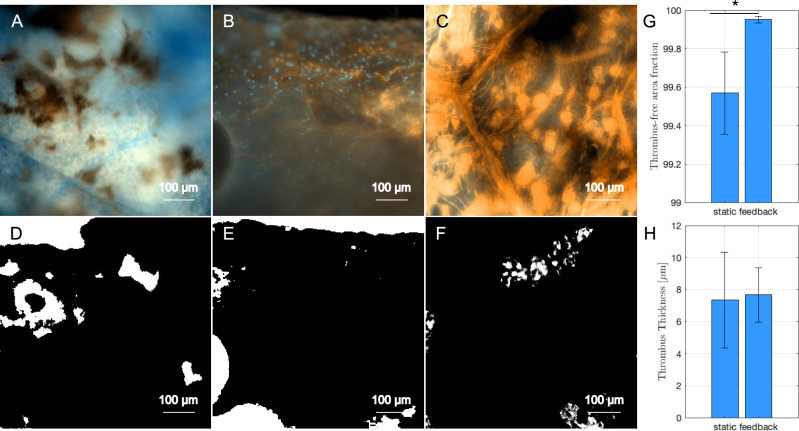
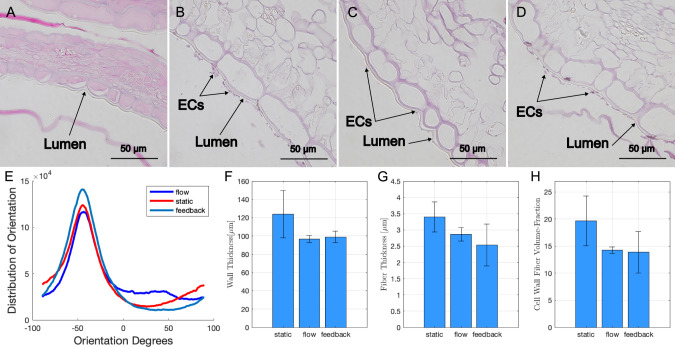
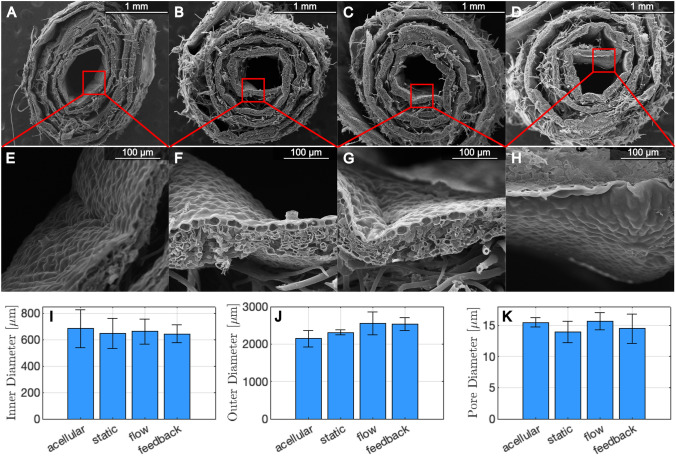
Results: Bioreactor treatment with fluid flow significantly increased luminal endothelial cell density, while pressure waveforms reduced thrombus formation and maintained viable vascular smooth muscle cells within inner layers of grafts compared to static controls. Suture retention of grafts met transplantation standards and white cell viability was suitable for vascular remodeling.
Conclusion: Low thrombogenicity of endothelialized leatherleaf viburnum holds great potential for vascular repair. This study provides insight into benefits of conditioning plant-based materials with hemodynamic forces at higher frequencies that have not previously been investigated.
Keywords: Bioreactor; Plant; Tissue engineering; Vascular graft.
© 2024. The Author(s).
Conflict of interest statement
Declarations. Conflict of interest: The authors have no financial or non-financial interests to disclose. The content is solely the responsibility of the authors and does not necessarily represent the official views of the National Institute of Health. Ethical approval: Collection of whole blood was performed after receiving approval of the Institutional Animal Care and Use Committee (IACUC) at Hofstra University (IACUC approved Protocol #21.22–11).
Figures
References
Publication types
MeSH terms
Grants and funding
LinkOut - more resources
Full Text Sources
Miscellaneous