


The effectiveness of unsupervised home-based exercise for improving lower extremity physical function in older adults in Western and Eastern cultures: a systematic review and meta-analysis
- PMID: 39354428
- PMCID: PMC11443890
- DOI: 10.1186/s12877-024-05393-4
The effectiveness of unsupervised home-based exercise for improving lower extremity physical function in older adults in Western and Eastern cultures: a systematic review and meta-analysis
Abstract
Background: Ageing leads to decreased physical function, which can impact independent living and raise health risks, increasing demand on healthcare resources. Finding affordable and accessible exercise to improve physical function is necessary for a population seemingly resistant to strength and balance training in leisure settings. This review aimed to evaluate whether unsupervised home-based exercises improve lower extremity function in older adults.
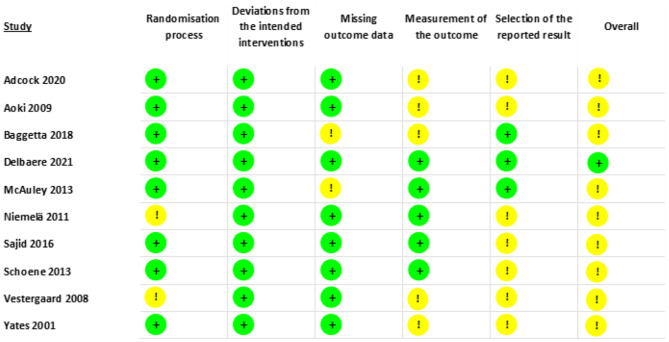
Methods: We systematically searched for randomised controlled trials (RCTs) and cluster RCTs investigating unsupervised home-based exercises' effects on physical function in older adults through English and Mandarin databases. Studies' methodological quality was assessed using the Cochrane's Risk of Bias Tool. Meta-analyses were conducted on lower extremity functions outcomes.
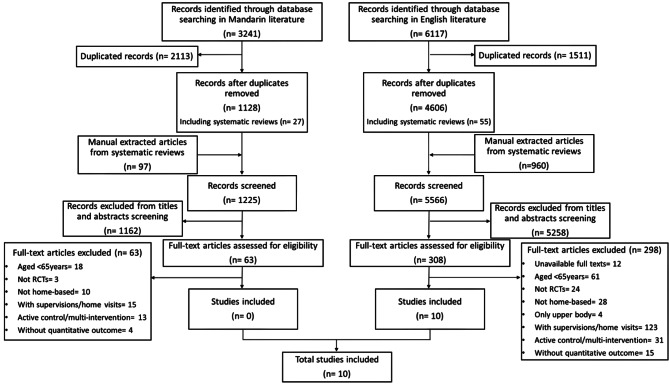
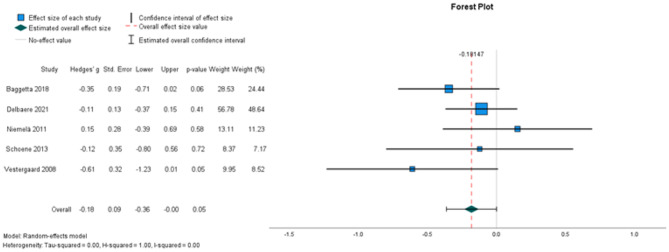
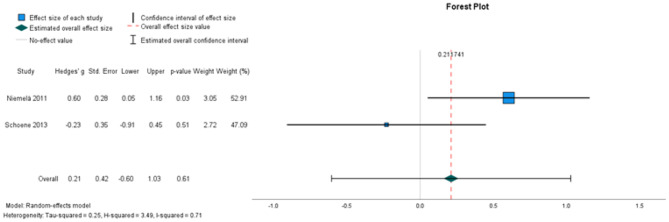
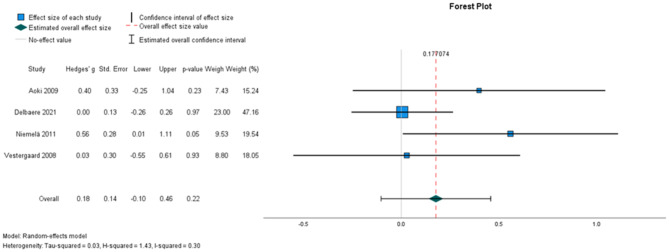
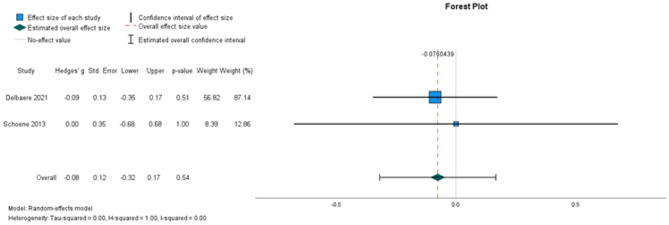
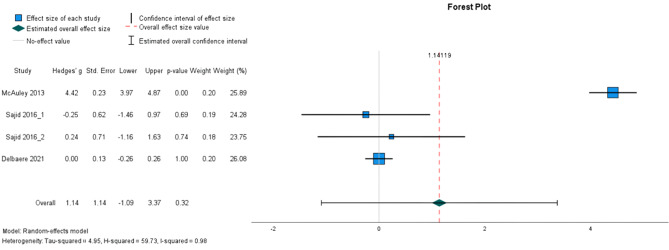
Results: Of the 6791 identified articles, 10 English studies (907 participants) were included, 8 studies (839 participants) were used for final meta-analysis, with no Mandarin studies. Studies were largely based in Europe with mostly moderate risk of bias. Most interventions were multicomponent lasting 10-40 min/session, 3 times/week. Meta-analysis showed no statistically significant differences in 5 sit-to-stand (p = 0.05; I2 = 0%), maximal knee extension strength (p = 0.61; I2 = 71%), 10 m maximal walking speed (p = 0.22; I2 = 30%), timed-up-to-go (p = 0.54; I2 = 0%), and short physical performance battery (p = 0.32; I2 = 98%) between exercise and control groups.
Conclusions: This meta-analysis suggests that unsupervised home-based exercise programmes have little impact on lower extremity functions in older adults. This review is limited by the small number of included studies, sample sizes, and high heterogeneity. There is a need to understand why this format lacks efficacy, and design more beneficial home-based exercise programmes.
Keywords: Ageing population; Home-based activities; Independent living; Lower extremity physical performance; Unsupervised exercise intervention.
© 2024. The Author(s).
Conflict of interest statement
The authors declare no competing interests.
Figures
References
-
- United Nations. In: Affairs, editor. World Population Ageing 2019 highlights. D.o.E.a.S.: United Nations; 2019.
-
- Runge M, et al. Is muscle power output a key factor in the age-related decline in physical performance? A comparison of muscle cross section, chair‐rising test and jumping power. Clin Physiol Funct Imaging. 2004;24(6):335–40. - PubMed
-
- Rosenberg IH. Sarcopenia: origins and clinical relevance. J Nutr. 1997;127(5):S990–1. - PubMed
-
- Brown CJ, Flood KL. Mobility limitation in the older patient: a clinical review. JAMA. 2013;310(11):1168–77. - PubMed
Publication types
MeSH terms
LinkOut - more resources
Full Text Sources
