


An empirical application of the consumer-based authenticity model in heritage tourism of the George Town historic district, Penang, Malaysia
- PMID: 39364247
- PMCID: PMC11447308
- DOI: 10.1016/j.heliyon.2024.e38254
An empirical application of the consumer-based authenticity model in heritage tourism of the George Town historic district, Penang, Malaysia
Abstract
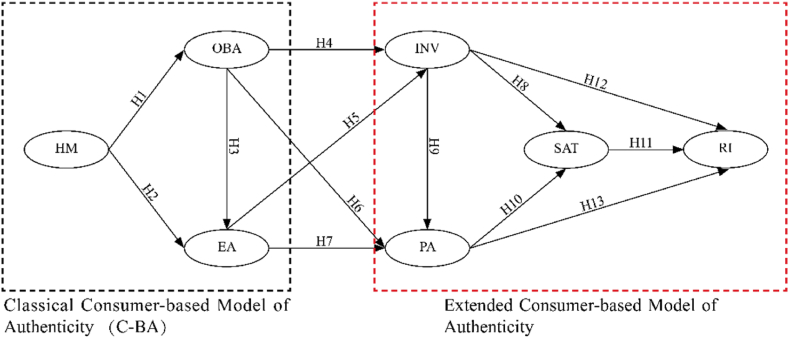
The primary objective of this paper is to investigate the specific application of the Consumer-based Model of Authenticity (C-BA) in historic districts. The paper building upon the C-BA model and examines the direct effects between the variables, as well as the mediating role of tourists' involvement, and place attachment in the connection between, authenticity (encompassing object-based authenticity and existential authenticity) and revisit intention. This study applied the C-BA model to the context of heritage tourism within a historic district. The analysis utilized structural equation modelling and involved 394 samples. The findings indicate that authenticity, influences tourists' intentions to return from a dual perspective. The results reveal that object-based authenticity mediates the relationship between tourists' involvement and satisfaction, while existential authenticity mediates the connection between place attachment and satisfaction. The study suggests that stakeholders ought to prioritize the preservation of the objective authenticity of the historic district and the provision of high-quality activity experiences.
Keywords: Authenticity; George town; Heritage tourism; Historic district; Place attachment.
© 2024 The Authors.
Conflict of interest statement
The authors declare that they have no known competing financial interests or personal relationships that could have appeared to influence the work reported in this paper.
Figures


References
-
- United Nations International tourism is expected to return to pre-pandemic levels by 2024. 2024. https://news.un.org/zh/story/2024/01/1125947
-
- Wang X., Aoki N. Paradox between neoliberal urban redevelopment, heritage conservation, and community needs: case study of a historic neighbourhood in Tianjin, China. Cities. 2019;85:156–169. doi: 10.1016/j.cities.2018.09.004. - DOI
-
- Plevoets B., Cleempoel K.V. Routledge, Taylor & Francis Group; London ; New York: 2019. Adaptive Reuse of the Built Heritage: Concepts and Cases of an Emerging Discipline.
-
- Zhu Y., González Martínez P. Heritage, values and gentrification: the redevelopment of historic areas in China. Int. J. Herit. Stud. 2022;28:476–494. doi: 10.1080/13527258.2021.2010791. - DOI
-
- United Nations . 2015. 2030 Agenda for Sustainable Development.Pdf.https://sdgs.un.org/sites/default/files/publications/21252030%20Agenda%2...
Publication types
LinkOut - more resources
Full Text Sources
