


Influence of perceived harm due to substance use on the relationships between positive psychotic experiences and suicidal experiences in people with non-affective psychosis
- PMID: 39364657
- PMCID: PMC11496240
- DOI: 10.1017/S0033291724001764
Influence of perceived harm due to substance use on the relationships between positive psychotic experiences and suicidal experiences in people with non-affective psychosis
Abstract
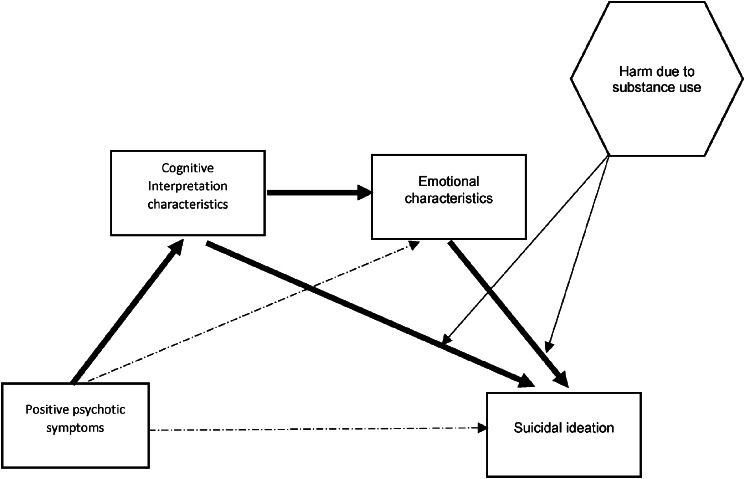
Background: The ways in which perceived harm due to substance use affects relationships between psychotic and suicidal experiences are poorly understood. The goal of the current study was to redress this gap by investigating the moderating effects of harm due to substance use on pathways involving positive psychotic symptoms, the perceived cognitive-emotional sequelae of those symptoms, and suicidal ideation.
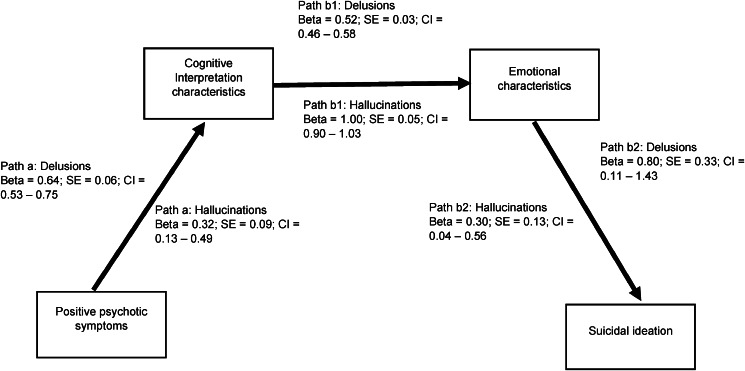
Method: The design was cross-sectional. Mediation and moderated mediation pathways were tested. The predictor was severity of positive psychotic symptoms. Cognitive interpretative and emotional characteristics of both auditory hallucinations and delusions were mediators. Suicidal ideation was the outcome variable. General symptoms associated with severe mental health problems were statistically controlled for.
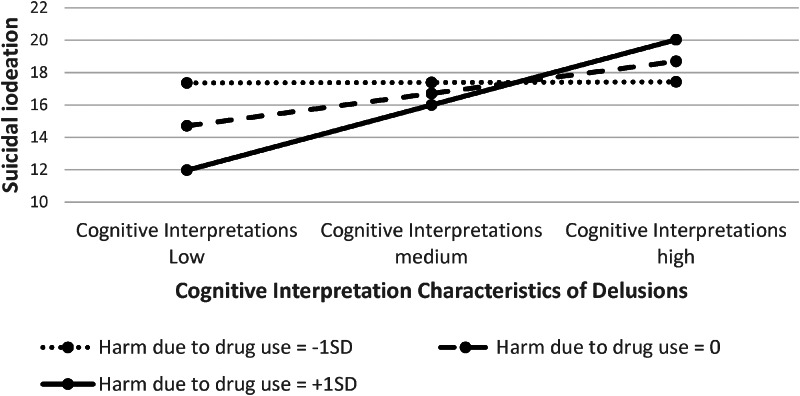
Results: There was evidence of an indirect pathway between positive psychotic symptom severity and suicidal ideation via cognitive interpretation and emotional characteristics of both auditory hallucinations and delusions. Harm due to drug use, but not alcohol use, moderated the indirect pathway involving delusions such that it was most prominent when harm due to drug use was at medium-to-high levels. The components of suicidal ideation that were most strongly affected by this moderated indirect pathway were active intent, passive desire, and lack of deterrents.
Conclusions: From both scientific and therapy development perspectives, it is important to understand the complex interplay between, not only the presence of auditory hallucinations and delusions, but the ensuing cognitive and emotional consequences of those experiences which, when combined with harm associated with substance use, in particular drug use, can escalate suicidal thoughts and acts.
Keywords: active suicidal thoughts; alcohol use; auditory hallucinations; delusions; drug use; passive suicidal thoughts; psychosis; schizophrenia; substance use; suicide.
Conflict of interest statement
R. E. is supported by the National Institute for Health and Care Research (NIHR Research Professorship, NIHR300051). The views expressed in this publication are those of the author(s) and not necessarily those of the MRC, NIHR or the Department of Health and Social Care. All other authors have no competing interests.
Figures
References
-
- Armoon, B., SoleimanvandiAzar, N., Fleury, M. J., Noroozi, A., Bayat, A. H., Mohammadi, R., … Fattah Moghaddam, L. (2021). Prevalence, sociodemographic variables, mental health condition, and type of drug use associated with suicide behaviors among people with substance use disorders: A systematic review and meta-analysis. Journal of Addictive Disorders, 39(4), 550–569. doi: 10.1080/10550887.2021.1912572 - DOI - PubMed
-
- Beck, A. T., & Steer, R. A. (1991). Manual for Beck scale for suicidal ideation. New York: Psychological Corporation.
-
- Bolton, C., Gooding, P., Kapur, N., Barrowclough, C., & Tarrier, N. (2007). Developing psychological perspectives of suicidal behaviour and risk in people with a diagnosis of schizophrenia: We know they kill themselves but do we understand why? Clinical Psychology Review, 27(4), 511–536. - PubMed
LinkOut - more resources
Full Text Sources
Miscellaneous
