


Synbiotic supplementation may globally improve non-motor symptoms in patients with stable Parkinson's disease: results from an open label single-arm study
- PMID: 39367119
- PMCID: PMC11452401
- DOI: 10.1038/s41598-024-74400-w
Synbiotic supplementation may globally improve non-motor symptoms in patients with stable Parkinson's disease: results from an open label single-arm study
Abstract
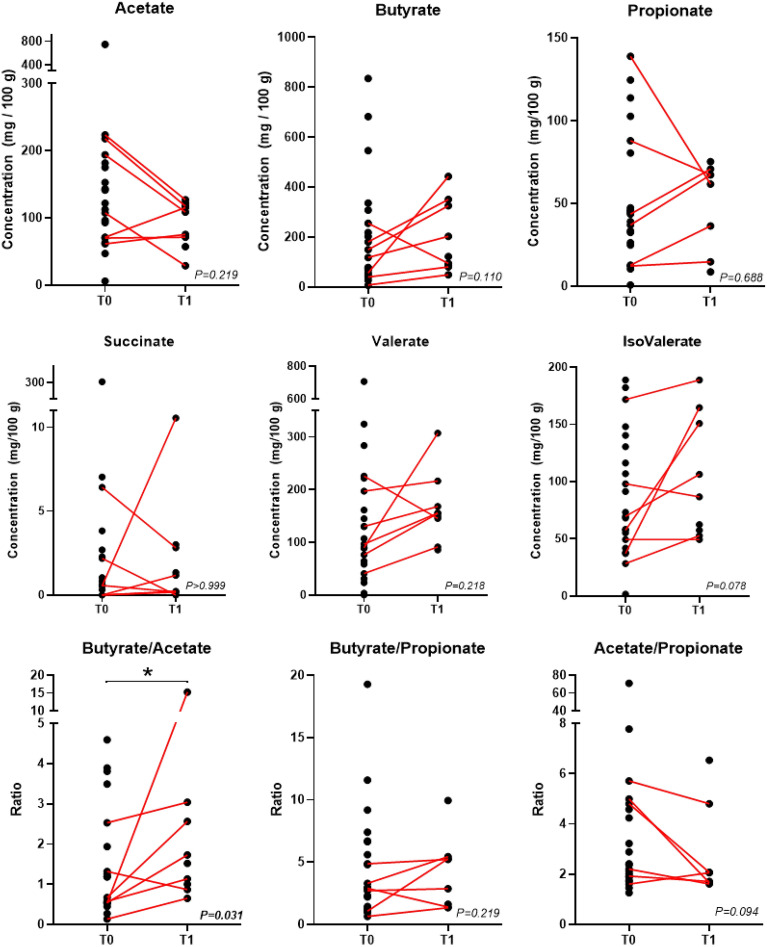
Gut microbiota changes and brain-gut-axis (BGA) dysregulation are common in people with Parkinson's Disease (PD). Probiotics and prebiotics are emerging as a potential therapeutic approach for PD patients. The aim of this paper was to assess the neurological and gastroenterological effects in PD patients with constipation after the administration of a synbiotic product, with a focus on behavioral and cognitive symptoms. We enrolled patients with stable PD who met diagnostic criteria for functional constipation and/or irritable bowel syndrome with constipation according to Rome IV Criteria. Patients received a synbiotic treatment (Enterolactis Duo, containing the probiotic strain Lacticaseibacillus paracasei DG and the prebiotic fiber inulin) for 12 weeks. A neurological and a gastroenterological evaluation were collected before and after the treatment. In addition, 16S rRNA gene profiling and short chain fatty acid quantification were performed to characterize the microbial ecosystem of fecal samples collected before (n = 22) and after (n = 9) the synbiotic administration. 30 patients were consecutively enrolled. After treatment, patients performed better in MDS-UPDRS part 1 (p = 0.000), SCOPA-AUT (p = 0.001), TAS-20 (p = 0.014), HAM-D (p = 0.026), DIFt (p = 0.003), PAS-A (p = 0.048). Gastroenterological evaluations showed improvements in PAC-SYM score (p < 0.001), number of complete bowel movement (p < 0.001) and BSFS (p < 0.001). After the synbiotic administration, we observed a significant increase in the abundance of the order Oscillospirales, as well as the Oscillospiraceae family and the species Faecalibacterium prausnitzii within this order in fecal samples. Synbiotic treatment demonstrates potential efficacy in ameliorating non-motor features in PD patients.
Keywords: Constipation; Movement disorders; Non motor symptoms; Parkinson’s disease.
© 2024. The Author(s).
Conflict of interest statement
The authors declare no competing interests.
Figures

References
-
- Fasano, A., Visanji, N. P., Liu, L. W., Lang, A. E. & Pfeiffer, R. F. Gastrointestinal dysfunction in Parkinson’s disease. Lancet Neurol.14, 625–639 (2015). - PubMed
-
- Krogh, K., Ostergaard, K., Sabroe, S. & Laurberg, S. Clinical aspects of bowel symptoms in Parkinson’s disease. Acta Neurol. Scand.117(1), 60–64 (2008). - PubMed
-
- Scheperjans, F. et al. Gut microbiota are related to Parkinson’s disease and clinical phenotype. Mov. Disord.30(3), 350–358 (2015). - PubMed
Publication types
MeSH terms
Substances
LinkOut - more resources
Full Text Sources
Other Literature Sources
Medical
Research Materials
Miscellaneous
