


Malignant Mesothelioma: Overcoming Diagnostic Hurdles
- PMID: 39371847
- PMCID: PMC11455275
- DOI: 10.7759/cureus.68718
Malignant Mesothelioma: Overcoming Diagnostic Hurdles
Abstract
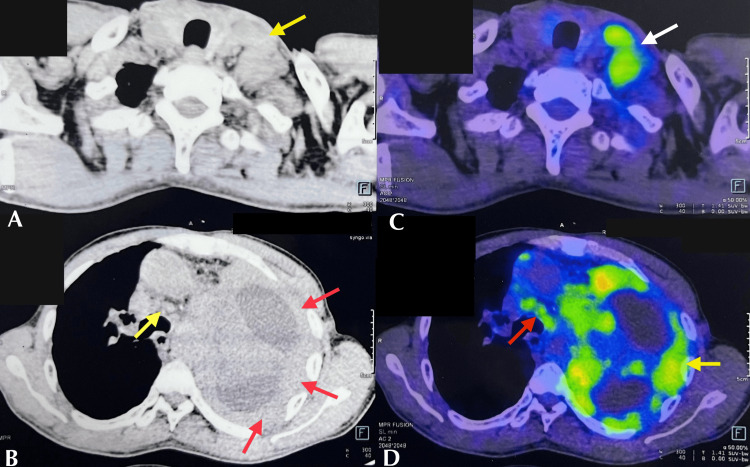
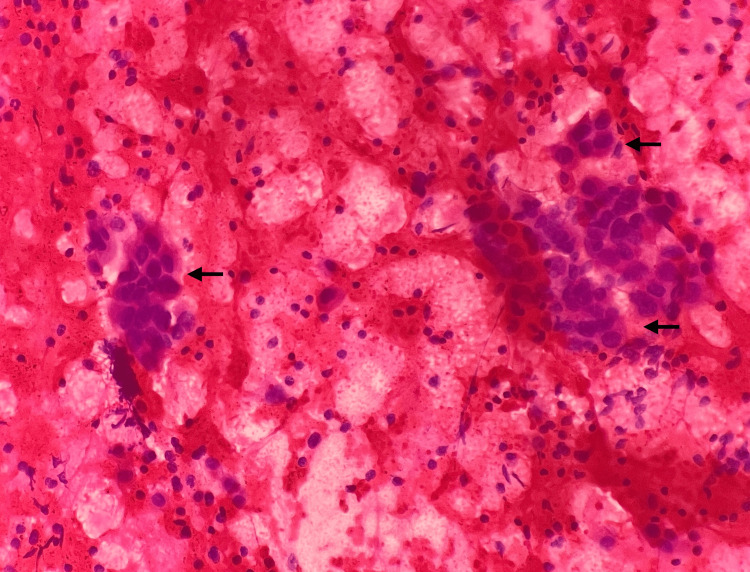
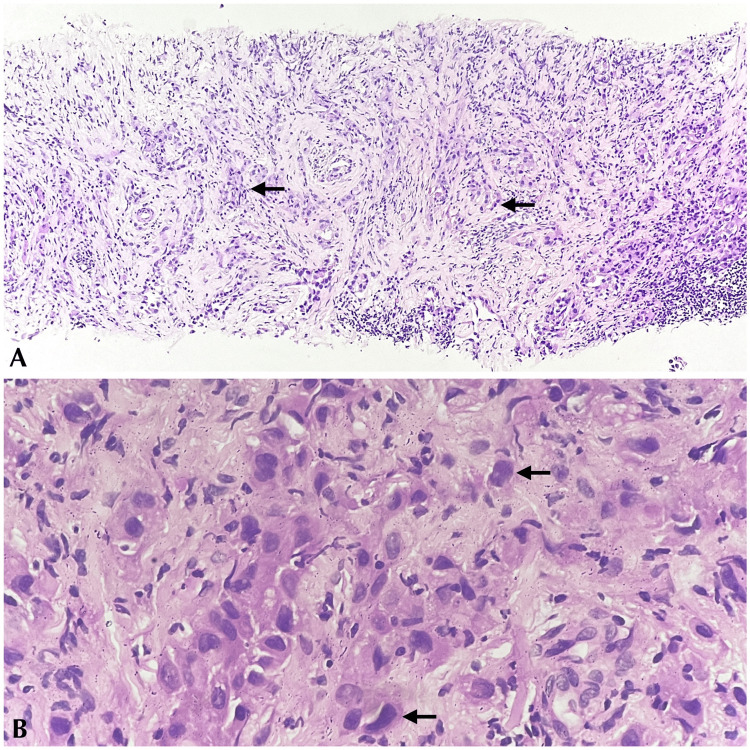
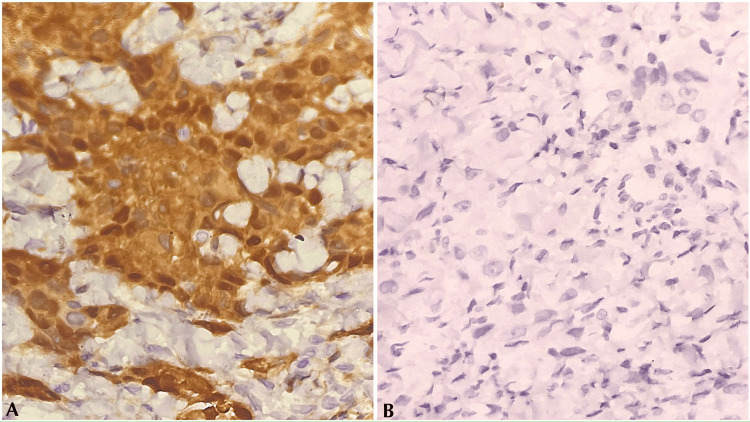
Malignant pleural mesothelioma, an aggressive neoplasm frequently linked to asbestos exposure, is often detected at an advanced stage. This report details the case of a 58-year-old mason who presented with left-sided chest pain, and shortness of breath, accompanied by weight loss for a month. A positron emission tomography (PET) scan revealed increased uptake along the pleural surface, as well as in several mediastinal lymph nodes and the left supraclavicular lymph node. Thoracoscopy revealed the presence of multiple nodules on the costal pleura. Despite repeated negative results from pleural effusion cytology, cell block analysis, and pleural biopsies, the diagnosis of malignant mesothelioma (MM) was ultimately established through an ultrasound-guided (USG) biopsy of the left supraclavicular lymph node, with immunohistochemical confirmation using calretinin.
Keywords: asbestos exposure; calretinin positive; malignant pleural mesothelioma (mpm); massive pleural effusion; pleural neoplasm.
Copyright © 2024, R et al.
Conflict of interest statement
Human subjects: Consent was obtained or waived by all participants in this study. Conflicts of interest: In compliance with the ICMJE uniform disclosure form, all authors declare the following: Payment/services info: All authors have declared that no financial support was received from any organization for the submitted work. Financial relationships: All authors have declared that they have no financial relationships at present or within the previous three years with any organizations that might have an interest in the submitted work. Other relationships: All authors have declared that there are no other relationships or activities that could appear to have influenced the submitted work.
Figures
References
-
- Clinical and pathological features of three-year survivors of malignant pleural mesothelioma following extrapleural pneumonectomy. Sugarbaker DJ, Wolf AS, Chirieac LR, et al. Eur J Cardiothorac Surg. 2011;40:298–303. - PubMed
Publication types
LinkOut - more resources
Full Text Sources