


Prognostic value of body composition measures in breast cancer patients treated with chemotherapy
- PMID: 39375403
- PMCID: PMC11458607
- DOI: 10.1038/s41598-024-74060-w
Prognostic value of body composition measures in breast cancer patients treated with chemotherapy
Abstract
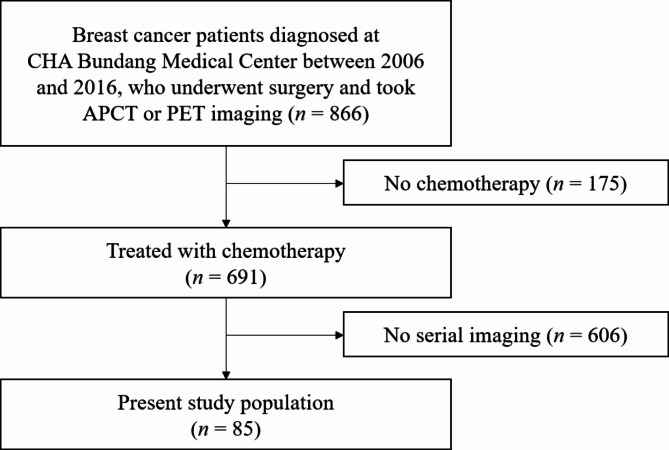
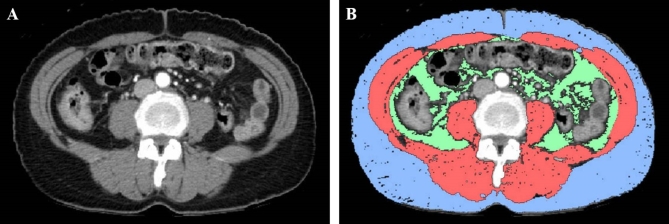
Breast cancer remains a significant public health issue, often resulting in severe side effects such as neutropenia, highlighting the need for reliable predictors of clinical outcomes. This study aimed to evaluate the predictive value of body composition measures for mortality, recurrence, and chemotherapy-induced neutropenia in patients with breast cancer following surgery and chemotherapy. We retrospectively analyzed 85 breast cancer patients who underwent surgery and chemotherapy between 2006 and 2016. Body composition was assessed using computed tomography (CT) or positron emission tomography (PET) at diagnosis and three years and five years post-diagnosis. Metrics included skeletal muscle area (SMA), skeletal muscle index (SMI), subcutaneous adipose tissue area (SAT), and visceral adipose tissue area (VAT). Longitudinal analysis revealed a decrease in muscle mass (P < 0.001 for both SMA and SMI) and nonsignificant changes in fat mass (P = 0.449 for SAT and P = 0.798 for VAT). A lower SMI at diagnosis was significantly associated with increased mortality (P = 0.019) and a higher incidence of grade 4 neutropenia (P = 0.008). There was no significant association between SMI at diagnosis and recurrence (P = 0.691). No associations were found between body composition measurements during the follow-up period and the clinical outcomes. Lower skeletal muscle mass at diagnosis is strongly associated with higher mortality and chemotherapy-induced complications in patients with breast cancer, highlighting the potential of readily available imaging techniques as valuable predictors of clinical outcomes.
Keywords: Body composition; Breast cancer; Chemotherapy-induced neutropenia; Mortality; Prognosis; Sarcopenia.
© 2024. The Author(s).
Conflict of interest statement
The authors declare no competing interests.
Figures

References
-
- National Cancer Institute. Surveillance Epidemiology and End Results (SEER) Program. Cancer Stat Facts: Female Breast Cancer. https://seer.cancer.gov/statfacts/html/breast.html. (2023). Accessed 18 March 2024.
MeSH terms
Grants and funding
LinkOut - more resources
Full Text Sources
Medical
Research Materials
