


Seroprevalence and risk factors for Lassa virus infection in South-West and North-Central Nigeria: a community-based cross-sectional study
- PMID: 39375602
- PMCID: PMC11460173
- DOI: 10.1186/s12879-024-09954-1
Seroprevalence and risk factors for Lassa virus infection in South-West and North-Central Nigeria: a community-based cross-sectional study
Abstract
Background: Understanding the level of exposure to Lassa virus (LASV) in at-risk communities allows for the administration of effective preventive interventions to mitigate epidemics of Lassa fever. We assessed the seroprevalence of LASV antibodies in rural and semiurban communities of two cosmopolitan cities in Nigeria with poorly understood Lassa epidemiology.
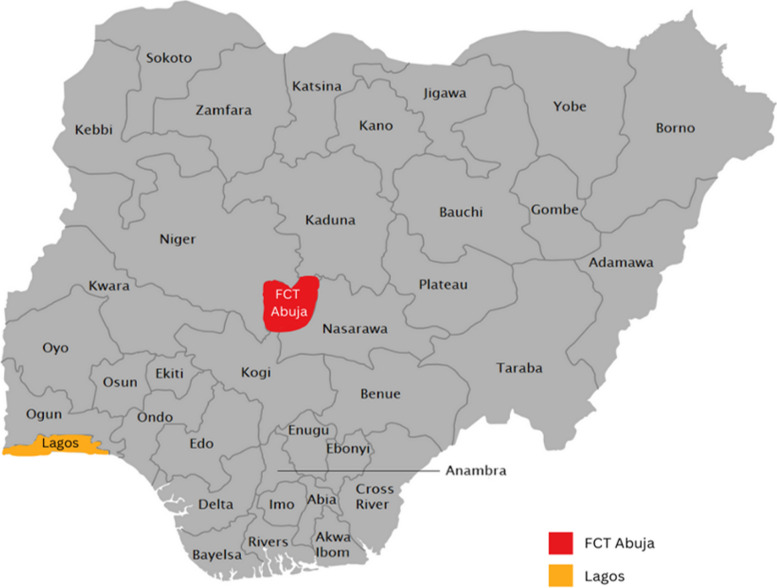
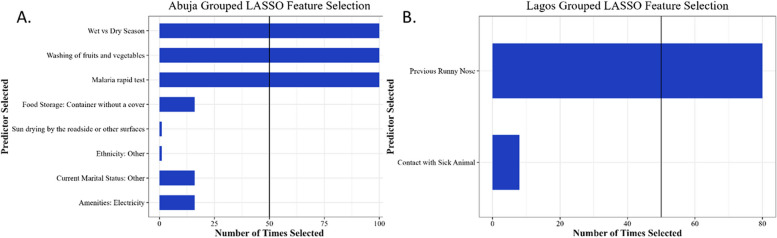
Methods: A cross-sectional study was conducted in ten communities located in the Abuja Municipal Area Council (AMAC), Abuja, and Ikorodu Local Government Area (LGA), Lagos, from February 2nd to July 5th, 2022. Serum samples collected from participants were analyzed for IgG and IgM antibodies using a ReLASV® Pan-Lassa NP IgG/IgM enzyme-linked immunosorbent assay (ELISA) kit. A questionnaire administered to participants collected self-reported sociodemographic and LASV exposure information. Seroprevalence of LASV IgG/IgM was estimated overall, and by study site. Univariate and multivariate log-binomial models estimated unadjusted and adjusted prevalence ratios (aPRs) and 95% confidence intervals (CI) for site-specific risk factors for LASV seropositivity. Grouped Least Absolute Shrinkage and Selection Operator (LASSO) was used for variable selection for multivariate analysis.
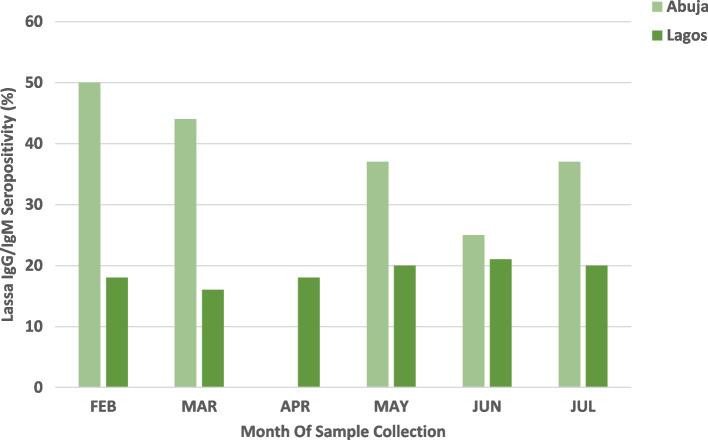
Results: A total of 628 participants with serum samples were included in the study. Most participants were female (434, 69%), married (459, 73%), and had a median age of 38 years (interquartile range 28-50). The overall seroprevalence was 27% (171/628), with a prevalence of 33% (126/376) in Abuja and 18% (45/252) in Lagos. Based on site-specific grouped LASSO selection, enrollment in the dry season (vs. wet; aPR, 95% CI: 1.73, 1.33-2.24), reported inconsistent washing of fruits and vegetables (aPR, 95% CI: 1.45, 1.10-1.92), and a positive malaria rapid test (aPR, 95% CI: 1.48, 1.09-2.00) were independently associated with LASV seropositivity in Abuja, whereas, only a self-reported history of rhinorrhea (PR, 95% CI: 2.21, 1.31-3.72) was independently associated with Lassa seropositivity in Lagos.
Conclusions: The LASV seroprevalence was comparable to that in other areas in Nigeria. Our findings corroborate those from other studies on the importance of limiting human exposure to rodents and focusing on behavioral factors such as poor hygiene practices to reduce exposure to LASV.
Keywords: Community-based study; Emerging infectious disease; Epidemiology; Lassa virus; Nigeria; Seroprevalence.
© 2024. The Author(s).
Conflict of interest statement
The authors declare no competing interests.
Figures
References
-
- Pfau CJ. Arenaviruses. In: Baron S, editors. Medical Microbiology. Galveston (TX): University of Texas Medical Branch at Galveston; 1996. Chapter: 57. https://www.ncbi.nlm.nih.gov/books/NBK8193/.
-
- Ogbu O, Ajuluchukwu E, Uneke CJ. Lassa fever in west African sub-region: an overview. J Vector Borne Dis. 2007;44(1):1–11. - PubMed
-
- Asogun DA, Adomeh DI, Ehimuan J, Odia I, Hass M, Gabriel M, Olschlager S, Becker-Ziaja B, Folarin O, Phelan E, et al. Molecular diagnostics for lassa fever at Irrua specialist teaching hospital, Nigeria: lessons learnt from two years of laboratory operation. PLoS Negl Trop Dis. 2012;6(9):e1839. - DOI - PMC - PubMed
MeSH terms
Substances
Grants and funding
- MI220237/Military Infectious Diseases Research Program, United States Army Medical Research and Development Command,
- MI220237/Military Infectious Diseases Research Program, United States Army Medical Research and Development Command,
- MI220237/Military Infectious Diseases Research Program, United States Army Medical Research and Development Command,
- MI220237/Military Infectious Diseases Research Program, United States Army Medical Research and Development Command,
- MI220237/Military Infectious Diseases Research Program, United States Army Medical Research and Development Command,
- MI220237/Military Infectious Diseases Research Program, United States Army Medical Research and Development Command,
- MI220237/Military Infectious Diseases Research Program, United States Army Medical Research and Development Command,
- MI220237/Military Infectious Diseases Research Program, United States Army Medical Research and Development Command,
- MI220237/Military Infectious Diseases Research Program, United States Army Medical Research and Development Command,
- MI220237/Military Infectious Diseases Research Program, United States Army Medical Research and Development Command,
- MI220237/Military Infectious Diseases Research Program, United States Army Medical Research and Development Command,
- MI220237/Military Infectious Diseases Research Program, United States Army Medical Research and Development Command,
- MI220237/Military Infectious Diseases Research Program, United States Army Medical Research and Development Command,
- MI220237/Military Infectious Diseases Research Program, United States Army Medical Research and Development Command,
- MI220237/Military Infectious Diseases Research Program, United States Army Medical Research and Development Command,
- MI220237/Military Infectious Diseases Research Program, United States Army Medical Research and Development Command,
- MI220237/Military Infectious Diseases Research Program, United States Army Medical Research and Development Command,
- MI220237/Military Infectious Diseases Research Program, United States Army Medical Research and Development Command,
- MI220237/Military Infectious Diseases Research Program, United States Army Medical Research and Development Command,
- MI220237/Military Infectious Diseases Research Program, United States Army Medical Research and Development Command,
- MI220237/Military Infectious Diseases Research Program, United States Army Medical Research and Development Command,
- MI220237/Military Infectious Diseases Research Program, United States Army Medical Research and Development Command,
- MI220237/Military Infectious Diseases Research Program, United States Army Medical Research and Development Command,
- MI220237/Military Infectious Diseases Research Program, United States Army Medical Research and Development Command,
- MI220237/Military Infectious Diseases Research Program, United States Army Medical Research and Development Command,
- MI220237/Military Infectious Diseases Research Program, United States Army Medical Research and Development Command,
- MI220237/Military Infectious Diseases Research Program, United States Army Medical Research and Development Command,
- MI220237/Military Infectious Diseases Research Program, United States Army Medical Research and Development Command,
- MI220237/Military Infectious Diseases Research Program, United States Army Medical Research and Development Command,
- MI220237/Military Infectious Diseases Research Program, United States Army Medical Research and Development Command,
- MI220237/Military Infectious Diseases Research Program, United States Army Medical Research and Development Command,
- MI220237/Military Infectious Diseases Research Program, United States Army Medical Research and Development Command,
- MI220237/Military Infectious Diseases Research Program, United States Army Medical Research and Development Command,
- MI220237/Military Infectious Diseases Research Program, United States Army Medical Research and Development Command,
- MI220237/Military Infectious Diseases Research Program, United States Army Medical Research and Development Command,
- MI220237/Military Infectious Diseases Research Program, United States Army Medical Research and Development Command,
- MI220237/Military Infectious Diseases Research Program, United States Army Medical Research and Development Command,
- MI220237/Military Infectious Diseases Research Program, United States Army Medical Research and Development Command,
- MI220237/Military Infectious Diseases Research Program, United States Army Medical Research and Development Command,
- MI220237/Military Infectious Diseases Research Program, United States Army Medical Research and Development Command,
- MI220237/Military Infectious Diseases Research Program, United States Army Medical Research and Development Command,
- MI220237/Military Infectious Diseases Research Program, United States Army Medical Research and Development Command,
- MI220237/Military Infectious Diseases Research Program, United States Army Medical Research and Development Command,
LinkOut - more resources
Full Text Sources
Research Materials
Miscellaneous
