


Nucleated red blood cell distribution in critically ill patients with acute pancreatitis: a retrospective cohort study
- PMID: 39375618
- PMCID: PMC11460230
- DOI: 10.1186/s12876-024-03444-z
Nucleated red blood cell distribution in critically ill patients with acute pancreatitis: a retrospective cohort study
Abstract
Objectives: This study examined the potential association between nucleated red blood cell (NRBC) levels and mortality in critically ill patients with acute pancreatitis (AP) in the intensive care unit, due to limited existing research on this correlation.
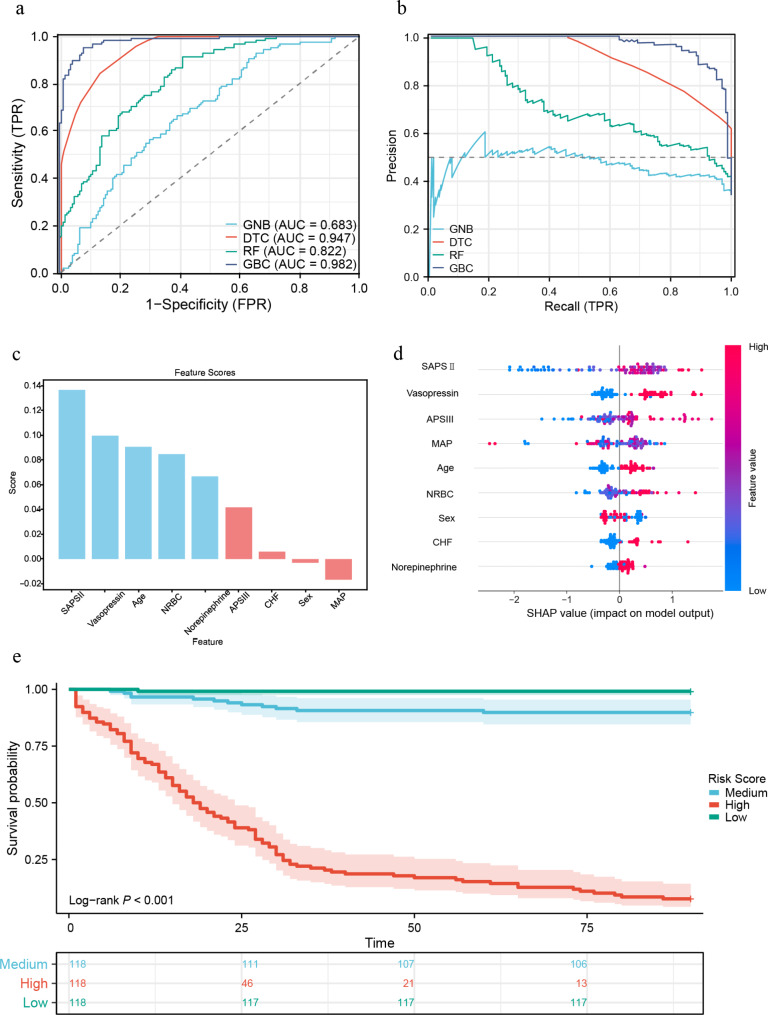
Methods: This retrospective cohort study utilized data from the MIMIC-IV v2.0 and MIMIC-III v1.4 databases to investigate the potential relationship between NRBC levels and patient outcomes. The study employed restricted cubic splines (RCS) regression analysis to explore non-linear associations. The impact of NRBC on prognosis was assessed using a generalized linear model (GLM) with a logit link, adjusted for potential confounders. Furthermore, four machine learning models, including Gradient Boosting Classifier (GBC), Random Forest, Gaussian Naive Bayes, and Decision Tree Classifier model, were constructed using NRBC data to generate risk scores and evaluate the potential of NRBC in predicting patient prognosis.
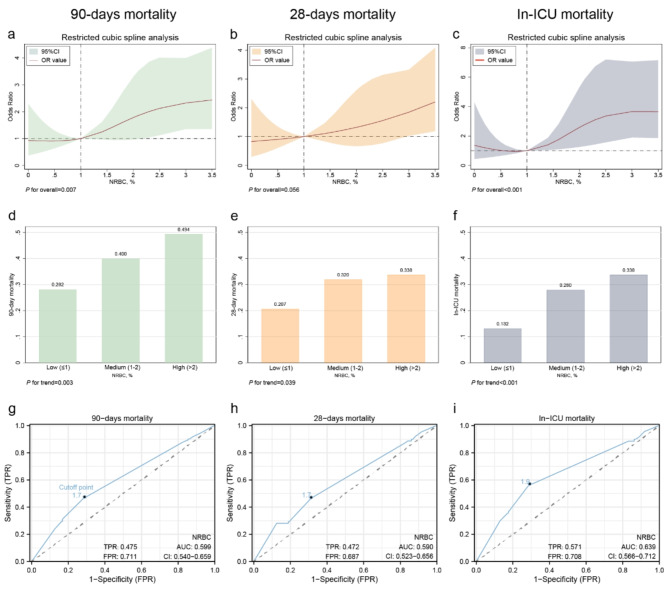
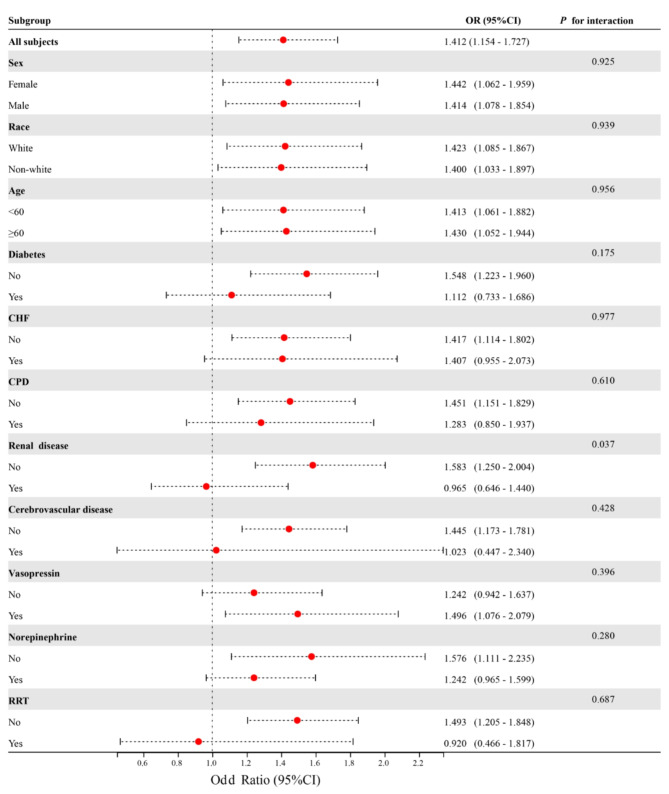
Results: A total of 354 patients were enrolled in the study, with 162 (45.8%) individuals aged 60 years or older and 204 (57.6%) males. RCS regression analysis demonstrated a non-linear relationship between NRBC levels and 90-day mortality. Receiver Operating Characteristic (ROC) analysis identified a 1.7% NRBC cutoff to distinguish survivor from non-survivor patients for 90-day mortality, yielding an Area Under the Curve (AUC) of 0.599, with a sensitivity of 0.475 and specificity of 0.711. Elevated NRBC levels were associated with increased risks of 90-day mortality in both unadjusted and adjusted models (all Odds Ratios > 1, P < 0.05). Assessment of various machine learning models with nine variables, including NRBC, Sex, Age, Simplified Acute Physiology Score II, Acute Physiology Score III, Congestive Heart Failure, Vasopressin, Norepinephrine, and Mean Arterial Pressure, indicated that the GBC model displayed the highest predictive accuracy for 90-day mortality, with an AUC of 0.982 (95% CI 0.970-0.994). Post hoc power analysis showed a statistical power of 0.880 in the study.
Conclusions: Elevated levels of NRBC are linked to an increased mortality risk in critically ill patients with AP, suggesting its potential for predicting mortality.
Keywords: Acute Pancreatitis; Cohort study; Critical care; Nucleated red blood cell; Risk factors.
© 2024. The Author(s).
Conflict of interest statement
The authors declare no competing interests.
Figures
References
-
- Sinonquel P, Laleman W, Wilmer A. Advances in acute pancreatitis. 2021, 27(2):193–200. - PubMed
-
- Sternby H, Bolado F, Canaval-Zuleta HJ, Marra-López C, Hernando-Alonso AI, del-Val-Antoñana A, García-Rayado G, Rivera-Irigoin R, Grau-García FJ, Oms L et al. Determinants of severity in Acute Pancreatitis: a Nation-wide Multicenter prospective cohort study. 2019, 270(2):348–55. - PubMed
MeSH terms
Grants and funding
LinkOut - more resources
Full Text Sources
Medical
