


Triheptanoin in patients with long-chain fatty acid oxidation disorders: clinical experience in Italy
- PMID: 39375714
- PMCID: PMC11460043
- DOI: 10.1186/s13052-024-01782-y
Triheptanoin in patients with long-chain fatty acid oxidation disorders: clinical experience in Italy
Abstract
Background: Long-chain fatty acid oxidation disorders (LC-FAOD) are rare and potentially life-threatening diseases that cause deficient energy production and accumulation of toxic metabolites. Despite dietary management, adherence to maximum fasting guidelines, restricted long-chain triglyceride intake and supplementation with medium-chain triglyceride (MCT) oil (current standard of care), most patients experience recurrent decompensation episodes that can require hospitalisation. Herein, we analysed the effectiveness and safety of triheptanoin (a highly purified, synthetic medium odd-chain triglyceride) treatment in a cohort of Italian patients with LC-FAOD.
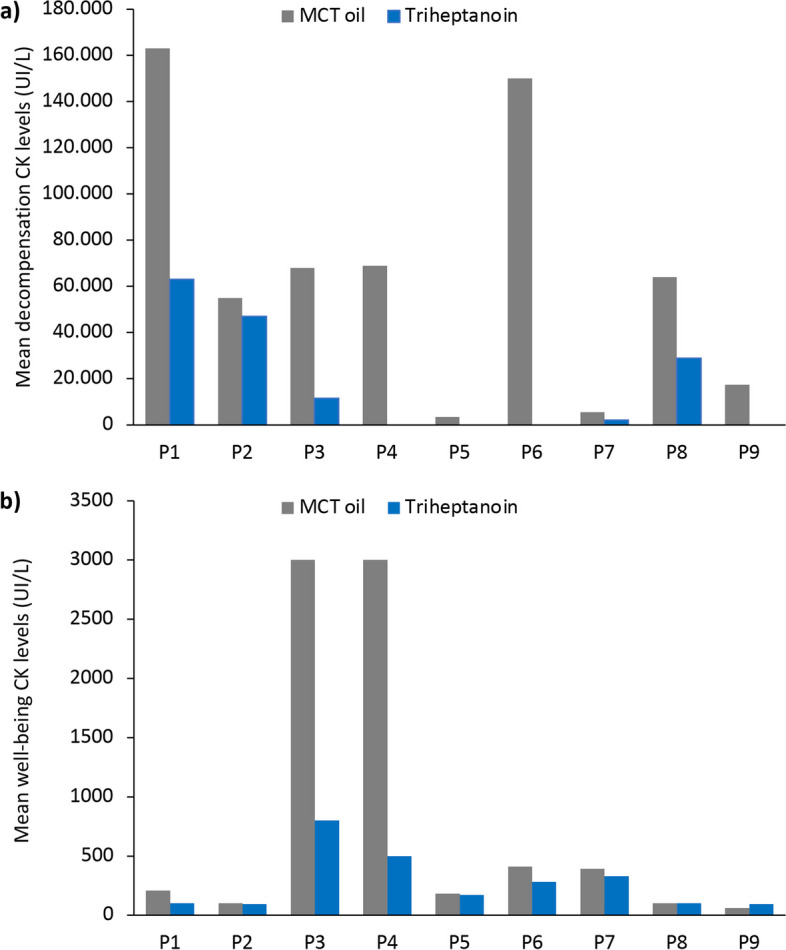
Methods: This retrospective, nationwide study included nine patients with LC-FAOD who switched from standard therapy with MCT oil to triheptanoin oral liquid. Data were collected between 2018 and 2022. Clinical outcome measures were the number and duration of intercurrent catabolic episodes and number and duration of metabolic decompensation episodes requiring hospitalisation. Creatine kinase (CK) levels and treatment-related adverse effects were also reported.
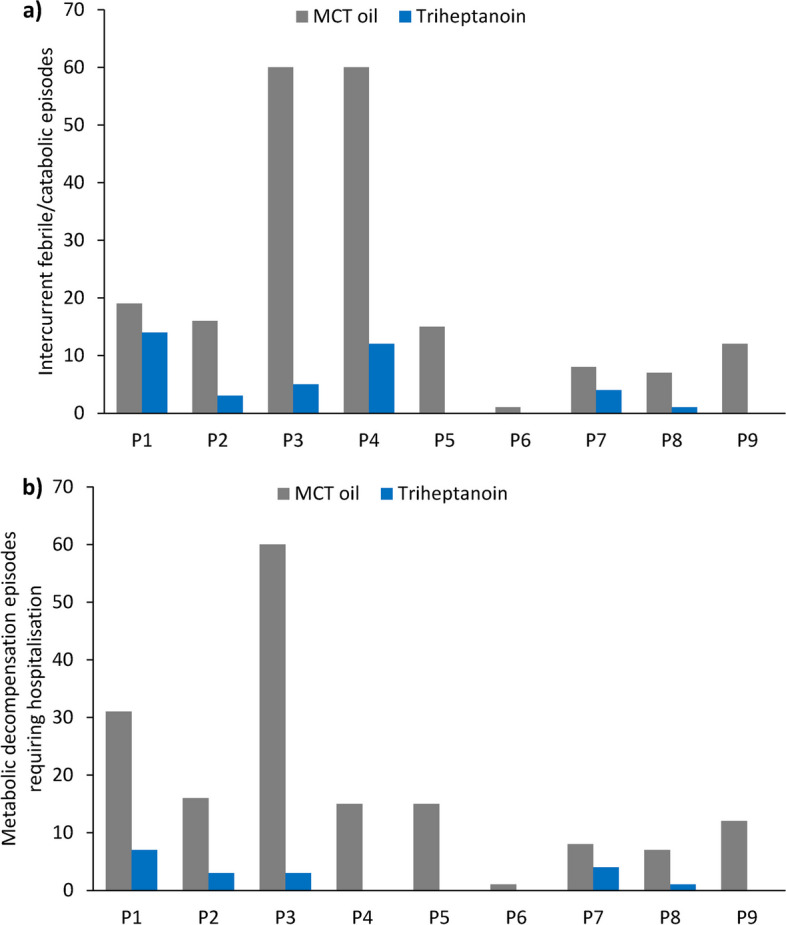
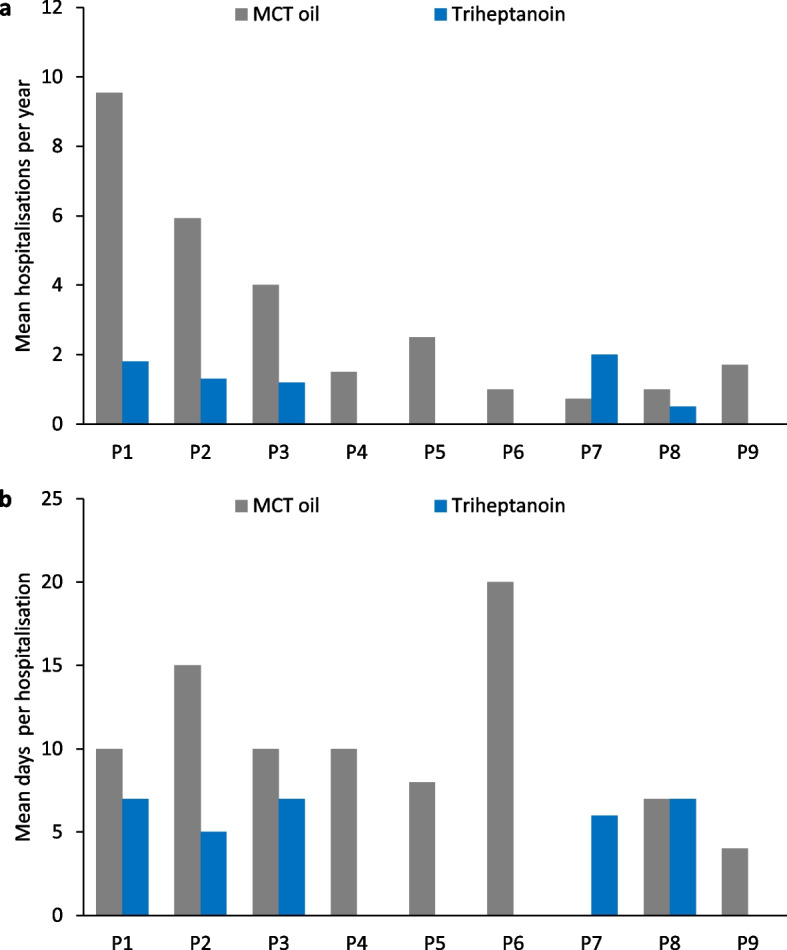
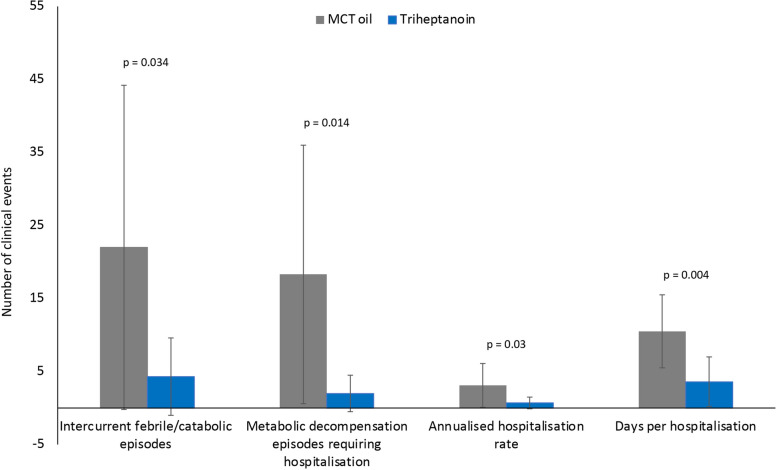
Results: Patients were provided a mean ± standard deviation (SD) triheptanoin dose of 1.5 ± 0.9 g/kg/day in four divided administrations, which accounted for 23.9 ± 8.9% of patients' total daily caloric intake. Triheptanoin treatment was started between 2.7 and 16 years of age and was continued for 2.2 ± 0.9 years. The number of intercurrent catabolic episodes during triheptanoin treatment was significantly lower than during MCT therapy (4.3 ± 5.3 vs 22.0 ± 22.2; p = 0.034), as were the number of metabolic decompensations requiring hospitalisation (mean ± SD: 2.0 ± 2.5 vs 18.3 ± 17.7; p = 0.014), and annualised hospitalisation rates and duration. Mean CK levels (outside metabolic decompensation episodes) were lower with triheptanoin treatment versus MCT oil for seven patients. No intensive care unit admissions were required during triheptanoin treatment. Epigastric pain and diarrhoea were recorded as adverse effects during both MCT and triheptanoin treatment.
Conclusions: The significant improvement in clinical outcome measures after the administration of triheptanoin highlights that this treatment approach can be more effective than MCT supplementation in patients with LC-FAOD. Triheptanoin was well tolerated and decreased the number of intercurrent catabolic episodes, metabolic decompensation episodes requiring hospitalisation, and the annualised rate and duration of hospitalisations.
Keywords: Inherited metabolic disorders; Long-chain fatty acid oxidation disorders; Medium-chain triglyceride oil; Triheptanoin.
© 2024. The Author(s).
Conflict of interest statement
VG received honoraria for lectures, presentations, speaker bureaus, manuscript writing or educational events from Sanofi and Nutricia; and financial support for attending meetings and/or travel expenses from Sanofi, Nutricia, Amicus and PIAM. SG, EP, FP, AM, CD-V and AB received fees for participation on the advisory board following personal experience in using triheptanoin. MS declares they have no competing interests.
Figures
References
MeSH terms
Substances
LinkOut - more resources
Full Text Sources
Medical
Research Materials
