


Chronic Invasive Fungal Sinusitis Mimicking Malignancy Post-Radiotherapy: A Case Report
- PMID: 39376440
- PMCID: PMC11456119
- DOI: 10.1007/s12070-024-04787-5
Chronic Invasive Fungal Sinusitis Mimicking Malignancy Post-Radiotherapy: A Case Report
Abstract
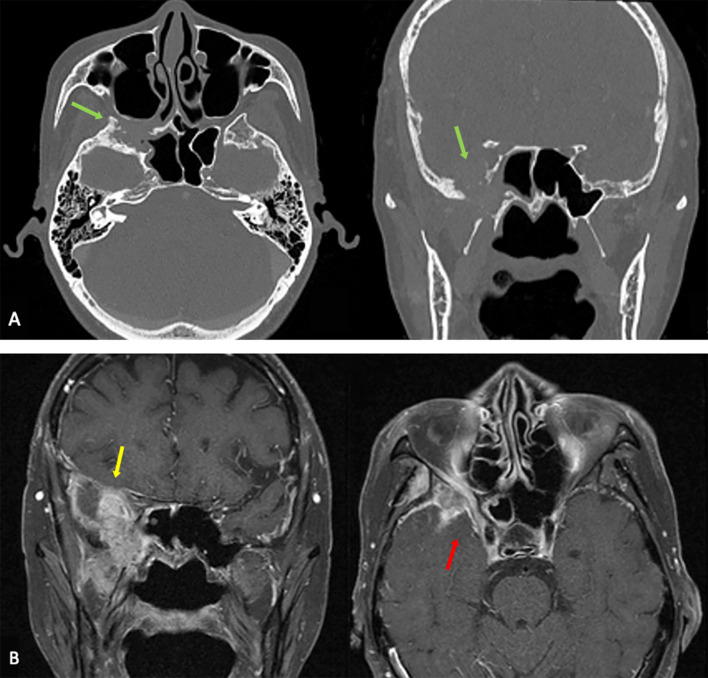
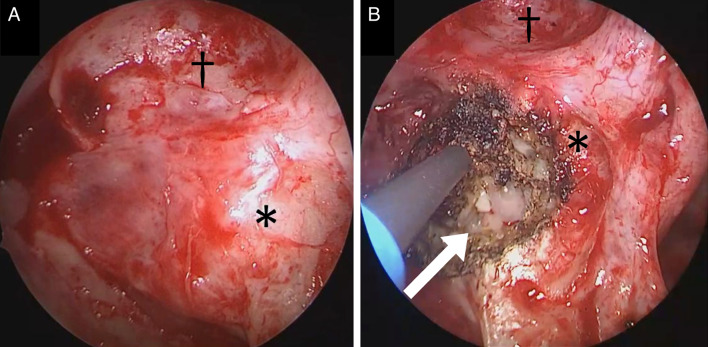
Invasive fungal sinusitis is a life-threatening form of fungal rhinosinusitis. Due to the aggressive clinical presentation and radiological appearance, there is diagnostic difficulty in differentiating invasive fungal sinusitis from a malignant process. This is even more challenging in oncological patients who have undergone previous head and neck radiotherapy, due to possibility of a recurrence of primary malignancy and radiation-induced neoplasms. We report a rare case of invasive fungal sinusitis mimicking a malignancy in a post-radiotherapy patient. Our patient was a 68-year-old male, 25-years post-radiotherapy for nasopharyngeal carcinoma. He presented with a 3-month history of purulent sputum and right facial paraesthesia. Magnetic resonance imaging showed an irregular destructive enhancing mass of the greater wing of right sphenoid and pterygoid bone with extensive extension into nearby structures. In view of extensive local and bony invasion, and a history of radiotherapy, initial suspicions were that of primary malignancy, specifically radiation-induced sarcoma, and recurrence of nasopharyngeal carcinoma. He underwent transpterygoid biopsy of the lesion, and histopathology demonstrated Aspergillus species, with no malignancy identified. Our report highlights the diagnostic difficulties in the post-radiotherapy cancer patient presenting with symptoms suggestive of aggressive sino-nasal disease. Invasive fungal sinusitis closely mimics the clinical and radiological findings of several neoplastic processes. We discuss the clinical and radiological characteristics of pathologies that may mimic invasive fungal sinusitis. Histological examination remains the gold standard for diagnosis, and early fungal staining is crucial. Furthermore, one should not presume the initial histopathological diagnosis to be confirmatory of isolated fungal disease. Repeat radiological investigations for disease resolution and histopathologic re-evaluation if required should be performed, keeping in mind possibility of coexisting malignancy.
Keywords: Aspergillosis; Carcinoma; Fungal sinusitis; Radiotherapy; Sarcoma.
© Association of Otolaryngologists of India 2024. Springer Nature or its licensor (e.g. a society or other partner) holds exclusive rights to this article under a publishing agreement with the author(s) or other rightsholder(s); author self-archiving of the accepted manuscript version of this article is solely governed by the terms of such publishing agreement and applicable law.
Conflict of interest statement
Conflict of InterestThe authors declare that they have no competing interests.
Figures
References
-
- Kumar D, Nepal P, Singh S et al (2018) CNS aspergilloma mimicking tumors: review of CNS aspergillus infection imaging characteristics in the immunocompetent population. J Neuroradiol 45(3):169–176. 10.1016/j.neurad.2017.11.001 - PubMed
-
- Stringer SP, Ryan MW (2000) Chronic invasive fungal rhinosinusitis. Otolaryngol Clin North Am 33(2):375–387. 10.1016/s0030-6665(00)80012-2 - PubMed
-
- Mneimneh W, Cazals-Hatem D, Mosnier I, Bellier C, Sterkers O, Bedossa P (2006) Indolent invasive sphenoid aspergillosis mimicking a neoplastic process. Histopathology 49(2):210–211. 10.1111/j.1365-2559.2006.02388.x - PubMed
-
- Gupta R, Anand A, Kumar S, Sinha N (2020) Sphenoid sinus aspergilloma clinically mimicking as malignancy—a case report. Egypt J Radiol Nucl Med 51(1):1–5. 10.1186/s43055-020-00321-z
-
- Chan W, Chow DL, Lau HY, Chan KW, Tung SY, Wong CS (2019) Fungal infection mimicking nasopharyngeal carcinoma recurrence: a case report. Hong Kong J Radiol 22(3):202
LinkOut - more resources
Full Text Sources