


Mapping individual cortico-basal ganglia-thalamo-cortical circuits integrating structural and functional connectome: implications for upper limb motor impairment poststroke
- PMID: 39376737
- PMCID: PMC11456677
- DOI: 10.1002/mco2.764
Mapping individual cortico-basal ganglia-thalamo-cortical circuits integrating structural and functional connectome: implications for upper limb motor impairment poststroke
Abstract
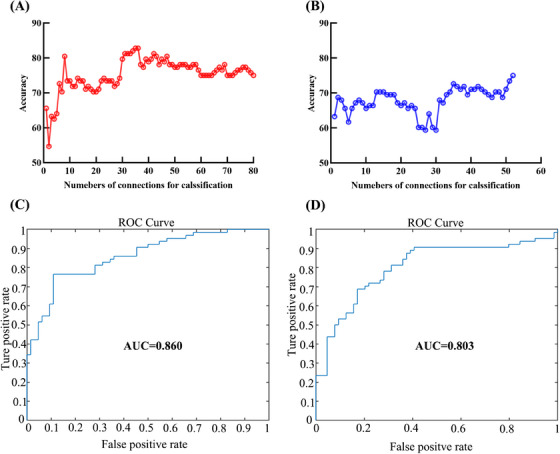
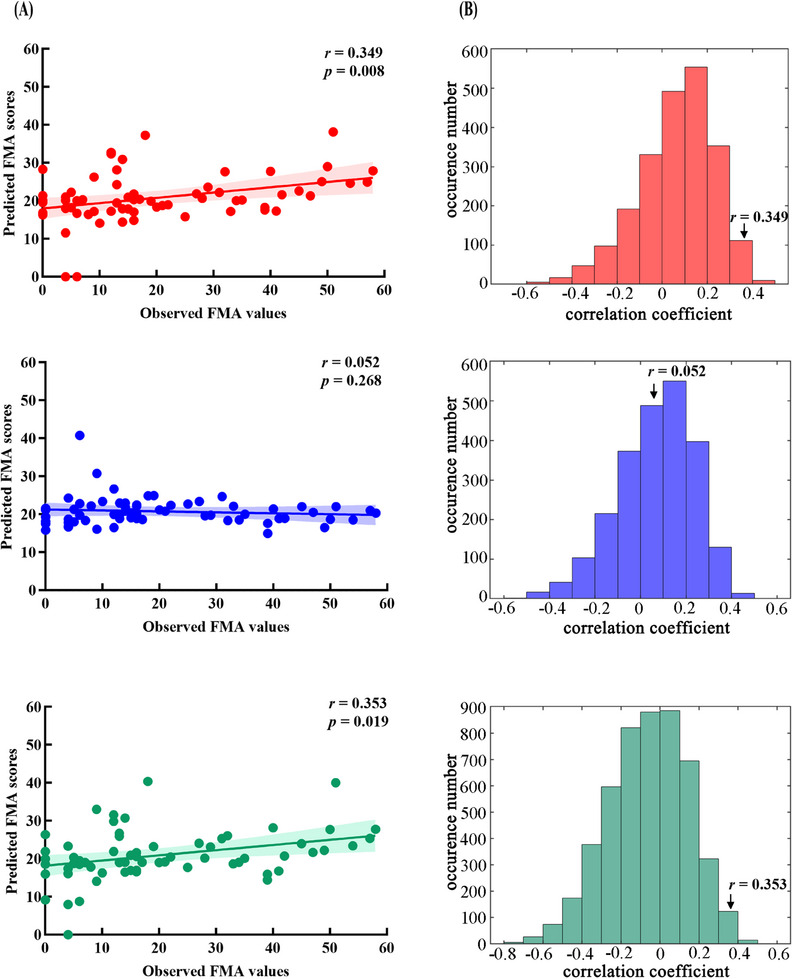
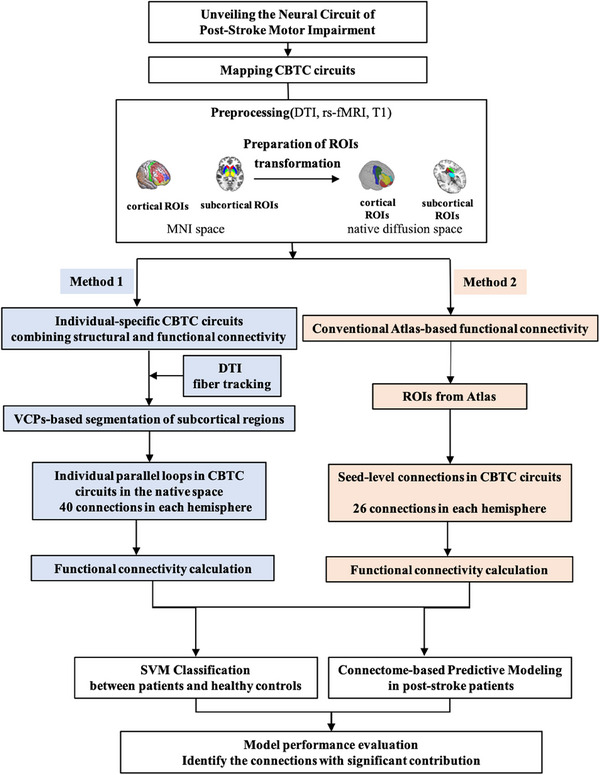
This study investigated alterations in functional connectivity (FC) within cortico-basal ganglia-thalamo-cortical (CBTC) circuits and identified critical connections influencing poststroke motor recovery, offering insights into optimizing brain modulation strategies to address the limitations of traditional single-target stimulation. We delineated individual-specific parallel loops of CBTC through probabilistic tracking and voxel connectivity profiles-based segmentation and calculated FC values in poststroke patients and healthy controls, comparing with conventional atlas-based FC calculation. Support vector machine (SVM) analysis distinguished poststroke patients from controls. Connectome-based predictive modeling (CPM) used FC values within CBTC circuits to predict upper limb motor function. Poststroke patients exhibited decreased ipsilesional connectivity within the individual-specific CBTC circuits. SVM analysis achieved 82.8% accuracy, 76.6% sensitivity, and 89.1% specificity using individual-specific parallel loops. Additionally, CPM featuring positive connections/all connections significantly predicted Fugl-Meyer assessment of upper extremity scores. There were no significant differences in the group comparisons of conventional atlas-based FC values, and the FC values resulted in SVM accuracy of 75.0%, sensitivity of 67.2%, and specificity of 82.8%, with no significant CPM capability. Individual-specific parallel loops show superior predictive power for assessing upper limb motor function in poststroke patients. Precise mapping of the disease-related circuits is essential for understanding poststroke brain reorganization.
Keywords: cortico–basal ganglia–thalamo–cortical circuits; motor impairment; stroke.
© 2024 The Author(s). MedComm published by Sichuan International Medical Exchange & Promotion Association (SCIMEA) and John Wiley & Sons Australia, Ltd.
Conflict of interest statement
The authors disclose no potential conflict of interest.
Figures
References
-
- Stinear DC, Prediction of recovery of motor function after stroke. 2010;9. - PubMed
-
- Schiemanck SK, Kwakkel G, Post MWM, Kappelle LJ, Prevo AJH. Predicting long‐term independency in activities of daily living after middle cerebral artery stroke: does information from MRI have added predictive value compared with clinical information?. Stroke. 2006;37(4):1050‐1054. - PubMed
-
- Lefaucheur JP, André‐Obadia N, Antal A, et al. Evidence‐based guidelines on the therapeutic use of repetitive transcranial magnetic stimulation (rTMS). Clinical Neurophysiology. 2014;125(11):2150‐2206. - PubMed
LinkOut - more resources
Full Text Sources