


Overview and Methods for the Youth Risk Behavior Surveillance System - United States, 2023
- PMID: 39378301
- PMCID: PMC11559678
- DOI: 10.15585/mmwr.su7304a1
Overview and Methods for the Youth Risk Behavior Surveillance System - United States, 2023
Abstract
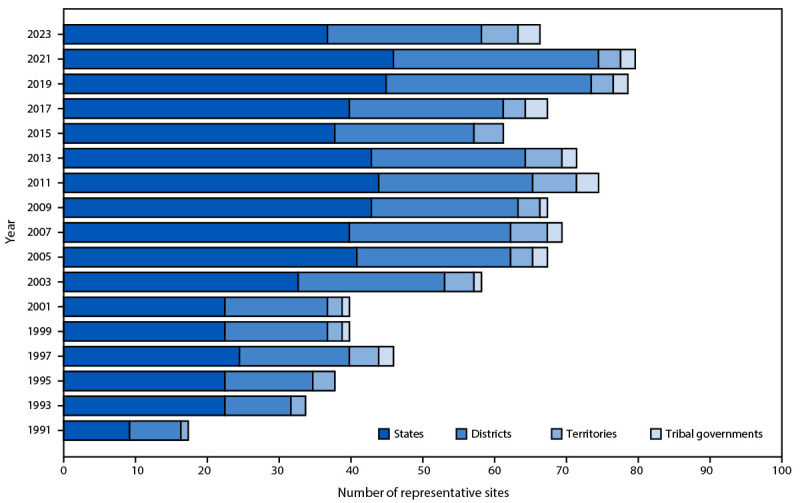
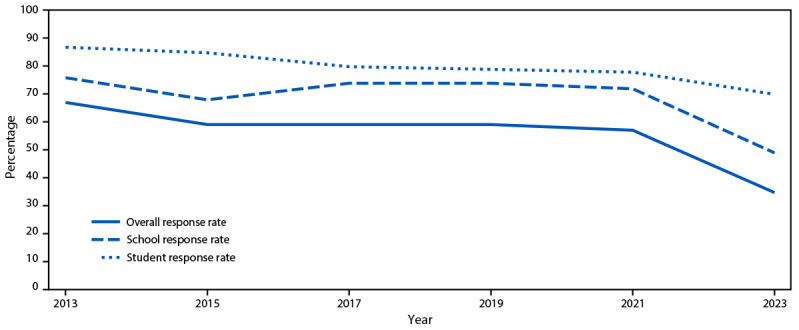
The Youth Risk Behavior Surveillance System (YRBSS) is a set of surveys that tracks a broad range of behaviors, experiences, and conditions that can lead to poor health among high school students. The system includes a nationally representative Youth Risk Behavior Survey (YRBS) and separate school-based YRBSs conducted by states, tribes, territories, and local school districts. For the 2023 national YRBS, CDC made changes to the sampling method, survey administration mode, and questionnaire. Specifically, the sampling design added an American Indian or Alaska Native (AI/AN) supplemental sample so that separate, precise estimates could be made for AI/AN high school students, in addition to the usual sample designed to provide nationally representative data for the population of students in grades 9-12. To decrease the time needed to collect and process data, CDC changed the survey administration mode from paper-and-pencil scannable booklets to a tablet-based electronic survey. To provide national data on topics of emerging interest, CDC added new questions to the questionnaire. These new questions assessed social media use, experiences of racism at school, adverse childhood experiences, transgender identity, consent for sexual contact, and unfair discipline at school. Public health practitioners and researchers can use YRBSS data to examine the prevalence of youth health behaviors, experiences, and conditions; monitor trends; and guide interventions. This overview report describes 2023 YRBSS survey methodology, including sampling, data collection, data processing, weighting, and data analyses. The 2023 YRBS participation map, survey response rates, and a detailed examination of student demographic characteristics are included in this report. During 2023, in addition to the national YRBS, 68 site-level surveys were administered to high school students in 39 states, three tribal governments, five territories, and 21 local school districts. These site-level surveys use site-specific questionnaires that are similar to the national YRBS questionnaire but are modified to meet sites' needs. This overview and methods report is one of 11 featured in this MMWR supplement, which reports results from the 2023 national YRBS but does not include data from the 68 site-level surveys. Each report is based on data collected using methods presented in this overview report. A full description of YRBSS results and downloadable data are available (https://www.cdc.gov/yrbs/index.html).
Conflict of interest statement
All authors have completed and submitted the International Committee of Medical Journal Editors form for disclosure of potential conflicts of interest. Jonetta Mpofu reported being a board member of the American School Health Association. Lindsay Trujillo reported receiving a grant from Social & Scientific Systems, Inc. No other potential conflicts of interest were disclosed.
Figures

References
-
- Bureau of Indian Education. Tribally controlled schools. Washington, DC: US Department of Interior, Bureau of Indian Education. https://www.bie.edu/topic-page/tribally-controlled-schools
-
- Borgogna NC, McDermott RC, Aita SL, Kridel MM. Anxiety and depression across gender and sexual minorities: implications for transgender, gender nonconforming, pansexual, demisexual, asexual, queer, and questioning individuals. Psychol Sex Orientat Gend Divers 2019;6:54–63. 10.1037/sgd0000306 - DOI
MeSH terms
LinkOut - more resources
Full Text Sources