


Understanding irritability through the lens of self-regulatory control processes in children and adolescents: a systematic review
- PMID: 39379596
- PMCID: PMC12122652
- DOI: 10.1007/s00787-024-02591-8
Understanding irritability through the lens of self-regulatory control processes in children and adolescents: a systematic review
Abstract
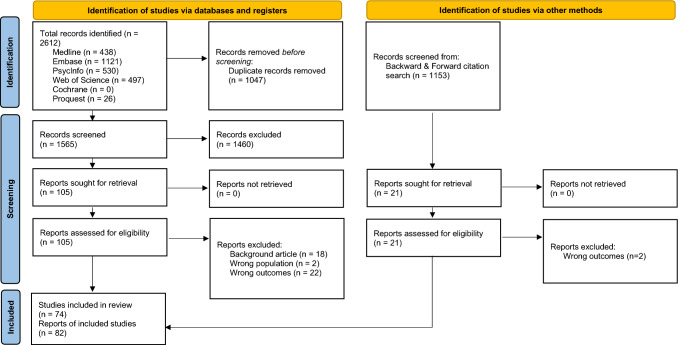
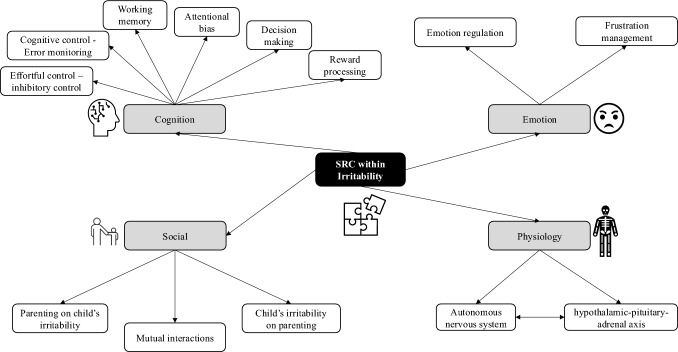
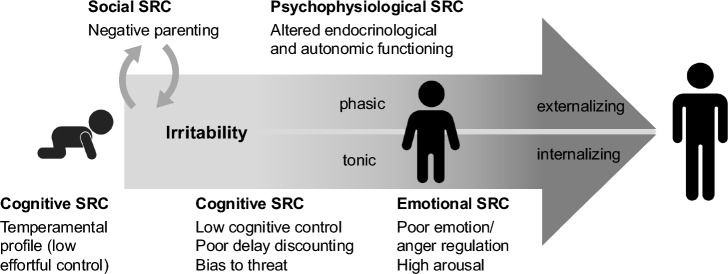
Among youths, pathological irritability is highly prevalent and severely disabling. As a frequent symptom, it often leads to referrals to child and adolescent mental health services. Self-regulatory control (SRC) processes are a set of socio-psycho-physiological processes that allow individuals to adapt to their ever-changing environments. This conceptual framework may enhance the current understanding of the cognitive, emotional, behavioural and social dysregulations underlying irritability. The present systematic review (PROSPERO registration: #CRD42022370390) aims to synthesize existing studies that examine irritability through the lens of SRC processes among youths (< 18 years of age). We conducted a comprehensive literature search among six bibliographic databases: Embase.com, Medline ALL Ovid, APA PsycInfo Ovid, Web of Science Core Collection, the Cochrane Database of Systematic Reviews Wiley and ProQuest Dissertations & Theses A&I. Additional searches were performed using citation tracing strategies. The retrieved reports totalled 2612, of which we included 82 (i.e., articles) from 74 studies. More than 85% of reports were published during the last 6 years, highlighting the topicality of this work. The studies sampled n = 26,764 participants (n = 12,384 girls and n = 12,905 boys, n = 1475 no information) with an average age of 8.08 years (SD = 5.26). The included reports suggest that irritability has an association with lower effortful control, lower cognitive control and delay intolerance. Further, evidence indicates both cross-sectional and longitudinal associations between irritability and a lack of regulation skills for positive and negative emotions, particularly anger. Physiological regulation seems to moderate the association between irritability and psychopathology. Finally, the mutual influence between a child's irritability and parenting practice has been established in several studies. This review uses the lens of SRC to illustrate the current understanding of irritability in psychopathology, discusses important gaps in the literature, and highlights new avenues for further research.
Keywords: Adolescents; Autonomic regulation; Children; Effortful control; Executive function; Frustration management; Irritability; Parenting; Self-regulatory control; Systematic review.
© 2024. The Author(s).
Conflict of interest statement
Declarations. Conflict of interest: The authors declare no competing interests.
Figures
References
-
- Brotman MA, Kircanski K, Stringaris A, Pine DS, Leibenluft E (2017) Irritability in youths: a translational model. Am J Psychiatry 174(6):520–532 - PubMed
-
- Collishaw S, Maughan B, Natarajan L, Pickles A (2010) Trends in adolescent emotional problems in England: a comparison of two national cohorts twenty years apart. J Child Psychol Psychiatry 51(8):885–894 - PubMed
Publication types
MeSH terms
Grants and funding
LinkOut - more resources
Full Text Sources
Research Materials
Miscellaneous
