Functional diversification process of opsin genes for teleost visual and pineal photoreceptions
- PMID: 39379743
- PMCID: PMC11461388
- DOI: 10.1007/s00018-024-05461-3
Functional diversification process of opsin genes for teleost visual and pineal photoreceptions
Abstract
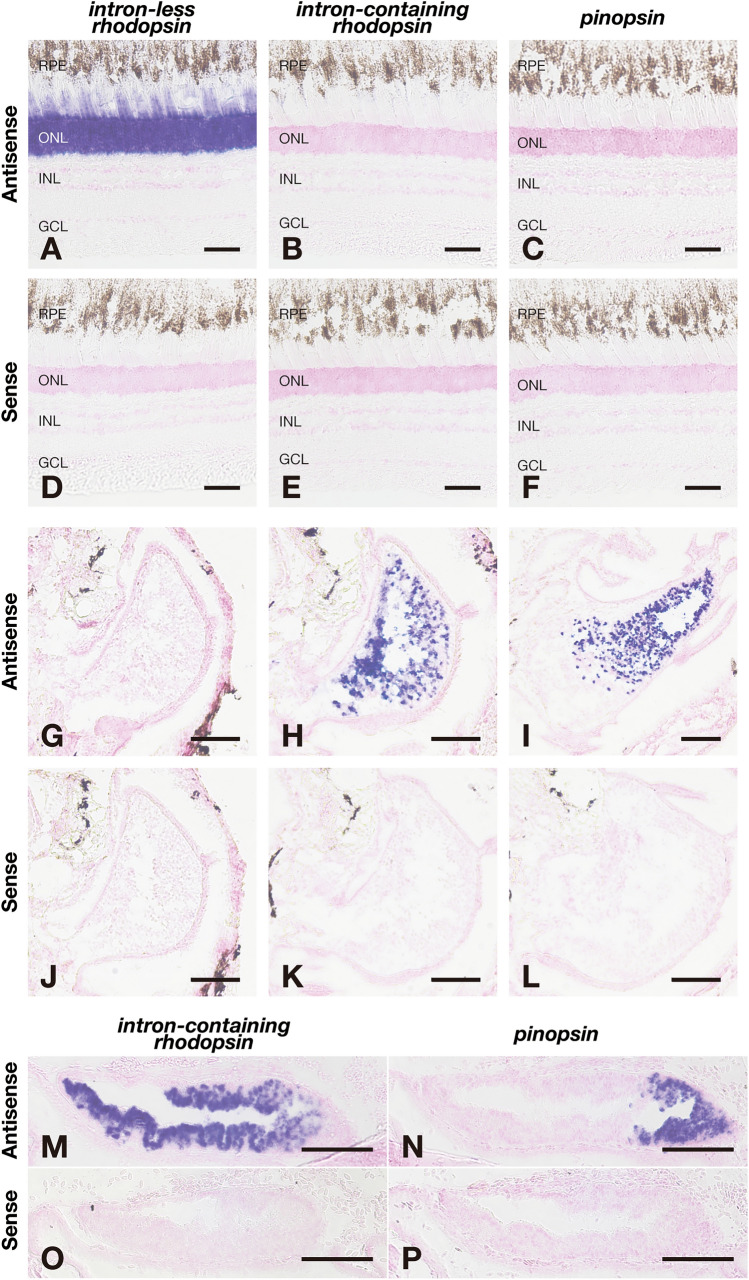
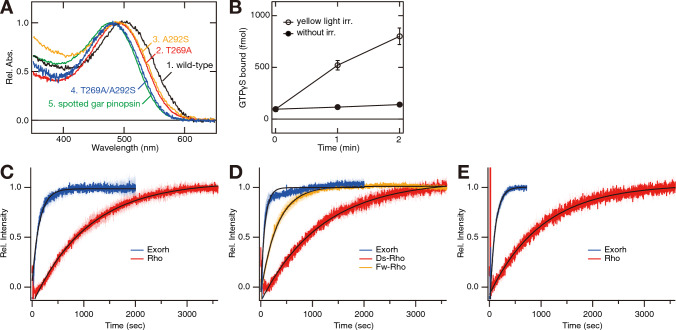
Most vertebrates have a rhodopsin gene with a five-exon structure for visual photoreception. By contrast, teleost fishes have an intron-less rhodopsin gene for visual photoreception and an intron-containing rhodopsin (exo-rhodopsin) gene for pineal photoreception. Here, our analysis of non-teleost and teleost fishes in various lineages of the Actinopterygii reveals that retroduplication after branching of the Polypteriformes produced the intron-less rhodopsin gene for visual photoreception, which converted the parental intron-containing rhodopsin gene into a pineal opsin in the common ancestor of the Teleostei. Additional analysis of a pineal opsin, pinopsin, shows that the pinopsin gene functions as a green-sensitive opsin together with the intron-containing rhodopsin gene for pineal photoreception in tarpon as an evolutionary intermediate state but is missing in other teleost fishes, probably because of the redundancy with the intron-containing rhodopsin gene. We propose an evolutionary scenario where unique retroduplication caused a "domino effect" on the functional diversification of teleost visual and pineal opsin genes.
Keywords: Opsin; Pineal gland; Pinopsin; Retina; Retroduplication; Rhodopsin.
© 2024. The Author(s).
Conflict of interest statement
The authors declare no competing interests.
Figures