


Pediatric migraine is characterized by traits of ecological and metabolic dysbiosis and inflammation
- PMID: 39379796
- PMCID: PMC11462686
- DOI: 10.1186/s10194-024-01871-7
Pediatric migraine is characterized by traits of ecological and metabolic dysbiosis and inflammation
Abstract
Background: Recently, there has been increasing interest in the possible role of the gut microbiota (GM) in the onset of migraine. Our aim was to verify whether bacterial populations associated with intestinal dysbiosis are found in pediatric patients with migraine. We looked for which metabolic pathways, these bacteria were involved and whether they might be associated with gut inflammation and increased intestinal permeability.
Methods: Patients aged between 6 and 17 years were recruited. The GM profiling was performed by the 16S rRNA metataxonomics of faecal samples from 98 patients with migraine and 98 healthy subjects. Alpha and beta diversity analyses and multivariate and univariate analyses were applied to compare the gut microbiota profiles between the two group. To predict functional metabolic pathways, we used phylogenetic analysis of communities. The level of indican in urine was analyzed to investigate the presence of metabolic dysbiosis. To assess gut inflammation, increased intestinal permeability and the mucosal immune activation, we measured the plasmatic levels of lipopolysaccharide, occludin and IgA, respectively.
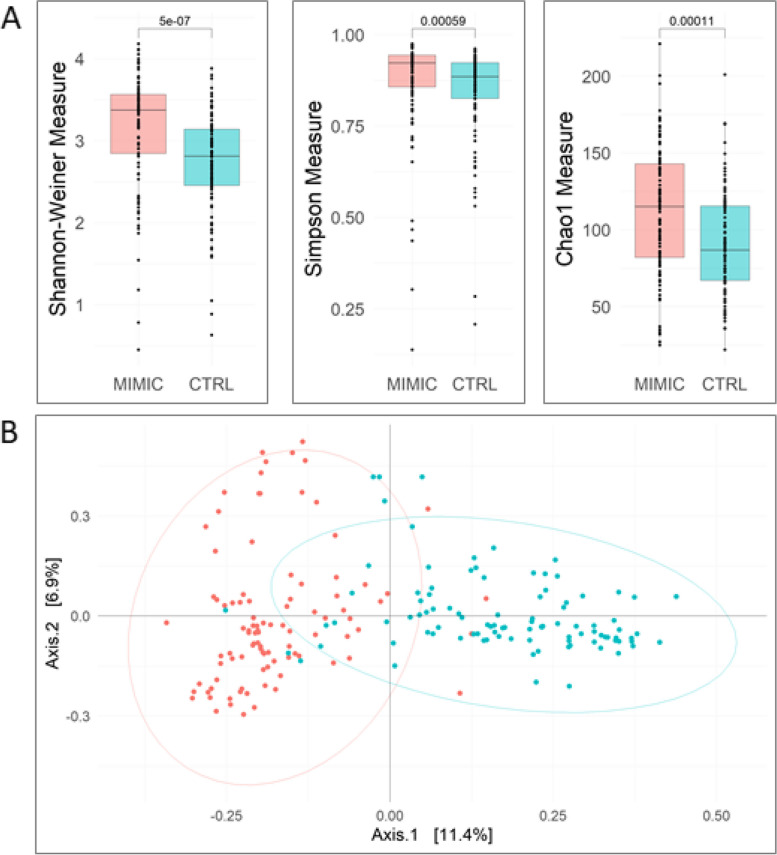
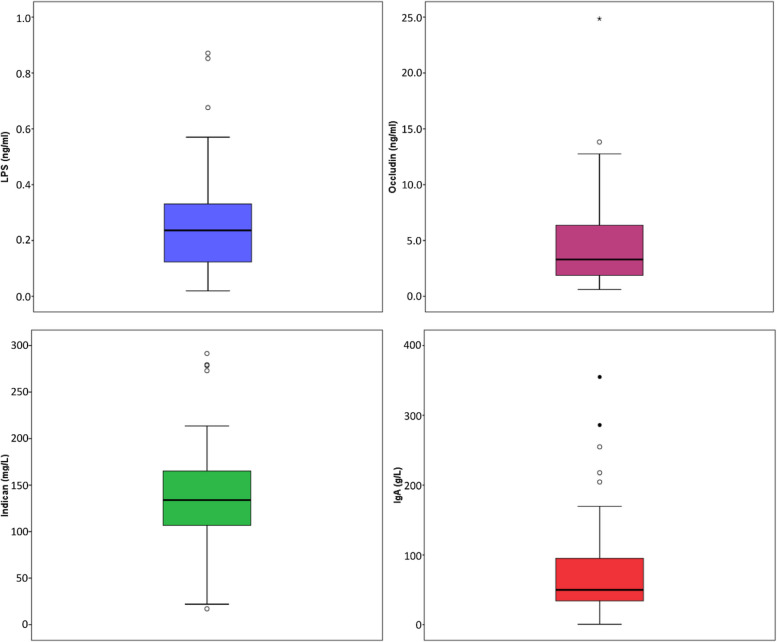
Results: The α-diversity analysis revealed a significant increase of bacterial richness in the migraine group. The β-diversity analysis showed significant differences between the two groups indicating gut dysbiosis in patients with migraine. Thirty-seven metabolic pathways were increased in the migraine group, which includes changes in tryptophan and phenylalanine metabolism. The presence of metabolic dysbiosis was confirmed by the increased level of indican in urine. Increased levels of plasmatic occludin and IgA indicated the presence of intestinal permeability and mucosal immune activation. The plasmatic LPS levels showed a low intestinal inflammation in patients with migraine.
Conclusions: Pediatric patients with migraine present GM profiles different from healthy subjects, associated with metabolic pathways important in migraine.
Keywords: Dysbiosis; Gut microbiota; migraine; tryptophan; Gut permeability; IgA; Indican; Inflammation; Lipopolysaccharide; Occludin.
© 2024. The Author(s).
Conflict of interest statement
The authors declare no competing interests.
Figures


References
-
- Abu-Arafeh I, Razak S, Sivaraman B, Graham C (2010) Prevalence of headache and migraine in children and adolescents: a systematic review of population-based studies. Develop Med Child Neuro 52:1088–1097. 10.1111/j.1469-8749.2010.03793.x - PubMed
-
- Arneth BM (2018) Gut–brain axis biochemical signalling from the gastrointestinal tract to the central nervous system: gut dysbiosis and altered brain function. Postgrad Med J 94:446–452. 10.1136/postgradmedj-2017-135424 - PubMed
-
- Ashina M, Hansen JM, Olesen J (2013) Pearls and pitfalls in human phar-macological models of migraine: 30 years’ experience. Cephalalgia 33:540–553. 10.1177/0333102412475234 - PubMed
MeSH terms
Substances
LinkOut - more resources
Full Text Sources
Medical
Miscellaneous
