


Acceptability of the power over pain portal among patients awaiting tertiary care consultation: A qualitative study of patients' perceptions
- PMID: 39381808
- PMCID: PMC11459597
- DOI: 10.1177/20552076241288748
Acceptability of the power over pain portal among patients awaiting tertiary care consultation: A qualitative study of patients' perceptions
Abstract
Objective: Chronic pain affects approximately 7.6 million Canadians and access to care remains an issue. The Power Over Pain (POP) Portal offers immediate access to evidence-based resources ranging from low- (e.g. education, self-management), to high- (e.g. individual counseling) intensity. We explored the POP Portal's acceptability, usability, and perceived usefulness among patients newly referred to a tertiary care pain clinic.
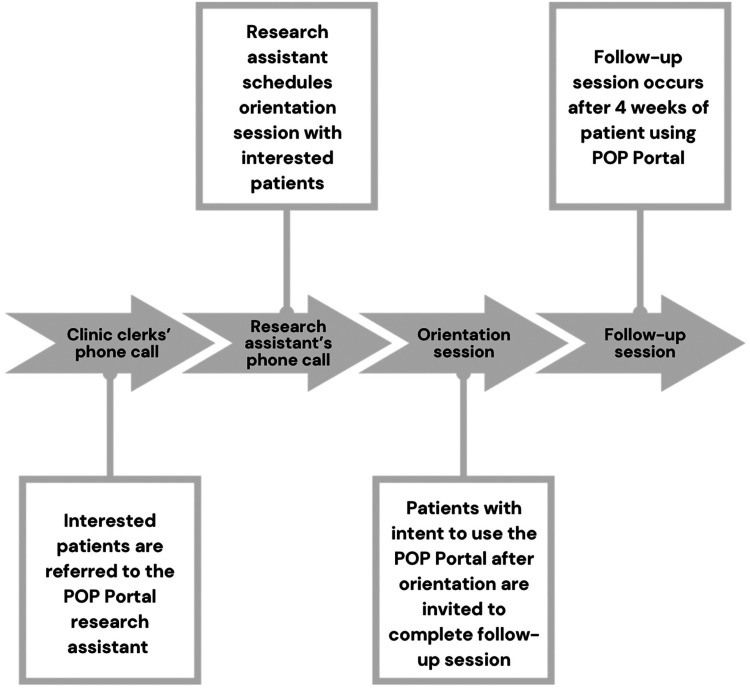
Methods: We used a descriptive, qualitative approach with a prospective cohort of 60 adult patients recently referred to The Ottawa Hospital Pain Clinic. Patients were offered an orientation session and asked to participate in a seven-week follow-up interview. Data were thematically analyzed in an iterative process, whereby responses were reviewed and coded by two members of the research team.
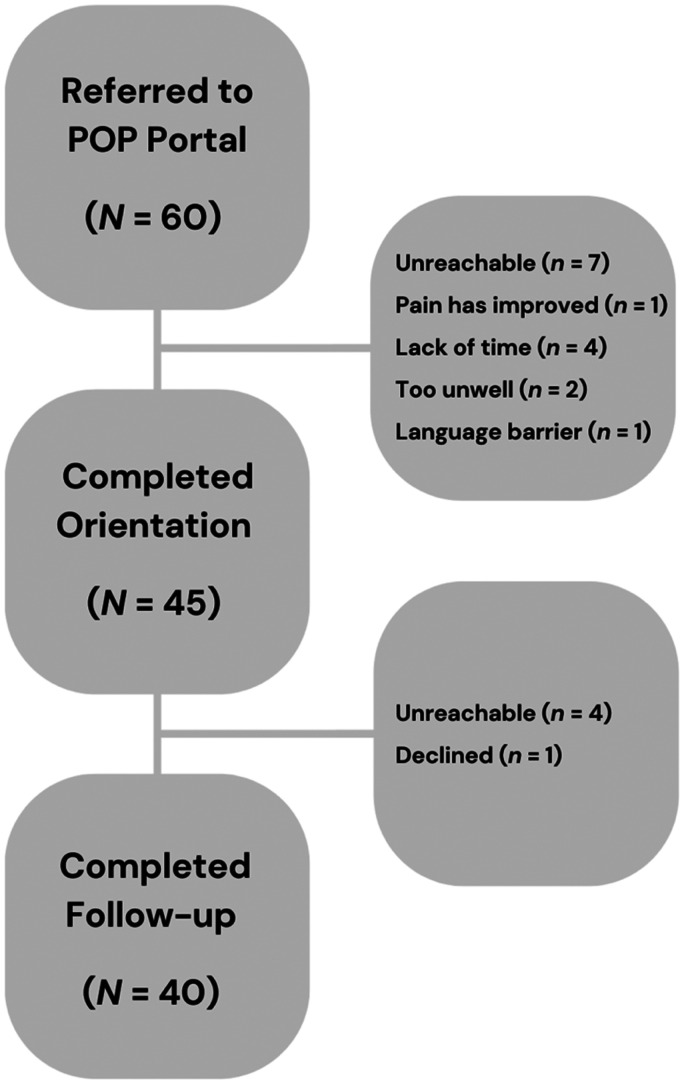
Results: Of the 60 patients referred to the POP Portal by clinic clerks, 45 participated in the orientation session, and 40 completed a four-week follow-up. All 40 patients had used the POP Portal and recommended that we continue to offer the POP Portal to patients awaiting care. We identified overarching themes of acceptability (five subthemes), usability (ten subthemes), accessibility (three subthemes), and patient value of the POP Portal (three subthemes). This includes (1) the POP Portal provides easy access to chronic pain resources; (2) the POP Portal is helpful in developing an understanding of chronic pain; and (3) improvements to the POP Portal are needed to increase usability and foster a user-friendly experience.
Conclusions: The POP Portal offers accessible and diverse resources for people living with pain awaiting a tertiary care consultation; however, patients would like to see resources specific to diagnosis. Improvements are suggested to allow greater increase the POP Portal usability.
Keywords: Chronic pain; self-management; telemedicine.
© The Author(s) 2024.
Conflict of interest statement
The authors declared no potential conflicts of interest with respect to the research, authorship, and/or publication of this article.
Figures
References
-
- Canadian Pain Task Force. Canadian pain task force report: March 2021. Ottawa, ON. 2021.
-
- Dassieu L, Choinière M, Saint-Jean L, et al. Frequency and characteristics of patient exclusion criteria in Canadian multidisciplinary pain treatment facilities: a cross-sectional study. Can J Anesth 2022; 69: 849–858. - PubMed
-
- Dear BF, Gandy M, Karin E, et al. The pain course: 12- and 24-month outcomes from a randomized controlled trial of an internet-delivered pain management program provided with different levels of clinician support. J Pain 2018; 19: 1491–1503. - PubMed
LinkOut - more resources
Full Text Sources
