


Enhancing the prediction of the invasiveness of pulmonary adenocarcinomas presenting as pure ground-glass nodules: Integrating intratumor heterogeneity score with clinical-radiological features via machine learning in a multicenter study
- PMID: 39381817
- PMCID: PMC11459516
- DOI: 10.1177/20552076241289181
Enhancing the prediction of the invasiveness of pulmonary adenocarcinomas presenting as pure ground-glass nodules: Integrating intratumor heterogeneity score with clinical-radiological features via machine learning in a multicenter study
Abstract
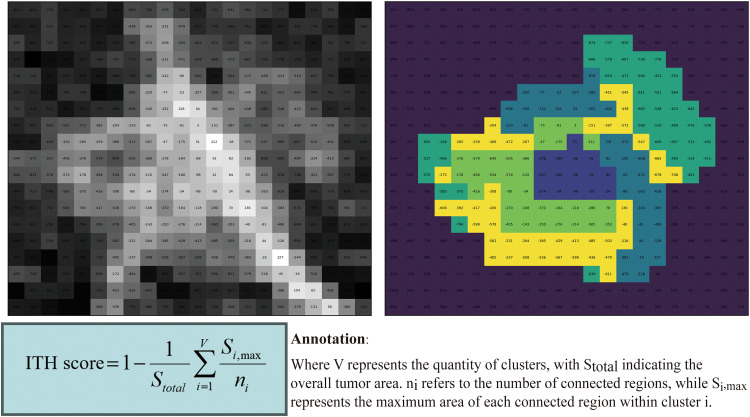
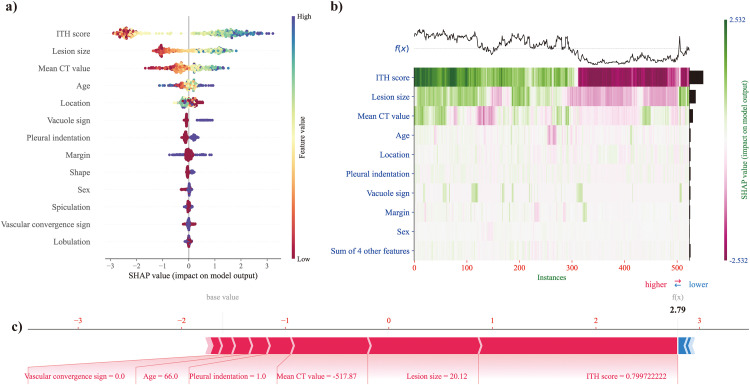
Objective: The invasiveness of lung adenocarcinoma significantly impacts clinical decision-making. However, assessing this invasiveness preoperatively, especially when it manifests as pure ground-glass nodules (pGGN) on CT scans, poses challenges. This study aims to quantify intratumor heterogeneity (ITH) and determine whether the ITH score can enhance the accuracy of invasiveness predictions.
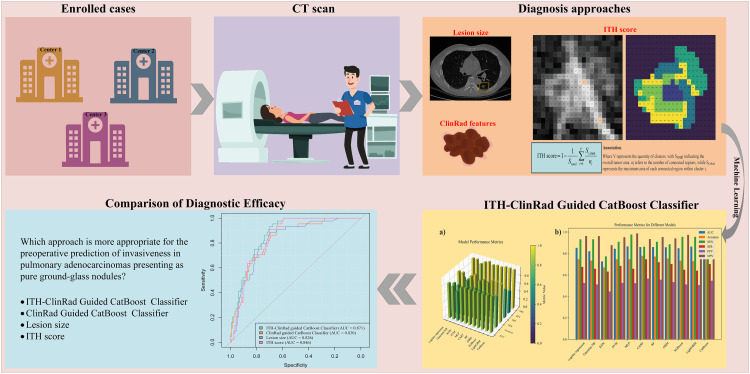
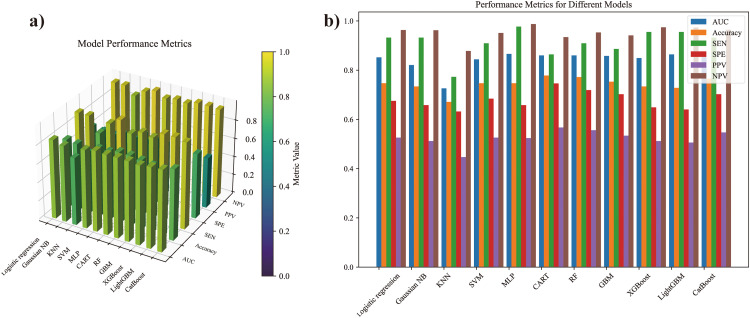
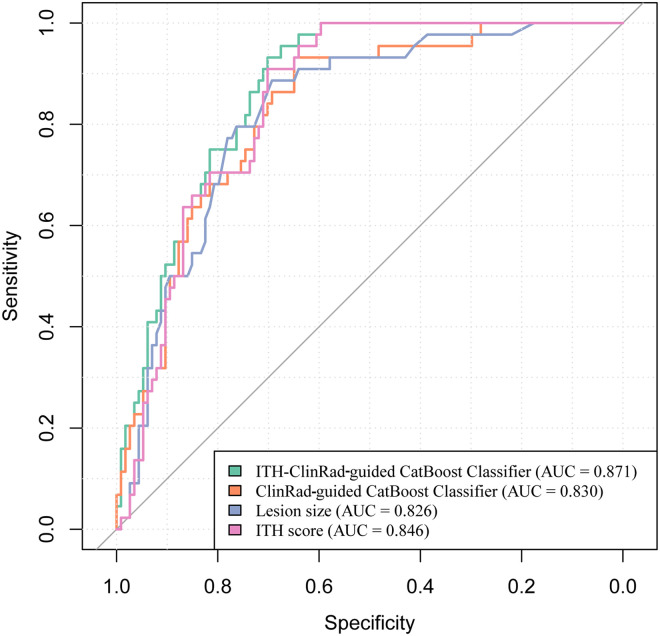
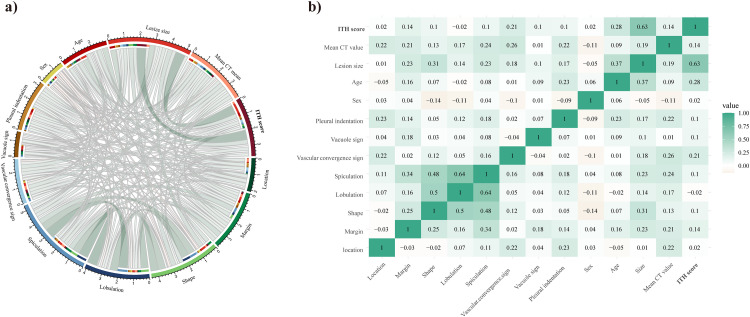
Methods: A total of 524 patients with lung adenocarcinomas presenting as pGGN were enrolled in the study, with 177 (33.78%) receiving a pathologic diagnosis of invasiveness. Four diagnostic approaches were developed to predict the invasiveness of lung adenocarcinoma presenting as pGGN: (1) conventional lesion size, (2) ITH score, (3) clinical-radiological features (ClinRad), and (4) integration of the ITH score with ClinRad. ClinRad alone or in combination with the ITH score served as the input for 11 machine learning approaches. The trained models were evaluated in an independent validation cohort, and the area under the curve (AUC) was calculated to assess classification performance.
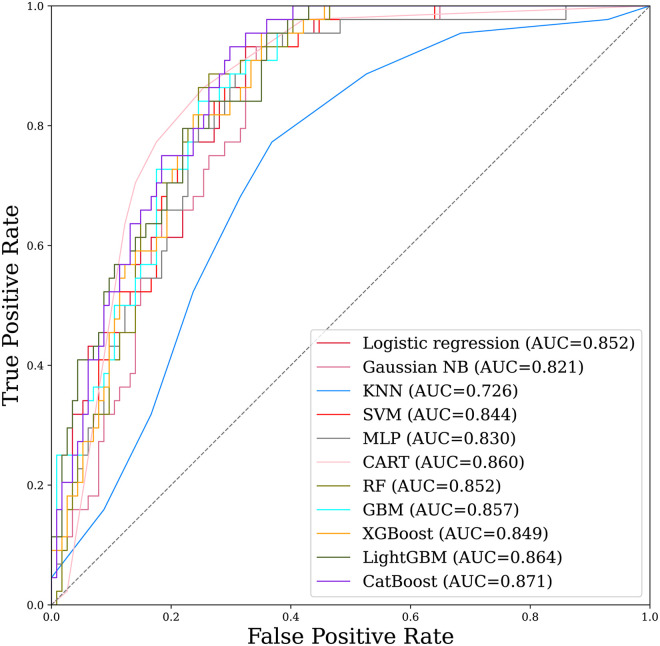
Results: The conventional lesion size showed the lowest performance, with an AUC of 0.826 (95% confidence interval [CI]: 0.758-0.894), while the ITH score outperformed it with an AUC of 0.846 (95% CI: 0.787-0.905). The CatBoost model performed best when the ITH score and ClinRad were both used as input features, leading to the development of an ITH-ClinRad-guided CatBoost classifier. CatBoost also excelled with ClinRad alone, resulting in a ClinRad-guided CatBoost classifier with an AUC of 0.830 (95% CI: 0.764-0.896), surpassed by the ITH-ClinRad-guided CatBoost classifier with an AUC of 0.871 (95% CI: 0.818-0.924).
Conclusion: The ITH-ClinRad-guided CatBoost classifier emerges as a promising tool with significant potential to revolutionize the management of lung adenocarcinomas presenting as pGGNs.
Keywords: Intratumor heterogeneity; invasiveness; machine learning; pulmonary adenocarcinoma; pure ground-glass nodule.
© The Author(s) 2024.
Conflict of interest statement
The authors declared no potential conflicts of interest with respect to the research, authorship, and/or publication of this article.
Figures
References
-
- Mazzone PJ, Lam L. Evaluating the patient with a pulmonary nodule: a review. JAMA 2022; 327: 264–273. - PubMed
-
- Kobayashi Y, Mitsudomi T, Sakao Y, et al. Genetic features of pulmonary adenocarcinoma presenting with ground-glass nodules: the differences between nodules with and without growth. Ann Oncol 2015; 26:156–161. - PubMed
-
- Lin MW, Su KY, Su TJ, et al. Clinicopathological and genomic comparisons between different histologic components in combined small cell lung cancer and non-small cell lung cancer. Lung Cancer 2018; 125: 282–290. - PubMed
LinkOut - more resources
Full Text Sources
