


Internet-delivered cognitive behaviour therapy for affective disorders, anxiety disorders and somatic conditions: An updated systematic umbrella review
- PMID: 39381818
- PMCID: PMC11459498
- DOI: 10.1177/20552076241287643
Internet-delivered cognitive behaviour therapy for affective disorders, anxiety disorders and somatic conditions: An updated systematic umbrella review
Abstract
Background: Internet-delivered cognitive behaviour therapy (ICBT), which can involve guidance from a clinician, continues to be a way to deliver psychological treatments. A previous umbrella review identified moderate-to-large effect sizes favouring ICBT compared to control conditions when treating major depression and anxiety disorders. Given the rapid developments in the field, an updated umbrella review of available meta-analyses can show other conditions and subpopulations for which ICBT is effective. The aim of the study was to provide an expanded overview of the efficacy of ICBT for a broader range of adult psychiatric and somatic conditions.
Methods: We conducted an updated search of the literature since the publication of the previous umbrella review back in 2019 and up until March 2024. Five different search engines were used (Medline (OVID), Scopus, Web of Science, Cochrane library and CINAHL). The search was expanded to include additional psychiatric conditions (e.g., suicidal ideation) and somatic conditions (e.g., tinnitus and chronic pain).
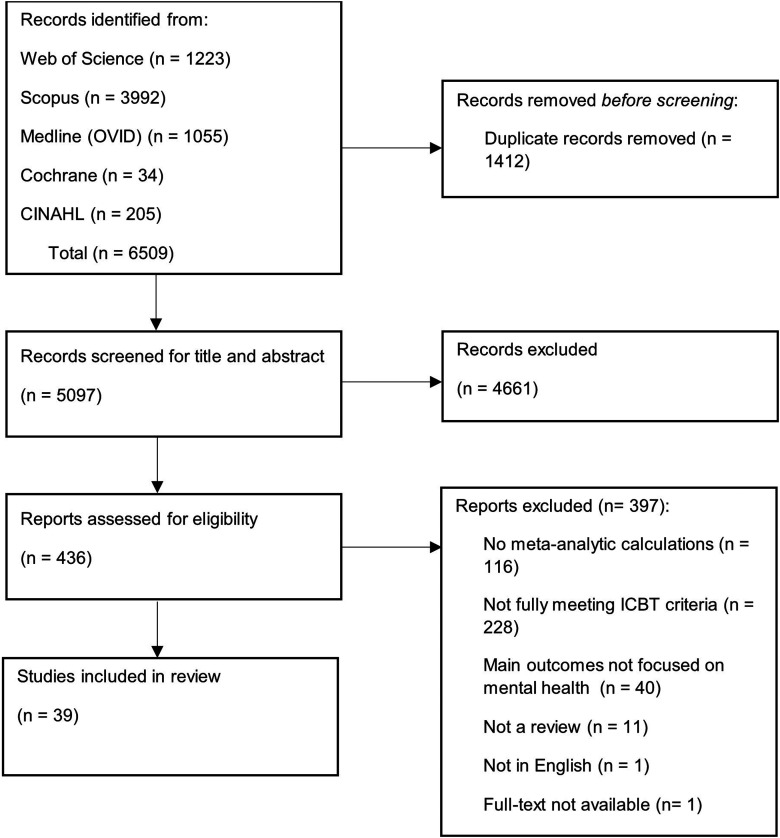
Results: Of the 6509 identified articles, 39 meta-analyses met the inclusion criteria. In these meta-analyses 19 unique outcomes were represented. The most common outcome was symptoms of major depressive disorder, followed by symptoms of anxiety. Effect sizes for the comparisons against control conditions ranged between small (e.g., SMD = 0.10 for stress in employees) to large (e.g., SMD = 1.20 for depressive symptoms among older adults).
Conclusions: ICBT can generally reduce symptoms of a wide range of conditions including both psychiatric and somatic conditions, as well as other mental health problems. This updated review of available meta-analyses also indicated that ICBT has been successful in treating symptoms in different subpopulations such as older adults and students. However, some knowledge gaps remain, including the use of ICBT for psychotic disorders, and the quality of the available meta-analyses' points to a need for more stringent methodological procedures.
Keywords: ICBT; cognitive behaviour therapy; eHealth; internet intervention; psychiatric disorders; somatic disorders.
© The Author(s) 2024.
Conflict of interest statement
The authors declared no potential conflicts of interest with respect to the research, authorship and/or publication of this article.
References
-
- Thoma N, Pilecki B, McKay D. Contemporary cognitive behavior therapy: a review of theory, history, and evidence. Psychodyn Psychiatry 2015; 43: 423–461. - PubMed
-
- Cuijpers P, Berking M, Andersson G, et al. A meta-analysis of cognitive-behavioural therapy for adult depression: alone and in comparison with other treatments. Can. J. Psychiatry 2013; 58: 376–385. - PubMed
-
- van Straten A, van der Zweerde T, Kleiboer A, et al. Cognitive and behavioral therapies in the treatment of insomnia: a meta-analysis. Sleep Med Rev 2018; 38: 3–16. - PubMed
Publication types
LinkOut - more resources
Full Text Sources
Miscellaneous
