


Epigenetic landscape reorganisation and reactivation of embryonic development genes are associated with malignancy in IDH-mutant astrocytoma
- PMID: 39382765
- PMCID: PMC11464554
- DOI: 10.1007/s00401-024-02811-0
Epigenetic landscape reorganisation and reactivation of embryonic development genes are associated with malignancy in IDH-mutant astrocytoma
Abstract
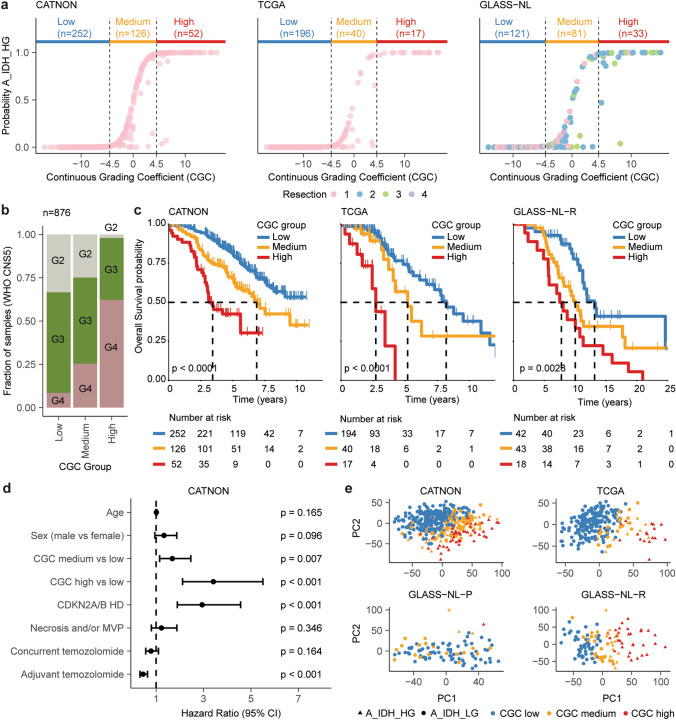
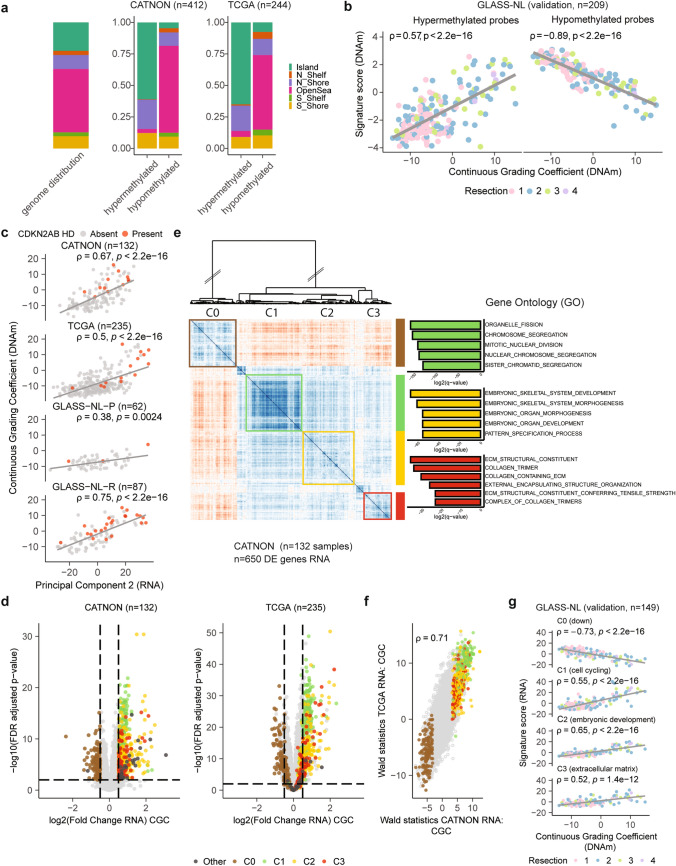
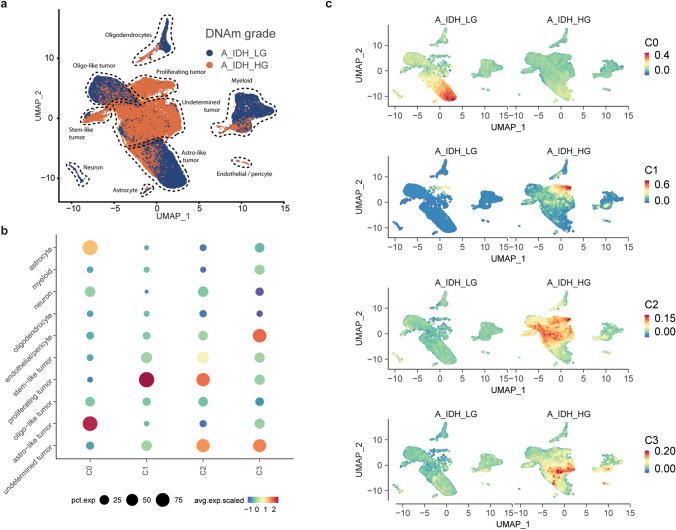
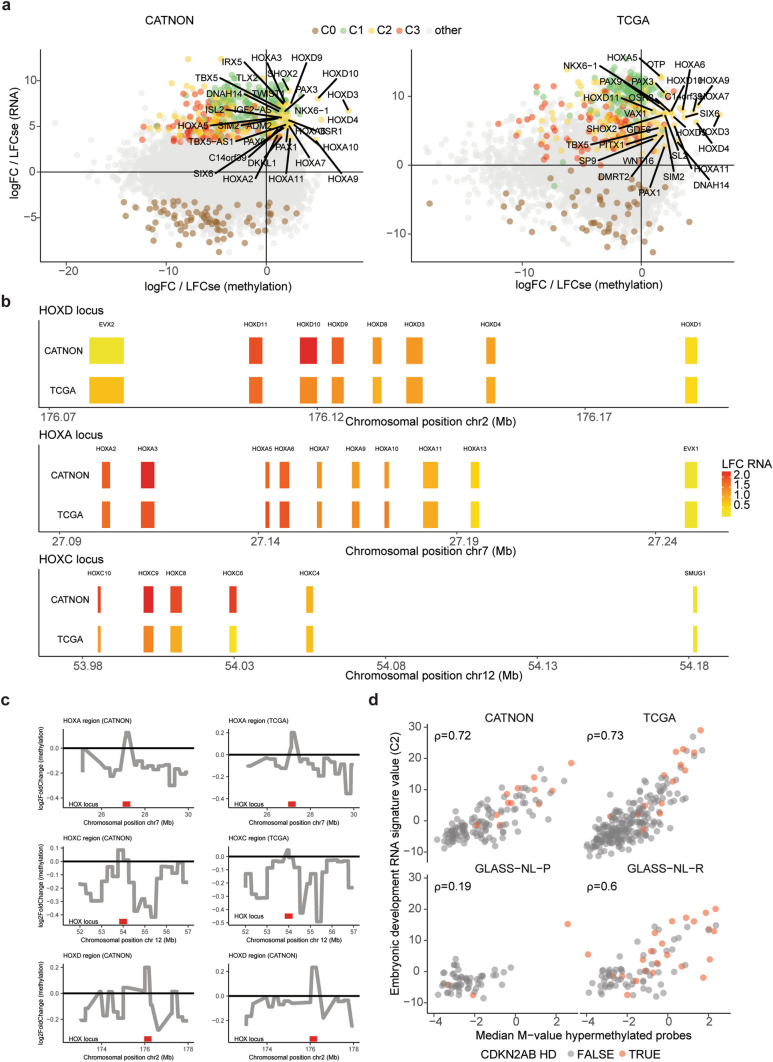
Accurate grading of IDH-mutant gliomas defines patient prognosis and guides the treatment path. Histological grading is challenging, and aside from CDKN2A/B homozygous deletions in IDH-mutant astrocytomas, there are no other objective molecular markers used for grading. RNA-sequencing was conducted on primary IDH-mutant astrocytomas (n = 138) included in the prospective CATNON trial, which was performed to assess the prognostic effect of adjuvant and concurrent temozolomide. We integrated the RNA-sequencing data with matched DNA-methylation and NGS data. We also used multi-omics data from IDH-mutant astrocytomas included in the TCGA dataset and validated results on matched primary and recurrent samples from the GLASS-NL study. Since discrete classes do not adequately capture grading of these tumours, we utilised DNA-methylation profiles to generate a Continuous Grading Coefficient (CGC) based on classification scores from a CNS-tumour classifier. CGC was an independent predictor of survival outperforming current WHO-CNS5 and methylation-based classification. Our RNA-sequencing analysis revealed four distinct transcription clusters that were associated with (i) upregulation of cell cycling genes; (ii) downregulation of glial differentiation genes; (iii) upregulation of embryonic development genes (e.g. HOX, PAX, and TBX) and (iv) upregulation of extracellular matrix genes. The upregulation of embryonic development genes was associated with a specific increase of CpG island methylation near these genes. Higher grade IDH-mutant astrocytomas have DNA-methylation signatures that, on the RNA level, are associated with increased cell cycling, tumour cell de-differentiation and extracellular matrix remodelling. These combined molecular signatures can serve as an objective marker for grading of IDH-mutant astrocytomas.
Keywords: Astrocytoma; DNA methylation; HOX; IDH; Molecular grading; RNA sequencing.
© 2024. The Author(s).
Conflict of interest statement
P.M. Clement reports other support from EORTC during the conduct of the study; fees (to institution) from Bayer, Merck, Leo Pharma, Rakuten Medical, Takeda, and Bristol Myers Squibb (BMS); fees and nonfinancial support from MSD; and grants from AstraZeneca outside the submitted work; also fees for occasional advice to government agencies such as FAGG/EMA, as well as being a member of CTG (substitute) in Belgium. M.J. van den Bent reports consulting for Boehringer Ingelheim, F. Hoffman-La Roche, Fore Biotherapeutics, Genenta, Incyte Corporation, AnHeart therapeutics, Mundipharma, SymBio Pharma and Servier Affaires Medicales.
Figures

Update of
-
Epigenetic landscape reorganization and reactivation of embryonic development genes are associated with malignancy in IDH-mutant astrocytoma.bioRxiv [Preprint]. 2024 Mar 20:2024.03.19.585212. doi: 10.1101/2024.03.19.585212. bioRxiv. 2024. Update in: Acta Neuropathol. 2024 Oct 9;148(1):50. doi: 10.1007/s00401-024-02811-0. PMID: 38562747 Free PMC article. Updated. Preprint.
References
Publication types
MeSH terms
Substances
Grants and funding
LinkOut - more resources
Full Text Sources
Medical
Miscellaneous
