


Post-viral symptoms and conditions are more frequent in COVID-19 than influenza, but not more persistent
- PMID: 39385128
- PMCID: PMC11465902
- DOI: 10.1186/s12879-024-10059-y
Post-viral symptoms and conditions are more frequent in COVID-19 than influenza, but not more persistent
Abstract
Background: Post-viral symptoms have long been known in the medical community but have received more public attention during the COVID-19 pandemic. Many post-viral symptoms were reported as particularly frequent after SARS-CoV-2 infection. However, there is still a lack of evidence regarding the specificity, frequency and persistence of these symptoms in comparison to other viral infectious diseases such as influenza.
Methods: We investigated a large population-based cohort based on German routine healthcare data. We matched 573,791 individuals with a PCR-test confirmed SARS-CoV-2 infection from the year 2020 to contemporary controls without SARS-CoV-2 infection and controls from the last influenza outbreak in 2018 and followed them up to 18 months.
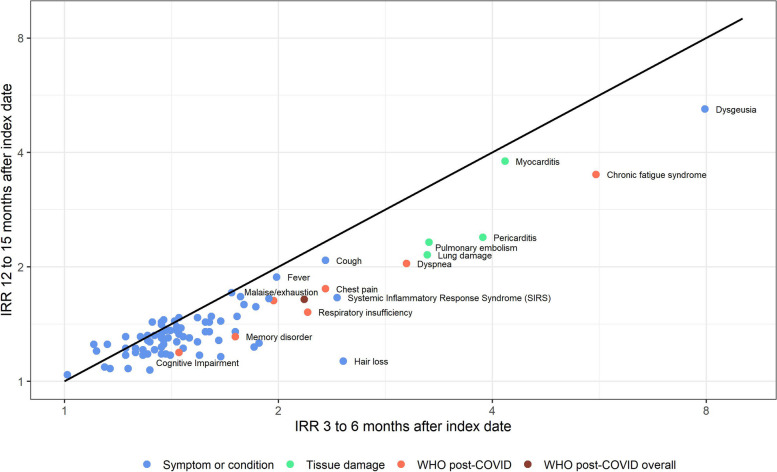
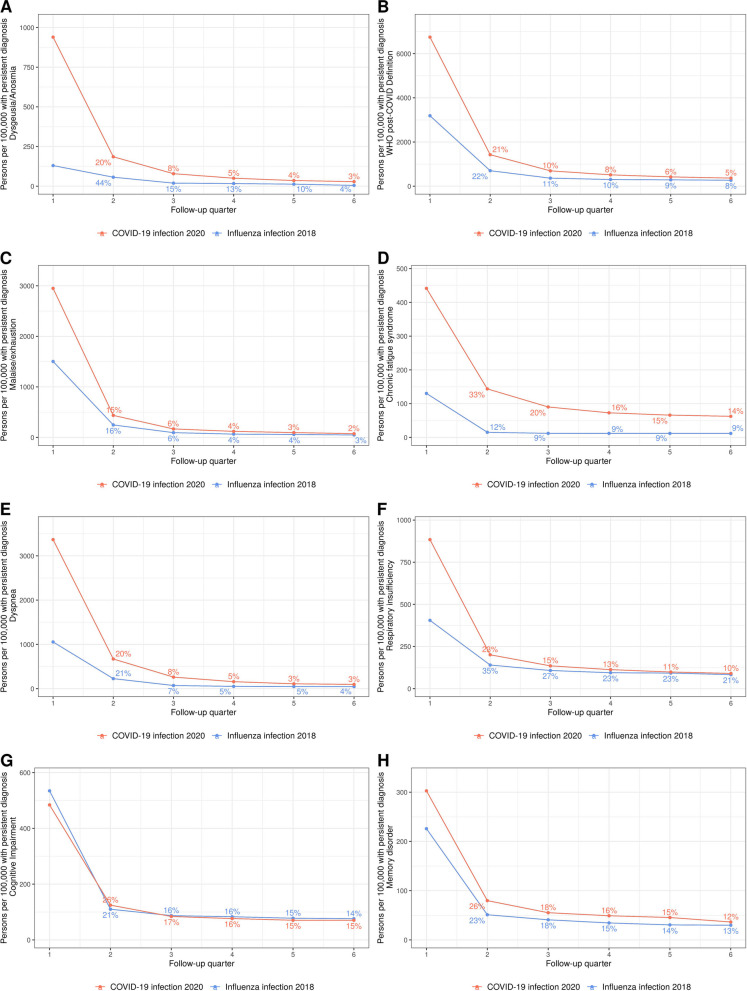
Results: We found that post-viral symptoms as defined for COVID-19 by the WHO as well as tissue damage were more frequent among the COVID-19 cohort than the influenza or contemporary control cohort. The persistence of post-viral symptoms was similar between COVID-19 and influenza.
Conclusion: Post-viral symptoms following SARS-CoV-2 infection constitute a substantial disease burden as they are frequent and often persist for many months. As COVID-19 is becoming endemic, the disease must not be trivialized. Research should focus on the development of effective treatments for post-viral symptoms.
Keywords: Claims data; Cohort study; Influenza; Post-COVID; SARS-CoV-2.
© 2024. The Author(s).
Conflict of interest statement
FT, FE, AV, ML, MS, GM, LR, CS, and JS and report institutional funding for this project from the German Federal Ministry of Health. Unrelated to this study, JS reports institutional grants for investigator-initiated research from the German Federal Joint Committee, German Ministry of Health, German Ministry of Research, European Union, German Federal State of Saxony, Novartis, Sanofi, ALK, and Pfizer. He participated in advisory board meetings as a paid consultant for Sanofi, Lilly, and ALK. JS serves the German Ministry of Health as a member of the German National Council for Health and Care. MB reports payment for data analysis which is presented in this paper from DAK-Gesundheit. Unrelated to this study, MB reports grants from German GBA, Pfizer, and Sanofi Pasteur and consulting fees from Janssen-Cilag. He participated in an advisory board for GSK. The other authors declare that they have no competing interest.
Figures

References
-
- Choutka J, Jansari V, Hornig M, Iwasaki A. Unexplained post-acute infection syndromes. Nat Med. 2022;28:911–23. - PubMed
MeSH terms
LinkOut - more resources
Full Text Sources
Medical
Research Materials
Miscellaneous
