. 2024 Nov;131(10):1656-1667.
doi: 10.1038/s41416-024-02875-5. Epub 2024 Oct 10.

The SRC-family serves as a therapeutic target in triple negative breast cancer with acquired resistance to chemotherapy

Affiliations

The SRC-family serves as a therapeutic target in triple negative breast cancer with acquired resistance to chemotherapy

Eivind Valen Egeland et al. Br J Cancer. 2024 Nov.

Abstract

Background: Resistance to chemotherapy, combined with heterogeneity among resistant tumors, represents a significant challenge in the clinical management of triple negative breast cancer (TNBC). By dissecting molecular pathways associated with treatment resistance, we sought to define patient sub-groups and actionable targets for next-line treatment.

Methods: Bulk RNA sequencing and reverse phase protein array profiling were performed on isogenic patient-derived xenografts (PDX) representing paclitaxel-sensitive and -resistant tumors. Pathways identified as upregulated in the resistant model were further explored as targets in PDX explants. Their clinical relevance was assessed in two distinct patient cohorts (NeoAva and MET500).

Results: Increased activity in signaling pathways involving SRC-family kinases (SFKs)- and MAPK/ERK was found in treatment resistant PDX, with targeted inhibitors being significantly more potent in resistant tumors. Up-regulation of SFKs- and MAPK/ERK-pathways was also detected in a sub-group of chemoresistant patients after neoadjuvant treatment. Furthermore, High SFK expression (of either SRC, FYN and/or YES1) was detected in metastatic lesions of TNBC patients with fast progressing disease (median disease-free interval 27 vs 105 months).

Conclusions: Upregulation of SFK-signaling is found in a subset of chemoresistant tumors and is persistent in metastatic lesions. Based on pre-clinical results, these patients may respond favorably to treatment targeting SFKs.


Conflict of interest statement

Competing interests Dr O Engebraaten receives institutional research support from AstraZeneca. Dr A Kristian is currently an employee at Novartis. All other authors have no conflict of interest to report. Ethics approval Ethical approvals for the studies involving animals (FOTSid 10296, 12097/28802 and 15499) were given by the Norwegian Food Safety Authority. All experiments involving animals were carried out in accordance with institutional guidelines, national legislation, and the European Union Directive 2010/63/EU.

Figures

Fig. 1
Fig. 1. Chemosensitivity of MAS98.12 and MAS98.12PR PDX.
a Relative tumor volume of MAS98.12 treated with paclitaxel at a concentration of 15 mg/kg twice/week or 30 mg/kg once/week for three weeks (untreated n = 11, paclitaxel n = 19, where 5 relapsed). The individual relapsed tumors (indicated by dashed lines) were exposed to the original dose of paclitaxel, and one of them did not show any response, becoming the origin of the resistant sub-line MAS98.12PR. b Relative tumor volume of MAS98.12PR treated with taxanes: 10 mg/kg paclitaxel (n = 8), 6 mg/kg docetaxel (n = 6), 0.5 mg/kg eribulin (n = 8) and 15 mg/kg cabazitaxel (n = 7) applied twice per week for two weeks; untreated n = 7. c, d Relative tumor volume of MAS98.12 (c) and MAS98.12PR (d) treated with different chemotherapeutic agents: 50 mg/kg carboplatin once per week (n = 9/12), 8 mg/kg doxorubicin once per week (n = 9/11) and 755 mg/kg capecitabine five times per week (n = 9/9) for three weeks. The curves in ad represent mean ± SEM; e Efficacy of the treatment (specified in bd in MAS98.12 and MAS98.12PR presented as relative AUC (compared to the untreated controls) on week two (for drugs in b) or three (for drugs in c, d); mean ± SEM; *p < 0.05.
Fig. 2
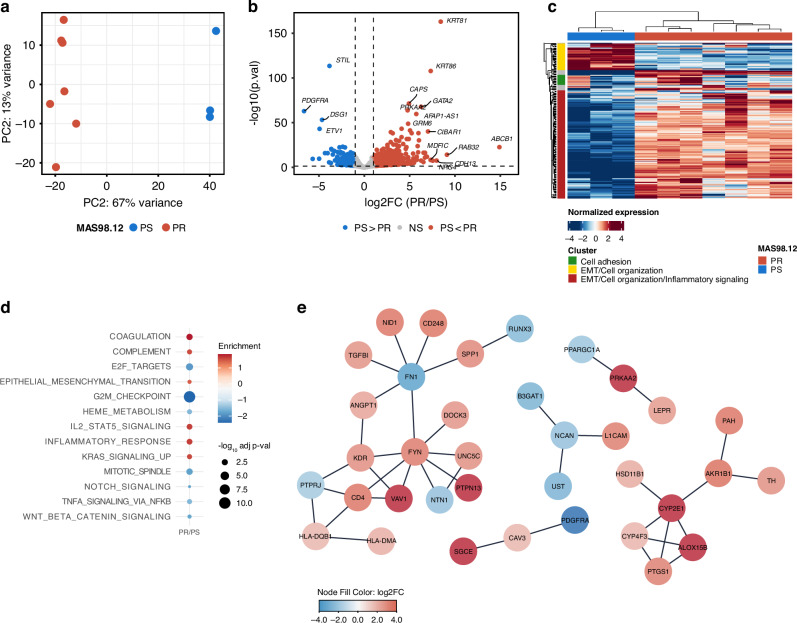
Fig. 2. Transcriptional changes in MAS98.12PR compared to MAS98.12.
a PCA of top 500 genes based on expression variance in RNAseq samples from PS (n = 3) and PR (n = 7). b Volcano plot of DEGs. Dotted line indicates padj = 0.05 and |LFC | > 1. c Heatmap of the 200 genes with highest variation across all samples. Three distinct clusters are highlighted with features defined by functional characteristics overlapping with genes sets in the Hallmark and KEGG signature databases. d GSEA performed on the Hallmark Signature Database, on values ranked by LFC from PR/PS. e PPI network generated with top 400 DEGs by using the STRING database, and the highest confidence (0.9) to select predicted interactions. Genes with >2 edges are shown.
Fig. 3
Fig. 3. Involvement of SFK-, MAPK/ERK- and PI3K/AKT-signaling pathways in MAS98.12PR compared to MAS98.12.
Comparison of expression levels of (phospho)proteins from the SFK (a,b), MAPK/ERK (d,e) and PI3K/AKT (g,h) signaling pathways in PDXs as detected by RPPA (a, d, g, n = 7/5) and validated by SWI (b, e, h, n = 3/5). PAS for SFK (c), MAPK/ERK (f) and PI3K/AKT (i) calculated from the RPPA data. For a,d and g, p-values were retrieved from differential analysis with limma. j Sensitivity of MAS98.12 and MAS98.12PR tissue to saracatinib, dasatinib, cobimetinib and capivasertib as assessed in PDXCs after treatment for six days; the effect was evaluated by measuring metabolic activity normalized to the corresponding untreated controls (mean ± SEM; n = 5/4/6/3). *p < 0.05. k IC50 values (µM) of drugs specified in j in PDXCs from MAS98.12 and MAS98.12PR.
Fig. 4
Fig. 4. SFK- and MAPK/ERK-pathway activity in chemoresistant tumors from the NeoAva clinical study.
PAS for SFK (a) and MAPK/ERK (b) calculated from RPPA data at screening (NASC; n = 12), and after NAT at week 25 (NA25; n = 10) in TNBC tumors without pCR. c Correlation plot of ∆PAS (NA25-NASC) between SFK and MAPK/ERK. d ∆Gene expression at NA25-NASC for SFK members in tumors with Up or Down ∆PAS SFK. e ∆Gene expression for MAPK/ERK members in tumors with Up or Down ∆PAS MAPK/ERK.
Fig. 5
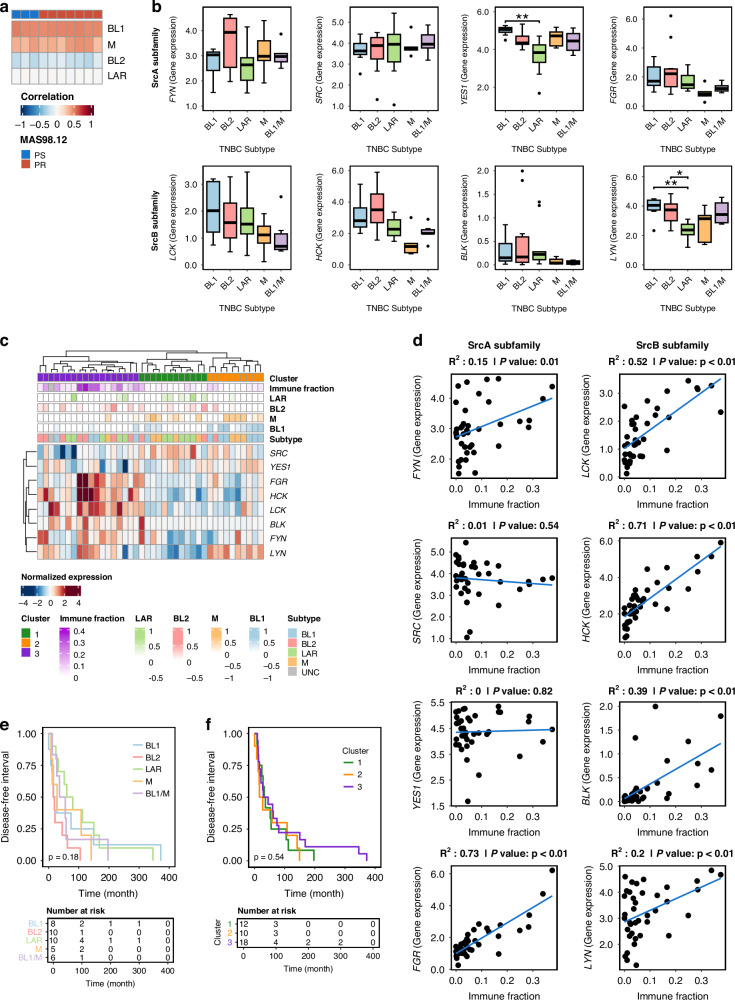
Fig. 5. SFKs gene expression and association with TNBC subtypes in metastatic lesions from MET500 cohort.
a Correlation with TNBC subtypes in MAS98.12 and MAS98.12PR. b Expression level of the eight SFK within the TNBC subtypes in the MET500 cohort. TNBC subtypes were defined as the 4-subtypes reported by Lehmann et al., in addition to samples showing dual correlation to both BL1 and M (BL1/M). c Hierarchical clustering of SFKs in samples from b, highlighting three distinct clusters as well as inferred immune fractions by xCell. d Correlation between SFKs expression and Immune fractions determined by xCell. e Kaplan–Meier plot showing disease-free interval for BL1/M compared to the established TNBC subtypes. f Disease-free interval for the three clusters defined in (c).
Fig. 6
Fig. 6. Expression of SRC-A sub-family members is associated with reduced disease-free interval in TNBC.
Disease-free interval for the members of SRC-A (a) and SRC-B (b) sub-family in TNBC tumors from the MET500 cohort. High expression was defined by samples with expression >75% quantile for the respective SFK. c Disease-free interval for High expression of relevant SFK as >75% quantile for at least one of the ubiquitously expressed members (i.e. SRC, FYN or YES1) and the corresponding Low group.

References

    1. Bianchini G, Balko JM, Mayer IA, Sanders ME, Gianni L. Triple-negative breast cancer: challenges and opportunities of a heterogeneous disease. Nat Rev Clin Oncol. 2016;13:674–90. - PMC - PubMed
    1. Dent R, Trudeau M, Pritchard KI, Hanna WM, Kahn HK, Sawka CA, et al. Triple-negative breast cancer: clinical features and patterns of recurrence. Clin Cancer Res. 2007;13:4429–34. - PubMed
    1. Furlanetto J, Loibl S. Optimal systemic treatment for early triple-negative breast cancer. Breast care (Basel, Switz). 2020;15:217–26. - PMC - PubMed
    1. Schmid P, Cortes J, Pusztai L, McArthur H, Kümmel S, Bergh J, et al. Pembrolizumab for early triple-negative breast cancer. N. Engl J Med. 2020;382:810–21. - PubMed
    1. Schmid P, Cortes J, Dent R, Pusztai L, McArthur H, Kümmel S, et al. Event-free survival with pembrolizumab in early triple-negative breast cancer. N. Engl J Med. 2022;386:556–67. - PubMed

MeSH terms