


Chaperone-mediated autophagy modulates Snail protein stability: implications for breast cancer metastasis
- PMID: 39390584
- PMCID: PMC11468019
- DOI: 10.1186/s12943-024-02138-0
Chaperone-mediated autophagy modulates Snail protein stability: implications for breast cancer metastasis
Abstract
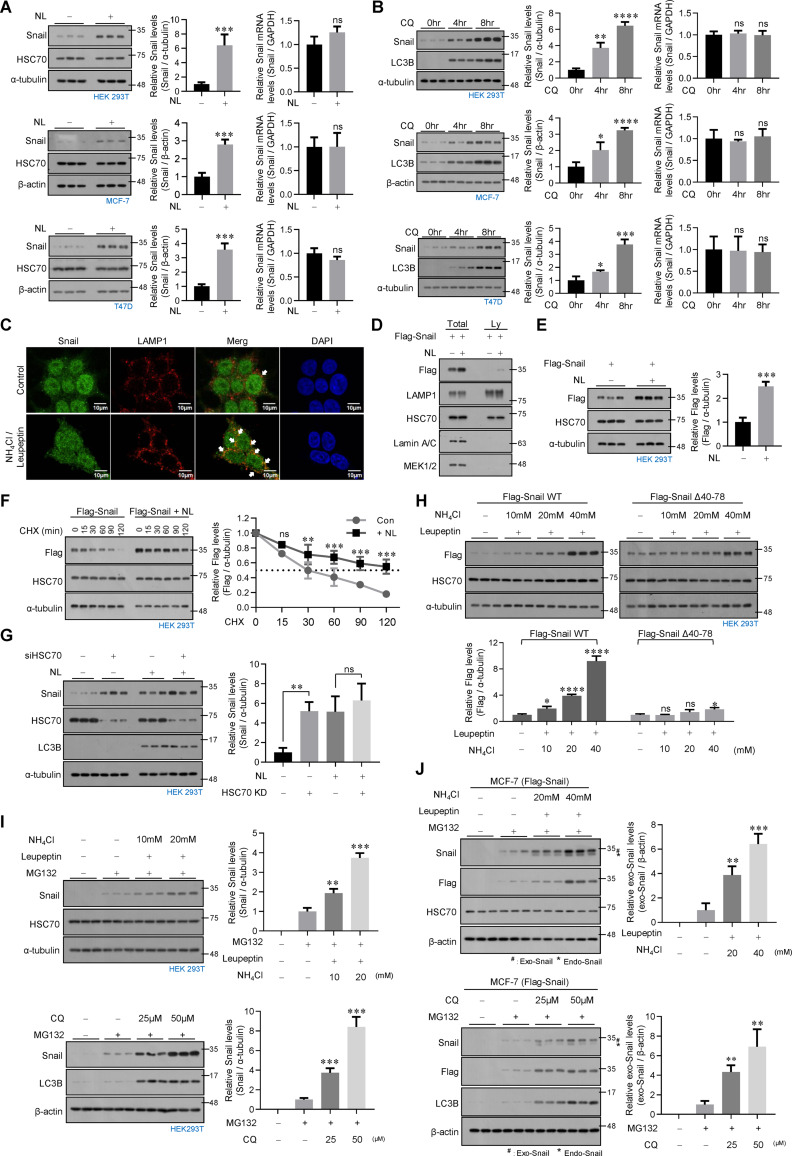
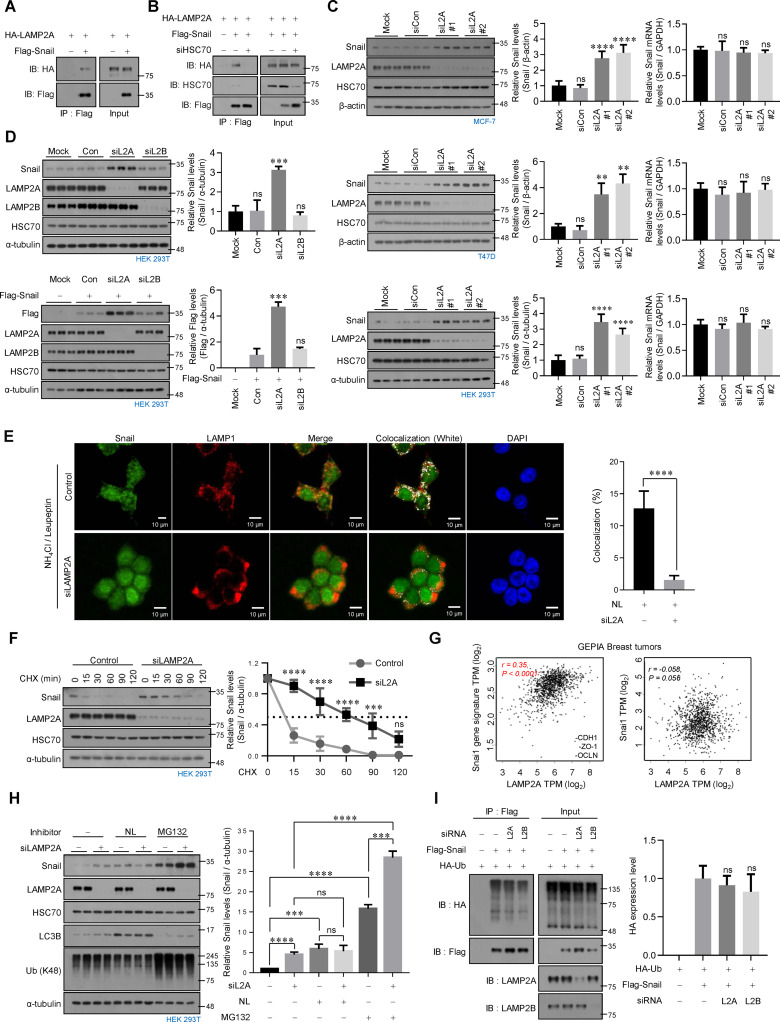
Breast cancer remains a significant health concern, with triple-negative breast cancer (TNBC) being an aggressive subtype with poor prognosis. Epithelial-mesenchymal transition (EMT) is important in early-stage tumor to invasive malignancy progression. Snail, a central EMT component, is tightly regulated and may be subjected to proteasomal degradation. We report a novel proteasomal independent pathway involving chaperone-mediated autophagy (CMA) in Snail degradation, mediated via its cytosolic interaction with HSC70 and lysosomal targeting, which prevented its accumulation in luminal-type breast cancer cells. Conversely, Snail predominantly localized to the nucleus, thus evading CMA-mediated degradation in TNBC cells. Starvation-induced CMA activation downregulated Snail in TNBC cells by promoting cytoplasmic translocation. Evasion of CMA-mediated Snail degradation induced EMT, and enhanced metastatic potential of luminal-type breast cancer cells. Our findings elucidate a previously unrecognized role of CMA in Snail regulation, highlight its significance in breast cancer, and provide a potential therapeutic target for clinical interventions.
Keywords: Breast cancer; Chaperone-mediated autophagy; EMT; Metastasis; Snail.
© 2024. The Author(s).
Conflict of interest statement
The authors declare no competing interests.
Figures



References
MeSH terms
Substances
Grants and funding
LinkOut - more resources
Full Text Sources
Molecular Biology Databases
Research Materials
Miscellaneous
