Sleep, Well-Being, and Cognition in Medical Interns on a Float or Overnight Call Schedule
- PMID: 39392631
- PMCID: PMC11581674
- DOI: 10.1001/jamanetworkopen.2024.38350
Sleep, Well-Being, and Cognition in Medical Interns on a Float or Overnight Call Schedule
Abstract
Importance: Extended work hours and night shifts are essential in health care, but negatively affect physician sleep, well-being, and patient care. Alternative schedules with shorter work hours and/or reduced irregularity might mitigate these issues.
Objective: To compare sleep, well-being, and cognition between interns working irregular, extended shifts (call schedule), and those working a more regular schedule with restricted hours (float schedule).
Design, setting, and participants: In this observational longitudinal cohort study, interns in a Singapore-based teaching hospital were studied for 8 weeks from January 2022 to July 2023. Data were analyzed from July 2023 to July 2024.
Exposure: Participants worked either regular approximately 10-hour workdays, interspersed with 24 hour or more overnight calls 4 to 5 times a month, or a float schedule, which included regular approximately 10-hour workdays, and 5 to 7 consecutive approximately 12-hour night shifts every 2 months. Exposure was based on departmental training and operational needs.
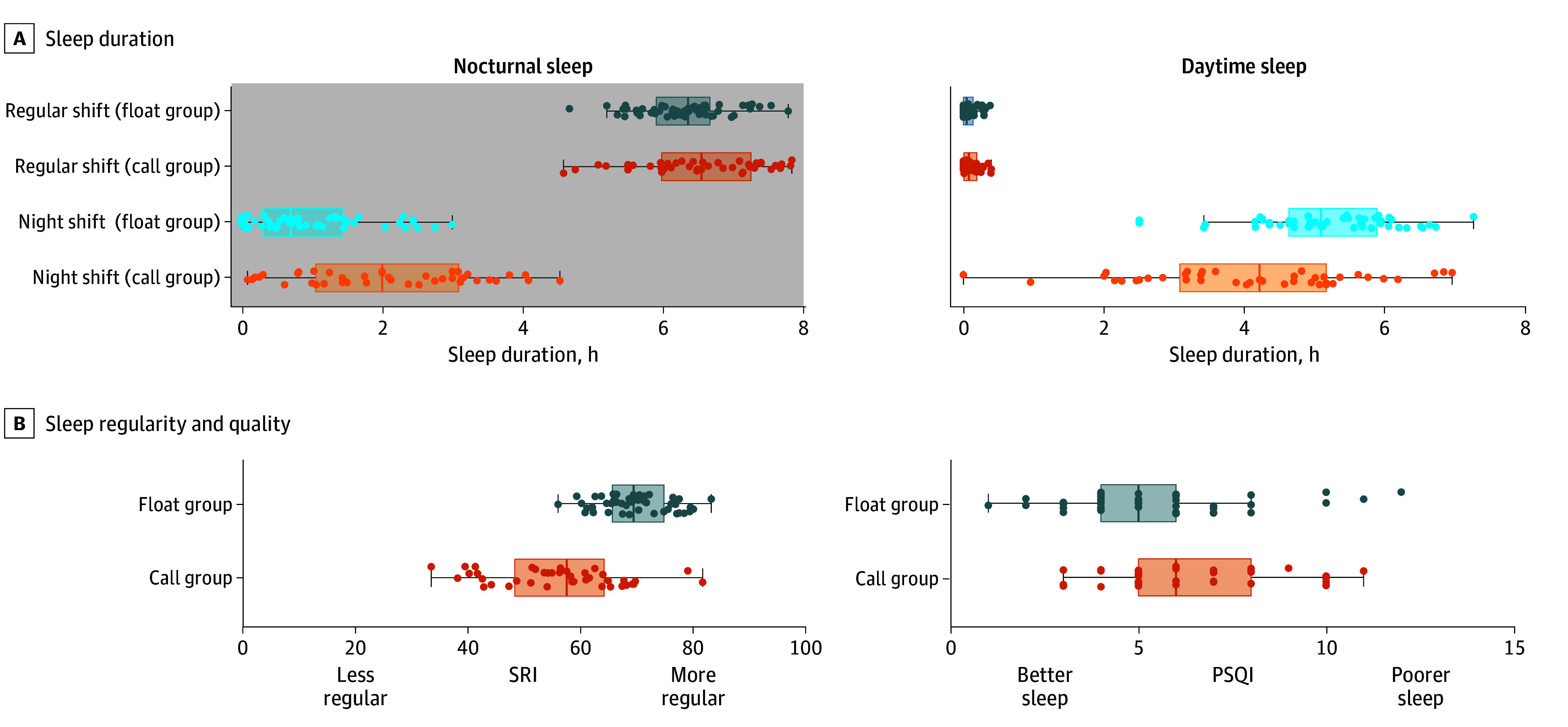
Main outcomes and measures: Sleep was measured with wearable sleep trackers and an electronic diary. Day-to-day well-being and cognitive assessments were collected through a smartphone application. Assessments included the Sleep Regularity Index (SRI; determines the probability of an individual being in the same state [sleep or wake] at any 2 time points 24 hours apart, with 0 indicating highly random sleep patterns and 100 denoting perfect regularity) and Pittsburgh Sleep Quality Inventory (PSQI; scores ranges from 0 to 21, with higher scores indicating poorer sleep; a score greater than 5 suggests significant sleep difficulties).
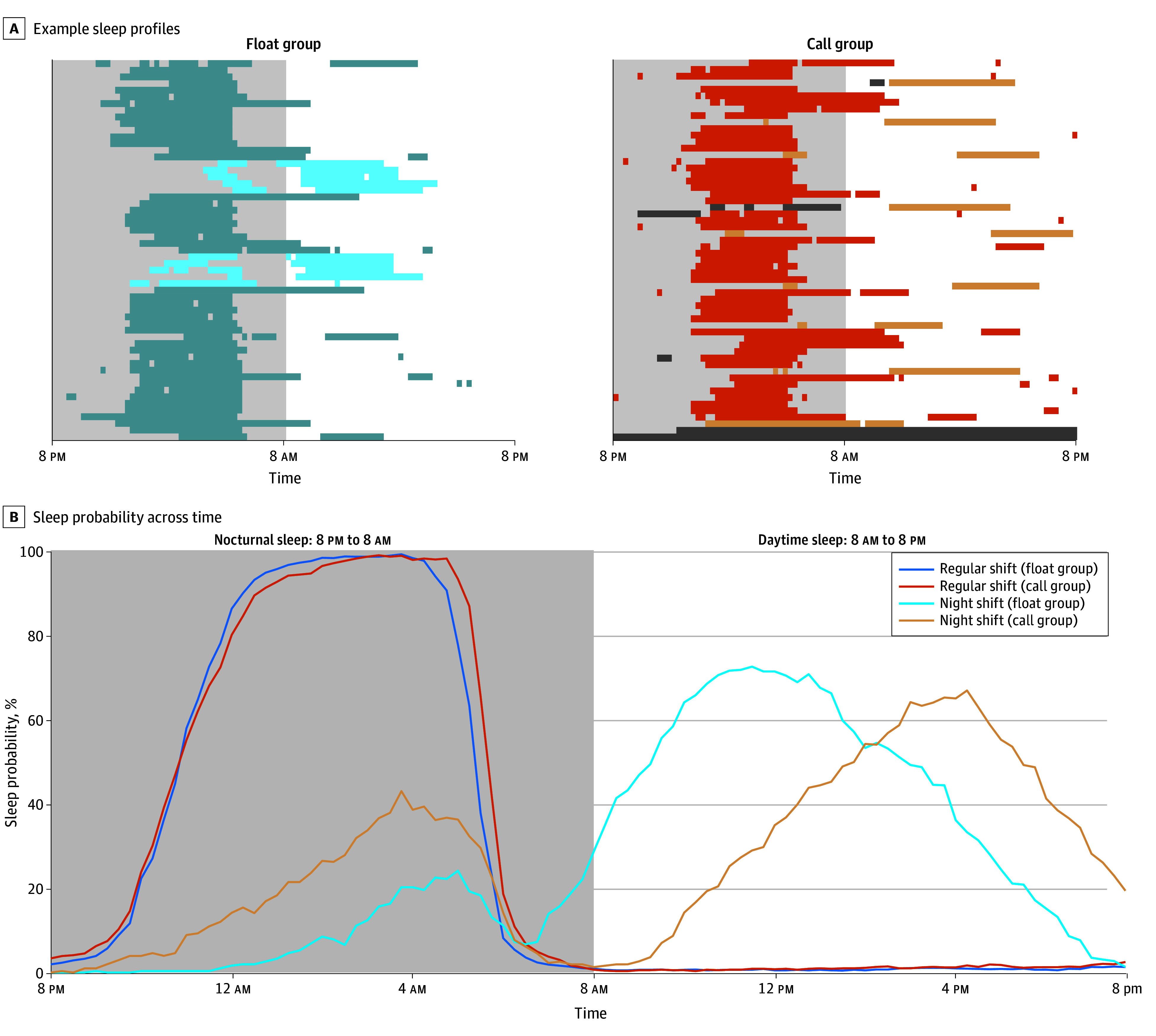
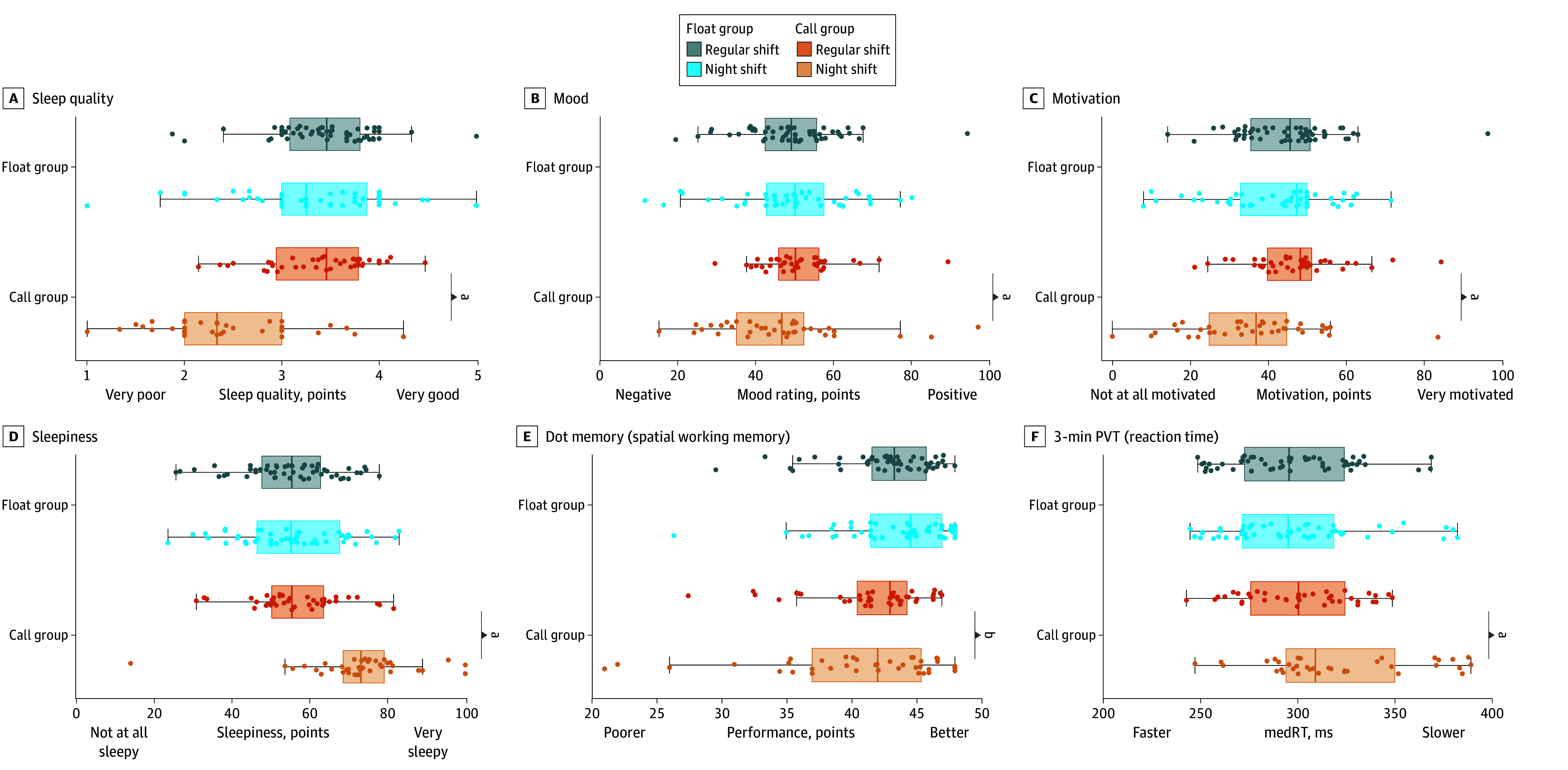
Results: Participants (mean [SD] age, 24.7 [1.1] years; 57 female participants [59.4%]; 41 on call schedule [42.7%]; 55 on float schedule [57.3%]) provided 4808 nights of sleep (84.2%) and 3390 days (59.3%) of well-being and cognition assessments. Participants on a float schedule had higher SRI scores (mean [SD] score, 69.4 [6.16]) and had better quality sleep (PSQI mean [SD] score, 5.4 [2.3]), than participants on call schedules (SRI mean [SD] score, 56.1 [11.3]; t91 = 6.81; mean difference, 13.3; 95% CI, 9.40 to 17.22; P < .001; PSQI mean [SD] score, 6.5 [2.3]; t79 = 2.16; 95% CI, 0.09 to 2.15; P = .03). Overnight call shifts, but not night float shifts, were associated with poorer mood (-13%; β = -6.79; 95% CI, -9.32 to -4.27; P < .001), motivation (-21%; β = -10.09; 95% CI, -12.55 to -7.63; P < .001), and sleepiness ratings (29%; β = 15.96; 95% CI, 13.01 to 18.90; P < .001) and impaired vigilance (21 ms slower; β = 20.68; 95% CI, 15.89 to 25.47; P < .001) compared with regular day shifts. Night shifts with naps were associated with better vigilance (16 ms faster; β = -15.72; 95% CI, -28.27 to -3.17; P = .01) than nights without naps.
Conclusions and relevance: In this cohort study, 24-hour call schedules were associated with poorer sleep, well-being, and cognition outcomes than float schedules. Naps during night shifts benefited vigilance in both schedules.
Conflict of interest statement
Figures
Comment in
-
Sleep and Wellness in Residency-Embracing the Shift.JAMA Netw Open. 2024 Oct 1;7(10):e2438294. doi: 10.1001/jamanetworkopen.2024.38294. JAMA Netw Open. 2024. PMID: 39392637 No abstract available.
References
Publication types
MeSH terms
LinkOut - more resources
Full Text Sources
Miscellaneous