


Mediation effect analysis of lipoprotein levels on BMI and cardiovascular outcomes in patients with heart failure
- PMID: 39395939
- PMCID: PMC11470738
- DOI: 10.1186/s12872-024-04155-9
Mediation effect analysis of lipoprotein levels on BMI and cardiovascular outcomes in patients with heart failure
Abstract
Background: Among heart failure patients with obesity, the prognosis is better than those with normal weight, a phenomenon known as the obesity paradox. However, it is unclear whether lipoprotein levels play a mediating role in the machine of the obesity paradox.
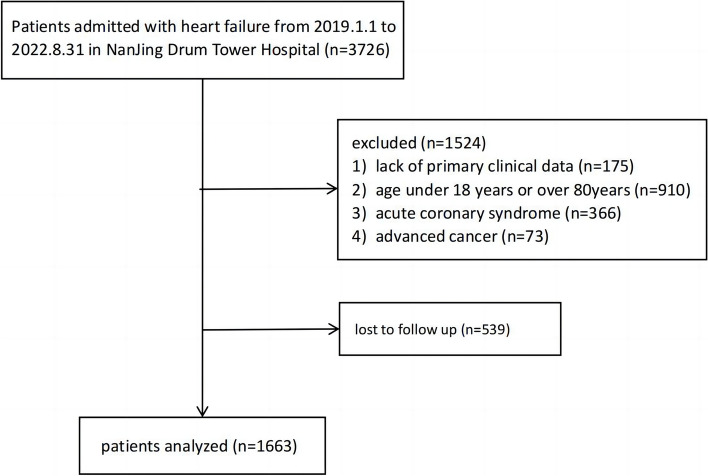
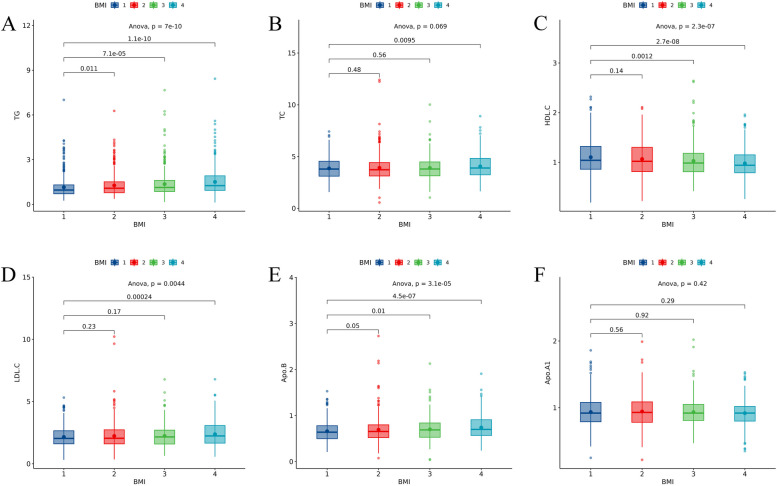
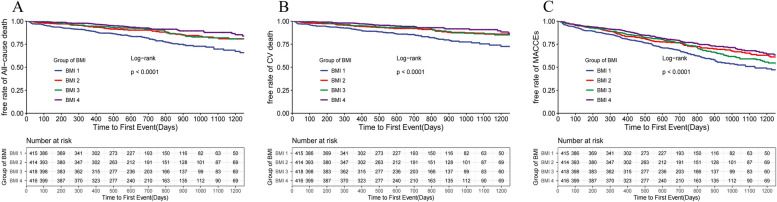
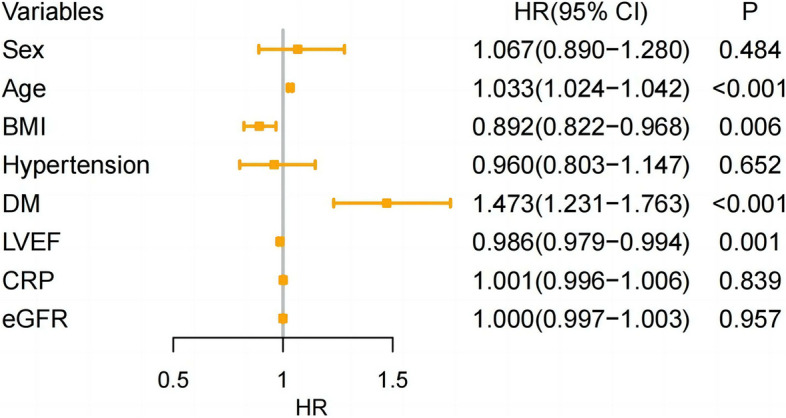
Methods: The study included 1663 heart failure patients hospitalized from January, 2019 through August, 2022. Kaplan-Meier survival analysis and Log-rank tests were performed for three endpoints in order to determine cumulative event-free survival. We investigated the correlation between Body Max Index (BMI) and outcomes by multifactorial Cox models. Mediation analysis was applied to study the presence and magnitude of mediation effects of triglyceride, total cholesterol, high-density lipoprotein cholesterol, low-density lipoprotein cholesterol, apolipoprotein A1 and apolipoprotein B, with the association between BMI and endpoints.
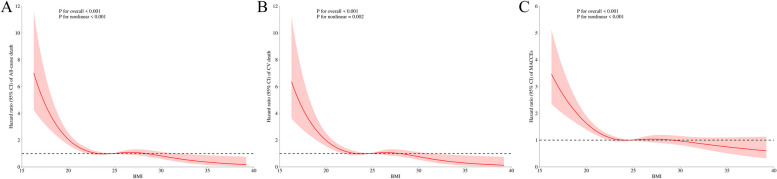
Results: In MACCEs, the median follow-up period was 679 days. In Cox model, compared with the underweight group, a high BMI level was significantly associated with lower all-cause mortality (HR=0.47, 95%CI 0.31~0.69, p<0.001, obese vs underweight), cardiovascular mortality (HR=0.46, 95%CI 0.30~0.73, p<0.001, obese vs underweight) and the incidence of MACCEs (HR=0.68, 95%CI 0.53~0.88, p=0.003, obese vs underweight). Mediation analysis revealed that TG was the strongest mediator between BMI and endpoints, with proportions of mediated effects of 6.6% (95%CI 2.2%~18.0%, p=0.0258, in all-cause death),7.0% (95%CI 2.3%~18.9%, p=0.0301, in cardiovascular death) and 10.2% (95%CI 3.3%~27.4%, p=0.0185, in MACCEs).
Conclusions: There is an "obesity paradox" in patients with heart failure, and lipoprotein levels especially triglyceride mediate the association between BMI and cardiovascular outcomes.
Keywords: Heart failure; Lipoprotein; Mediating effect; Obesity.
© 2024. The Author(s).
Conflict of interest statement
The authors declare no competing interests.
Figures
References
-
- Tsao CW, Aday AW, Almarzooq ZI, Alonso A, Beaton AZ, Bittencourt MS, Boehme AK, Buxton AE, Carson AP, Commodore-Mensah Y, et al. Heart Disease and Stroke Statistics-2022 Update: A Report From the American Heart Association. Circulation. 2022;145(8):e153–639. - PubMed
-
- Niderla-Bielińska J, Ścieżyńska A, Moskalik A, Jankowska-Steifer E, Bartkowiak K, Bartkowiak M, Kiernozek E, Podgórska A, Ciszek B, Majchrzak B et al: A Comprehensive miRNome Analysis of Macrophages Isolated from db/db Mice and Selected miRNAs Involved in Metabolic Syndrome-Associated Cardiac Remodeling. Int J Mol Sci 2021, 22(4). - PMC - PubMed
-
- Horwich TB, Fonarow GC, Clark AL. Obesity and the Obesity Paradox in Heart Failure. Prog Cardiovasc Dis. 2018;61(2):151–6. - PubMed
Publication types
MeSH terms
Substances
LinkOut - more resources
Full Text Sources
Medical
Miscellaneous
