


Effect of laxative polyherbal paste for loperamide induced constipation in rats
- PMID: 39398568
- PMCID: PMC11470361
- DOI: 10.62347/XSFH4004
Effect of laxative polyherbal paste for loperamide induced constipation in rats
Abstract
Objective: The goal of this study was to find out if polyherbal paste (PHP) with Rosadamascena, Terminalia chebula, and Trachyspermumammi in honey could help rats that were constipated because of loperamide.
Methods: Thirty male rats were divided into 6 groups: a control group receiving saline, a model group receiving loperamide at 10 mg/kg and saline, a phenolphthalein group (positive control) receiving loperamide at 10 mg/kg and phenolphthalein at 10 mg/kg, and low (20 mg/kg), medium (40 mg/kg), and high (60 mg/kg) doses of PHP, via intragastric administration for 7 days. Various parameters, including food consumption, water consumption, body weight, fecal characteristics, gastrointestinal transit rate, histological changes, serum biomarkers, and aquaporin-3 (AQP3) and C-kit protein expression levels, were assessed.
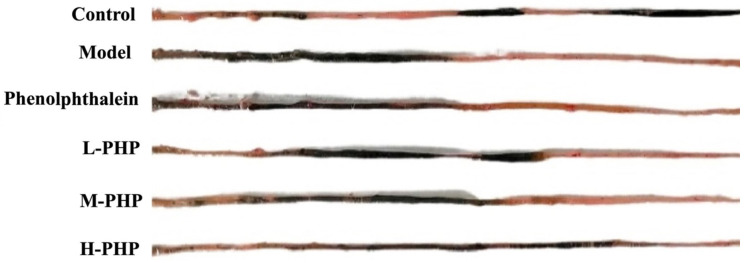
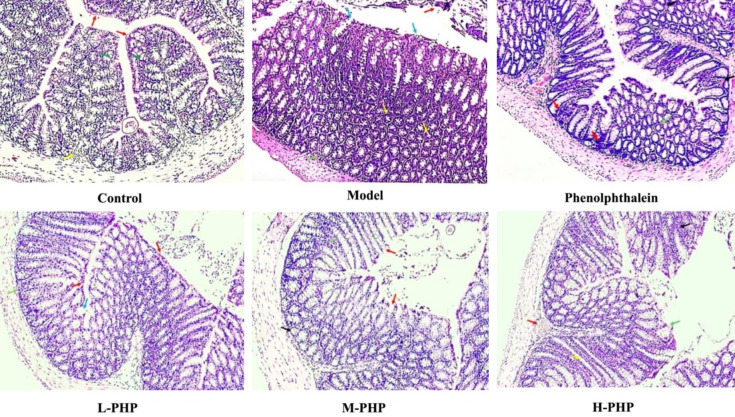
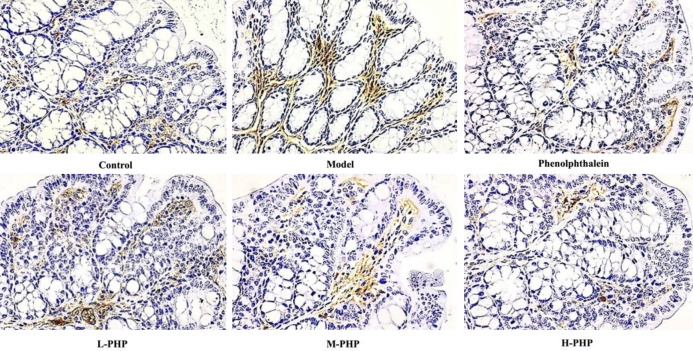
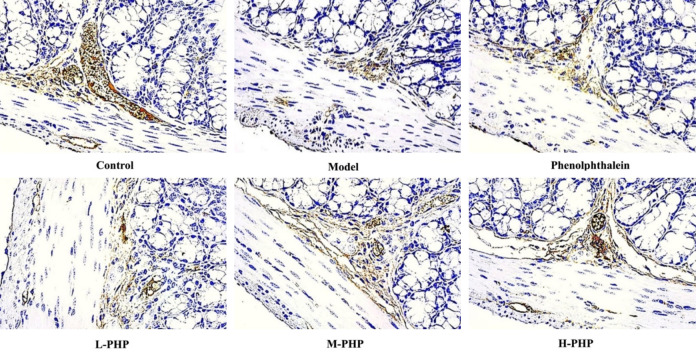
Results: Administering PHP at a dose of 60 mg/kg resulted in a 16.89% increase in fecal water content, a 12.14% increase in the amount of feces, and a 23.67% increase in gastrointestinal transit rate, while also reducing the time to black stool and restoring appearance by 23.41%. At the 40 mg/kg dose, PHP increased motilin levels in the blood by 31.22%, gastrin by 52.78%, and substance P by 19.45% while decreasing somatostatin by 20.17%. Furthermore, at the 60 mg/kg dose, PHP decreased mucous membrane damage and goblet cell function in the colon, reduced AQP3 protein production by 33.39%, and increased c-kit protein production by 12.14%.
Conclusion: The PHP showed promising therapeutic potential for loperamide-induced constipation in rats.
Keywords: Poly herbal paste; Terminalia chebula; gastrin; loperamide; motilin.
AJTR Copyright © 2024.
Conflict of interest statement
None.
Figures
References
-
- Khan IA, Aziz A, Manzoor Z, Munawar SH, Sarwar HS, Afzal A, Raza MA. Study on antipyretic activity of Rumex vesicarius leaves extract in albino rabbits. Vet World. 2014;7:44–48.
-
- Chattopadhyay D, Arunachalam G, Ghosh L, Rajendran K, Mandal AB, Bhattacharya SK. Antipyretic activity of Alstonia macrophylla wall ex A. DC: an ethnomedicine of Andaman Islands. J Pharm Pharm Sci. 2005;8:558–64. - PubMed
-
- Akinpelu DA, Onakoya TM. Antimicrobial activities of medicinal plants used in folklore remedies in South-Western. Afr J Biotechnol. 2006;5:1078–1081.
-
- Zhang H, Hou Y, Liu Y, Yu X, Li B, Cui H. Determination of mangiferin in rat eyes and pharmacokinetic study in plasma after oral administration of mangiferin-hydroxypropyl-beta-cyclodextrin inclusion. J Ocul Pharmacol Ther. 2010;26:319–24. - PubMed
LinkOut - more resources
Full Text Sources