


A hybrid LSTM random forest model with grey wolf optimization for enhanced detection of multiple bearing faults
- PMID: 39402110
- PMCID: PMC11473957
- DOI: 10.1038/s41598-024-75174-x
A hybrid LSTM random forest model with grey wolf optimization for enhanced detection of multiple bearing faults
Abstract
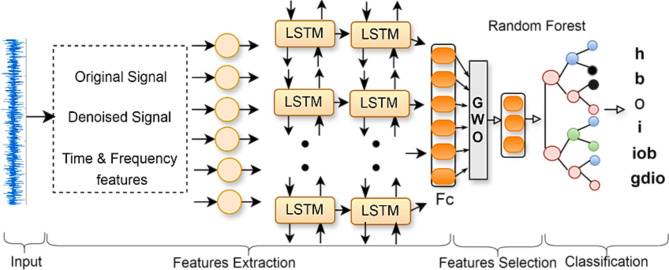
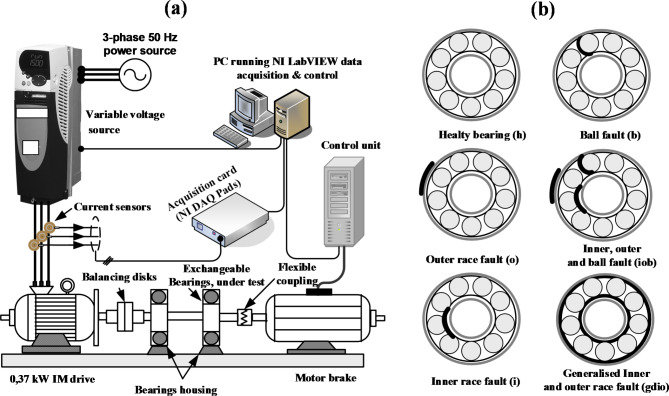
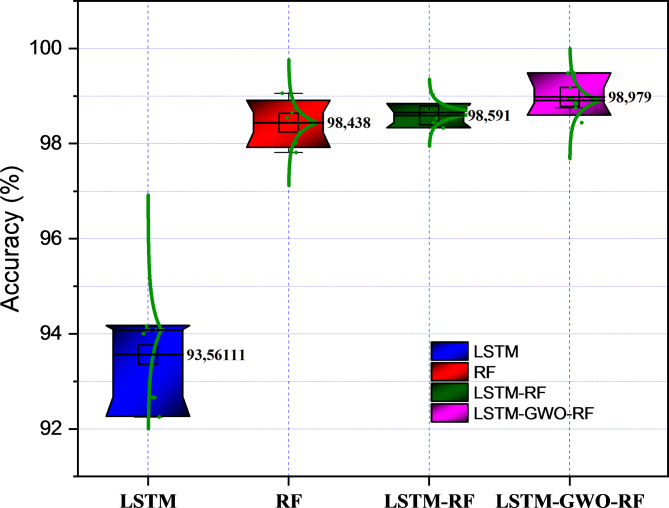
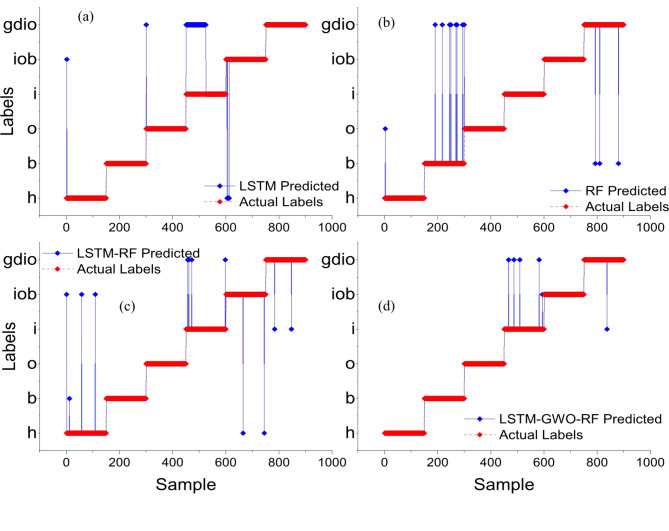
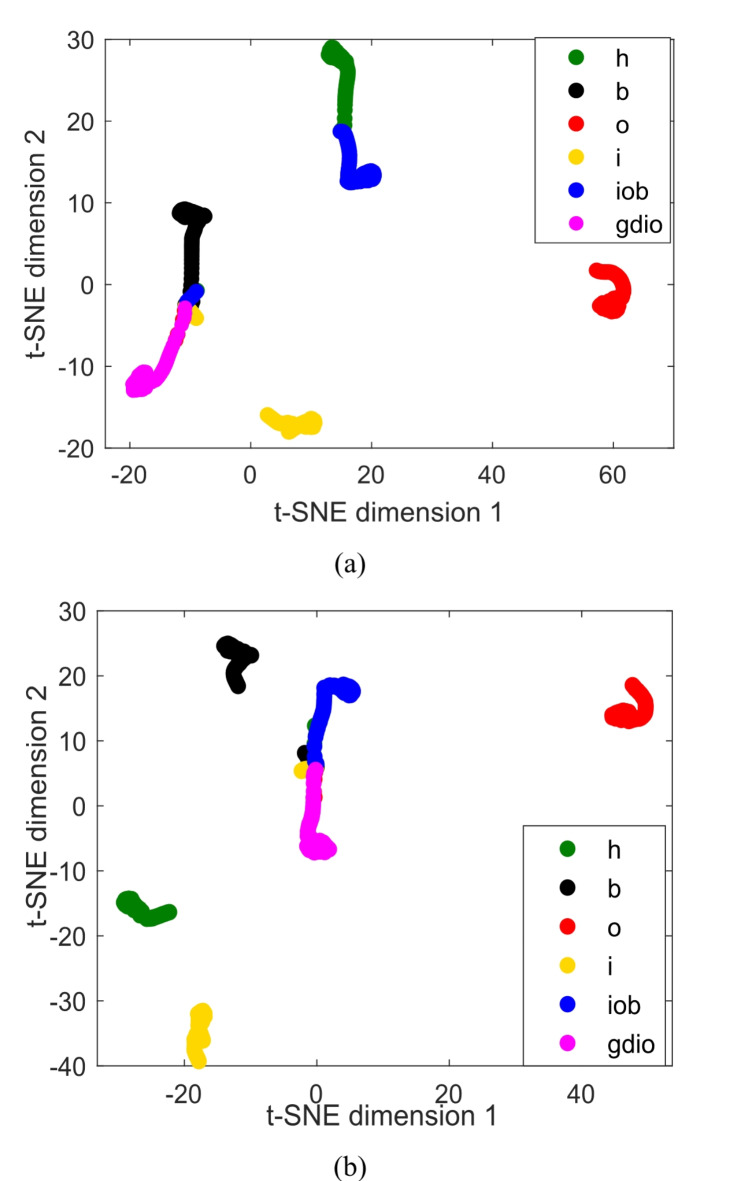
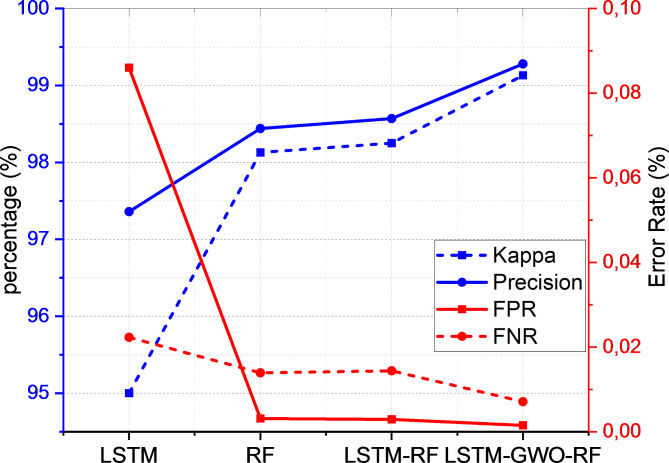
Bearing degradation is the primary cause of electrical machine failures, making reliable condition monitoring essential to prevent breakdowns. This paper presents a novel hybrid model for the detection of multiple faults in bearings, combining Long Short-Term Memory (LSTM) networks with random forest (RF) classifiers, further enhanced by the Grey Wolf Optimization (GWO) algorithm. The proposed approach is structured in three stages: first, time and frequency domain features are manually extracted from vibration signals; second, these features are processed by a dual-layer LSTM network, which is specifically designed to capture complex temporal relationships within the data; finally, the GWO algorithm is employed to optimize feature selection from the LSTM outputs, feeding the most relevant features into the RF classifier for fault classification. The model was rigorously evaluated using a dataset comprising six distinct bearing health conditions: healthy, outer race fault, ball fault, inner race fault, compounded fault, and generalized degradation. The hybrid LSTM-RF-GWO model achieved a remarkable classification accuracy of 98.97%, significantly outperforming standalone models such as LSTM (93.56%) and RF (98.44%). Furthermore, the inclusion of GWO led to an additional accuracy improvement of 0.39% compared to the hybrid LSTM-RF model without optimization. Other performance metrics, including precision, kappa coefficient, false negative rate (FNR), and false positive rate (FPR), were also improved, with precision reaching 99.28% and the kappa coefficient achieving 99.13%. The FNR and FPR were reduced to 0.0071 and 0.0015, respectively, underscoring the model's effectiveness in minimizing misclassifications. The experimental results demonstrate that the proposed hybrid LSTM-RF-GWO framework not only enhances fault detection accuracy but also provides a robust solution for distinguishing between closely related fault conditions, making it a valuable tool for predictive maintenance in industrial applications.
Keywords: Bearing fault detection; Feature selection; Grey wolf optimization; Hybrid model; LSTM; Machine learning; Random forest; Vibration signals.
© 2024. The Author(s).
Conflict of interest statement
The authors declare no competing interests.
Figures




References
-
- Xu, T., Wang, H., Liu, Z., Hao, Y. & Machinery Fault Diagnosis Using Recurrent Neural Network: A Review. In 2020 Global Reliability and Prognostics and Health Management (PHM-Shanghai) 1–6 (Shanghai, China, 2020). 10.1109/PHM-Shanghai49105.2020.9280936
-
- Verma, N. K., Subramanian, T. S. S., Electronics & Applications 7th IEEE Conference on Industrial and Cost Benefit Analysis of Intelligent Condition-Based Maintenance of Rotating Machinery, (ICIEA) 1390–1394 (Singapore, 2012). 10.1109/ICIEA.2012.6360940
-
- Smith, W. A. & Randall, R. B. Rolling element bearing diagnostics using the Case Western Reserve University data: A benchmark study. Mech. Syst. Signal Process. 64–65, 100–131 (2015).
-
- Saufi, S. R. et al. An intelligent bearing fault diagnosis system: A review. MATEC Web of Conferences. Vol. 255 (EDP Sciences, 2019).
-
- Djaballah, S. et al. Deep transfer learning for bearing fault diagnosis using CWT time–frequency images and convolutional neural networks. J. Fail. Anal. Prev.23 (3), 1046–1058 (2023). - DOI
LinkOut - more resources
Full Text Sources
Other Literature Sources
