


Magnetic Sphincter Augmentation for Gastroesophageal Reflux After Sleeve Gastrectomy: A Systematic Review
- PMID: 39402392
- PMCID: PMC11541252
- DOI: 10.1007/s11695-024-07523-8
Magnetic Sphincter Augmentation for Gastroesophageal Reflux After Sleeve Gastrectomy: A Systematic Review
Abstract
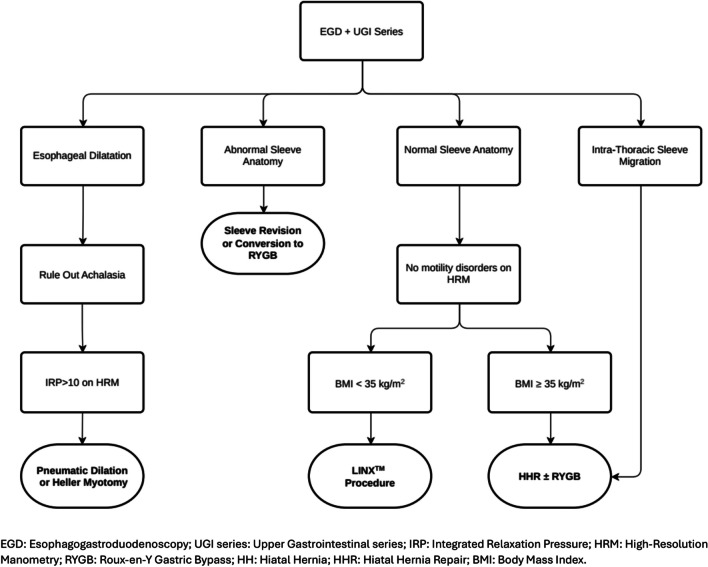
This systematic review aims to evaluate the current evidence regarding safety and efficacy of magnetic sphincter augmentation (MSA) for the treatment of gastroesophageal reflux disease (GERD) after laparoscopic sleeve gastrectomy (LSG). Conversion to Roux-en-Y gastric bypass (RYGB) carries the risk of surgical and metabolic complications and may be contraindicated in patients with normalized or near-normalized body mass index. The LINX™ procedure aims to restore LES competency and to repair the crura. We included 109 patients (14 studies) undergoing LINX™ implant after LSG. Median follow-up was 18.9 months (range 0.3-63). Both the GERD-HRQL (38 ± 13 vs. 10 ± 11; p = 0.0078) and daily PPI use (97.4% vs. 25.3%; p < 0.0001) were significantly improved. Overall, 31.8% of the patients experienced device-related adverse events, mainly self-limiting. LINX™ explant for esophageal erosion occurred in 0.9% of the patients.
Keywords: Bariatric surgery; Gastroesophageal reflux; LINX procedure; Magnetic sphincter augmentation; Refractory GERD; Roux-en-Y gastric bypass; Sleeve gastrectomy.
© 2024. The Author(s).
Conflict of interest statement
The authors declare no competing interests.
Figures

References
Publication types
MeSH terms
LinkOut - more resources
Full Text Sources
Medical
Research Materials
