


Aberrant DNA polymerase beta expression is associated with dysregulated tumor immune microenvironment and its prognostic value in gastric cancer
- PMID: 39402431
- PMCID: PMC11473650
- DOI: 10.1007/s10238-024-01498-7
Aberrant DNA polymerase beta expression is associated with dysregulated tumor immune microenvironment and its prognostic value in gastric cancer
Abstract
Background: Gastric cancer is caused by different exogenous risk factors. Polymerase beta (POLB) is critical to repair oxidative and alkylating-induced DNA damage in genome maintenance. It is unknown whether overexpression of POLB genes in GC modulates tumor immunogenicity and plays a role in its prognostic value.
Methods: RNA-Seq of GC data retrieved from TCGA and GEO database and patient survival were compared using Kaplan-Meier statistical test. The TIMER algorithm was used to calculate the abundance of tumor-infiltrating immune cells. Furthermore, ROC analysis was applied to evaluate the prognostic value of POLB overexpression.
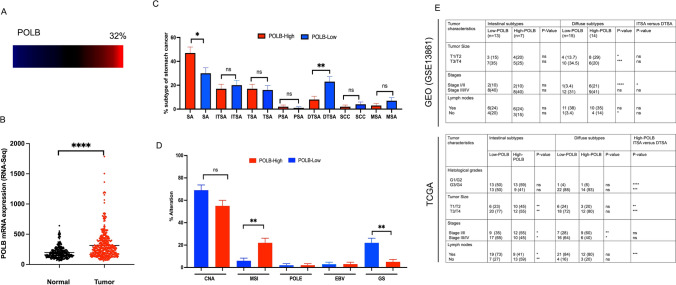
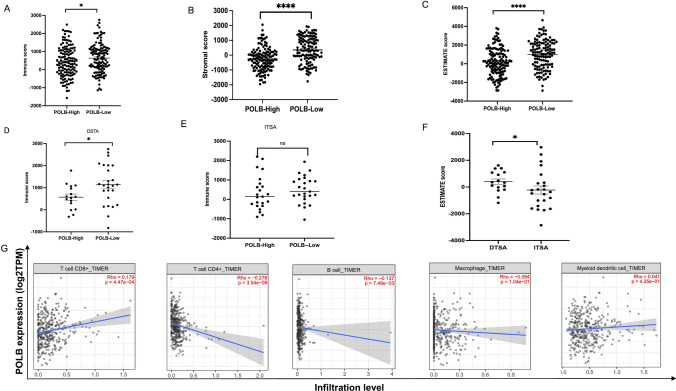
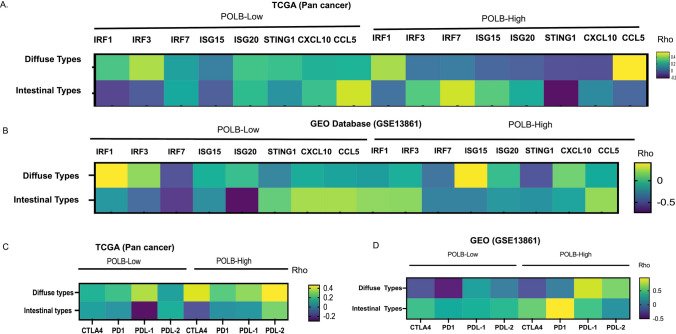
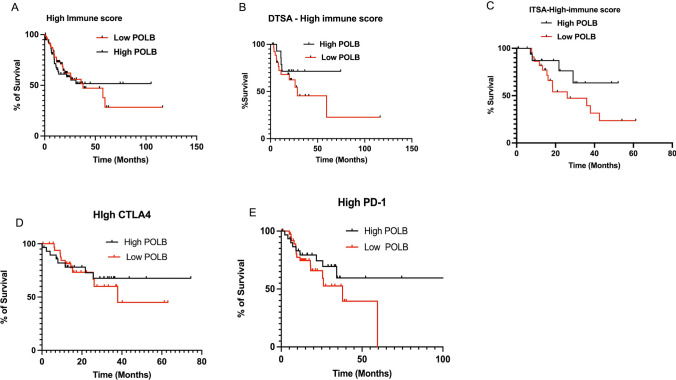
Results: Our data analysis of TCGA and GEO gastric cancer genomics datasets reveals that POLB overexpression is significantly associated with intestinal subtypes of stomach cancer. In addition, POLB overexpression is associated with low expression of innate immune signaling genes. In contrast, POLB-overexpressed tumor harbors high mutation frequency and MSI score. Furthermore, POLB-overexpressed tumor with high immune score exhibits a better prognosis. Interestingly, our ROC analysis results suggested that POLB overexpression has a potential for prognostic markers for stomach cancer.
Conclusions: Our analysis suggests that aberrant POLB overexpression in stomach cancer impacts the diverse aspects of tumor immune microenvironment. In addition, POLB might be a potential prognosis marker and/or an attractive target for immune-based therapy in GC. However, our observation still requires further experimental-based scientific validation studies.
© 2024. The Author(s).
Conflict of interest statement
The authors declare no competing interests.
Figures

References
-
- McLean MH, El-Omar EM. Genetics of gastric cancer. Nat Rev Gastroenterol Hepatol. 2014;11(11):664–74. - PubMed
-
- Wilson DM 3rd, Bohr VA. The mechanics of base excision repair, and its relationship to aging and disease. DNA Repair (Amst). 2007;6(4):544–59. - PubMed
-
- Ames BN. Dietary carcinogens and anticarcinogens oxygen Radicals and degenerative diseases. Science. 1983;221(4617):1256–64. - PubMed
-
- Lindahl T. Instability and decay of the primary structure of DNA [see comments]. Nature. 1993;362(6422):709–15. - PubMed
MeSH terms
Substances
Grants and funding
LinkOut - more resources
Full Text Sources
Medical
Miscellaneous
