Review
. 2024 Oct 14;15(1):365.
doi: 10.1186/s13287-024-03936-5.

Extracellular vesicles as therapeutic tools in regenerative dentistry

Affiliations
Review

Extracellular vesicles as therapeutic tools in regenerative dentistry

Evelyn Jingwen Xia et al. Stem Cell Res Ther. .

Abstract

Dental and maxillofacial diseases are always accompanied by complicated hard and soft tissue defects, involving bone, teeth, blood vessels and nerves, which are difficult to repair and severely affect the life quality of patients. Recently, extracellular vesicles (EVs) secreted by all types of cells and extracted from body fluids have gained more attention as potential solutions for tissue regeneration due to their special physiological characteristics and intrinsic signaling molecules. Compared to stem cells, EVs present lower immunogenicity and tumorigenicity, cause fewer ethical problems, and have higher stability. Thus, EV therapy may have a broad clinical application in regenerative dentistry. Herein, we reviewed the currently available literature regarding the functional roles of EVs in oral and maxillofacial tissue regeneration, including in maxilla and mandible bone, periodontal tissues, temporomandibular joint cartilage, dental hard tissues, peripheral nerves and soft tissues. We also summarized the underlying mechanisms of actions of EVs and their delivery strategies for dental tissue regeneration. This review would provide helpful guidelines and valuable insights into the emerging potential of EVs in future research and clinical applications in regenerative dentistry.

Keywords: Dental tissue; Dentistry; Exosomes; Extracellular vesicles; Tissue regeneration.


Conflict of interest statement

The authors declare no conflict of interest.

Figures
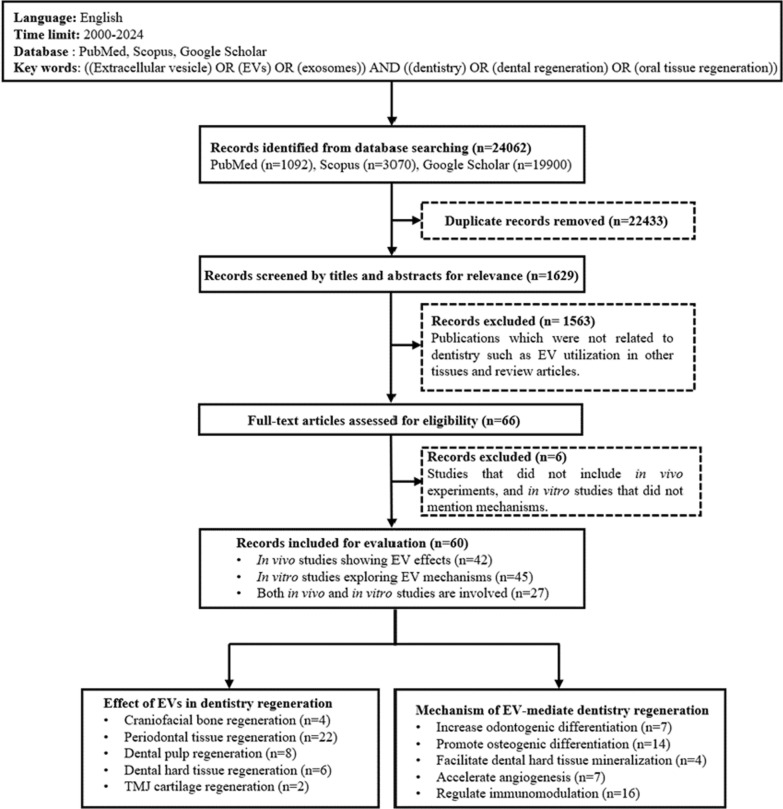
Fig. 1
Fig. 1
Flow chart of literature search for EVs in regenerative dentistry
Fig. 2
Fig. 2
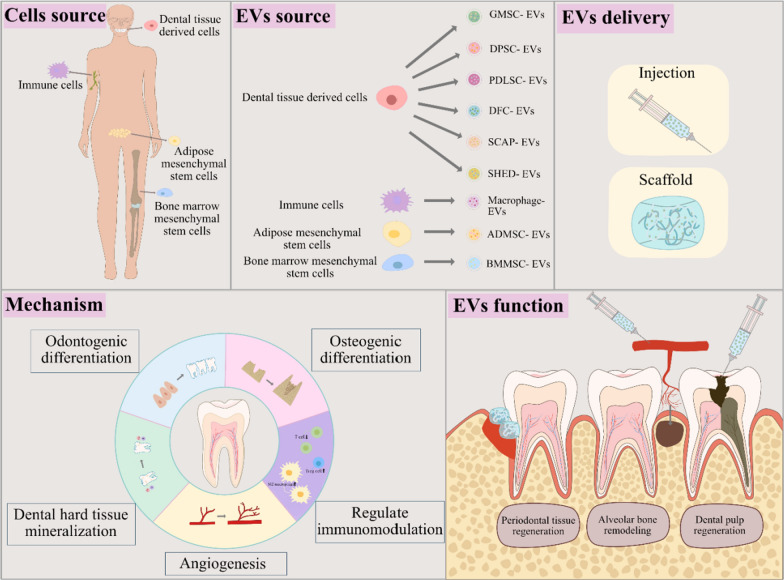
EVs parent cells source, EVs source, delivery strategies, functions and mechanisms of EVs in dental tissue regeneration. Abbreviations: EVs, extracellular vesicles; GMSC-EVs, gingival mesenchymal stem cell-derived extracellular vesicles; DPSC-EVs, dental pulp stem cell-derived extracellular vesicles; PDLSC-EVs, periodontal ligament stem cell-derived extracellular vesicles; DFC-EVs, dental follicle cell-derived extracellular vesicles; SCAP-EVs, stem cells from apical papilla-derived extracellular vesicles; SHED-EVs, human exfoliated deciduous teeth stem cell-derived extracellular vesicles; Macrophage-EVs, macrophage derived extracellular vesicles; ADMSC-EVs, adipose mesenchymal stem cell-derived extracellular vesicles; BMMSC-EVs, bone marrow mesenchymal stem cell-derived extracellular vesicles
Fig. 3
Fig. 3
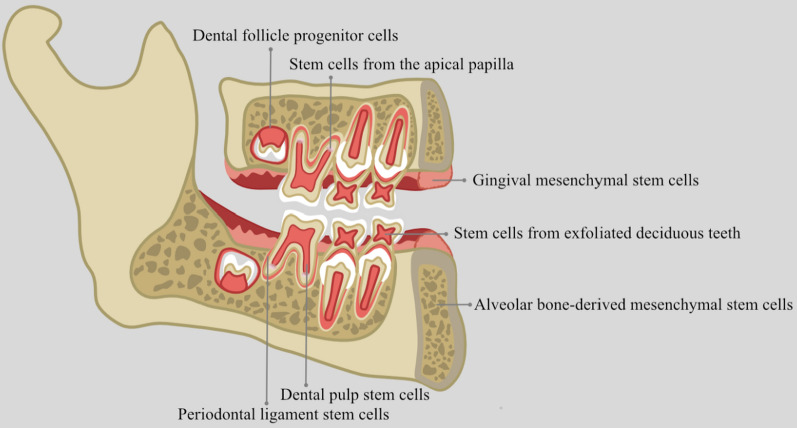
EVs from different dental tissue-derived stem cells used for dental tissue regeneration. EVs from different dental tissue-derived stem cells are mostly studied and utilized for dental tissue regeneration due to their multi-lineage differentiation and reproductive activity. EVs from different dental tissue-derived stem cells are mostly studied and utilized for dental tissue regeneration due to their multi-lineage differentiation and reproductive activity. Dental follicle progenitor cells are sourced from the connective tissue surrounding the developing tooth germ. Stem cells from the apical papilla are obtained from the apical papilla of incompletely developed teeth. Gingival mesenchymal stem cells are found within the gingiva. Stem cells from exfoliated deciduous teeth are harvested from the dental pulp of exfoliated primary teeth. Alveolar bone-derived mesenchymal stem cells can be extracted from the alveolar bone. Dental pulp stem cells are isolated from the dental pulp of permanent teeth. Periodontal ligament stem cells are sourced from the periodontal ligament of permanent teeth
Fig. 4
Fig. 4
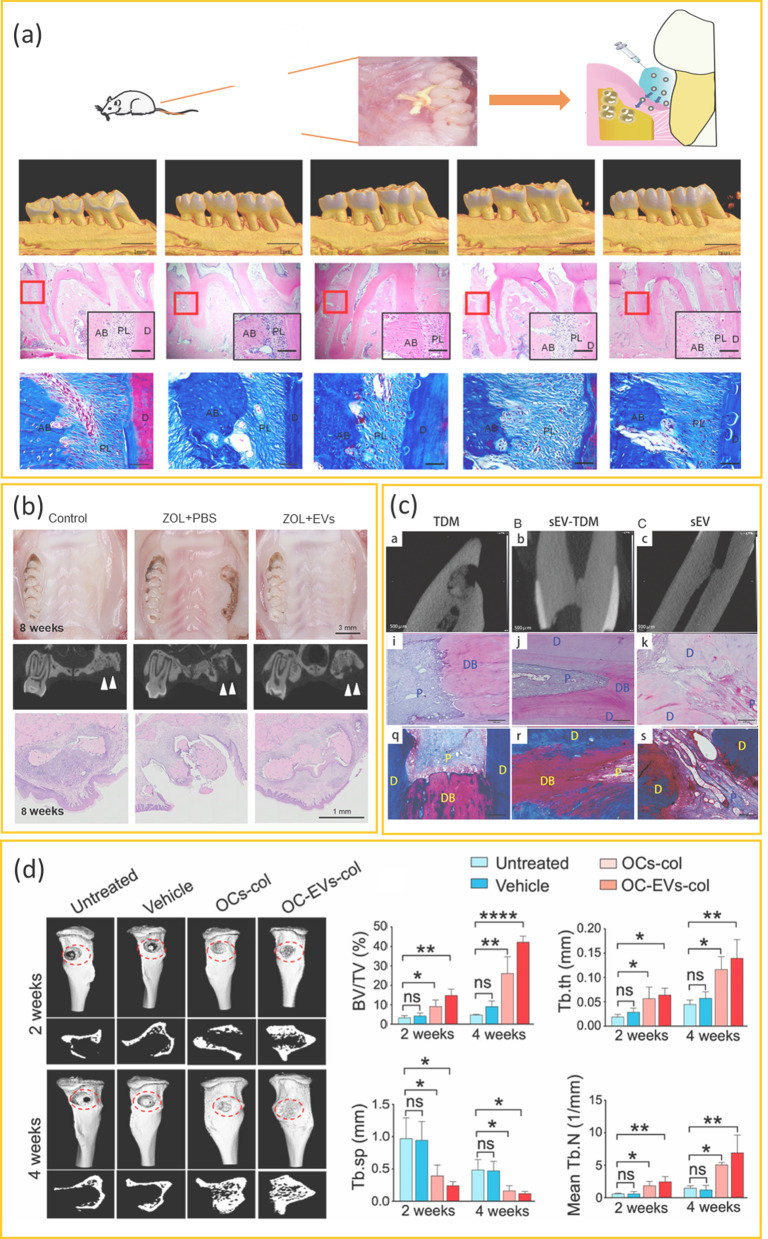
The therapeutic effects of extracellular vesicles on different dental tissue regeneration. a EVs derived from LPS-preconditioned DFCs loden on hydrogel applied in the treatment of periodontitis by repairing lost alveolar bone and promoting periodontal tissue regeneration. This figure is adapted and is freely accessible from reference [72], Licensed under a Creative Commons Attribution 4.0 International License (CC BY 4.0). b EVs derived from BMMSCs prevent BRONJ by preventing the spread of chronic inflammation and promoting angiogenesis and osteogenesis. This figure is adapted and is freely accessible from reference [46], c TDM and EVs isolated from DPSCs promote reparative dentin formation. This figure is adapted and is freely accessible from reference [87], Licensed by Sage Publications and Copyright Clearance Center. d EVs derived from osteoclasts promote bone regeneration. This figure is adapted and is freely accessible from reference [14], Reprinted under the terms of the Creative Commons CC-BY license. Abbreviations: AB, alveolar bone; PL, periodontal ligament; D, cementum; ZOL, zoledronic acid; TDM, dentin matrix; D, dentin; P, pulp tissue; DB, dental bridge; BV./TV., bone volume/total volume; OCs-col, osteoclasts on collagen; OC-EVs-col, EVs derived from osteoclasts on collagen
Fig. 5
Fig. 5
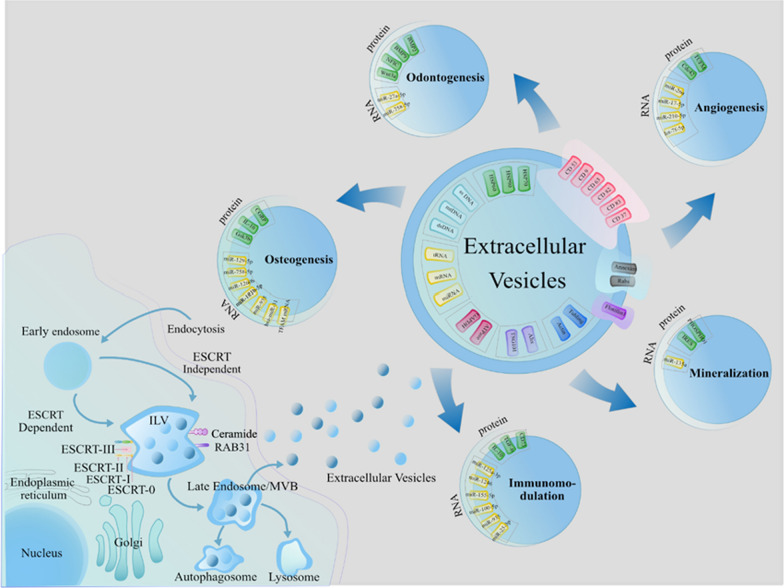
The effective components and functions of EVs for dental tissue regeneration. EVs are released upon the fusion of multivesicular bodies with plasma menbranes. They aid in dental tissue regeneration by promoting odontogenic differentiation, osteogenesis differentaition, dental hard tissue mineralization, angiogenesis and regulating immunomodultion through different cargos, including but not limited to protein, MicroRNA, and mRNA
Fig. 6
Fig. 6
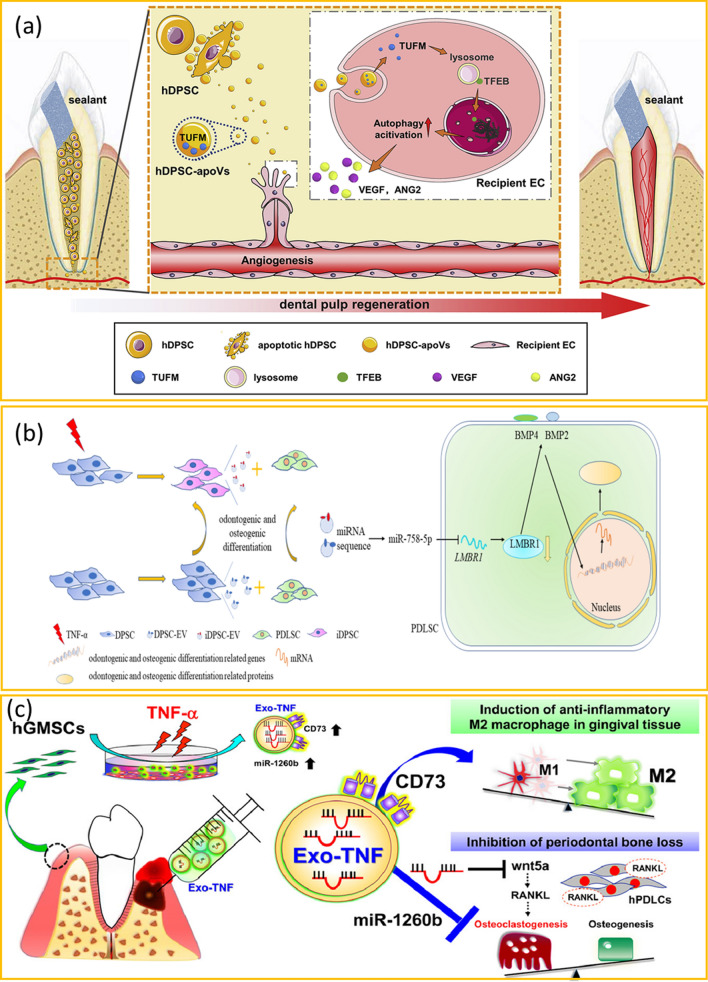
The mode of action of extracellular vesicles in promoting different dental tissue regeneration. a EVs derived from DPSCs specifically activate endogenous EC autophagy by transferring TUFM, thereby causing angiogenesis. The acceleration of vascular reconstruction promotes dental pulp regeneration. This figure is adapted and is freely accessible from reference [81], Licensed under a Creative Commons Attribution 4.0 International License (CC BY 4.0). b EVs derived from DPSCs under an inflammatory microenvironment participate in the regulating of odontogenic and osteogenic differentiation by miR-758-5p/LMBR1/BMP2/4 axis. This figure is adapted and is freely accessible from reference [99], Licensed under a Creative Commons Attribution 4.0 International License (CC BY 4.0). c EVs derived from GMSCs under inflammation microenvironment enhance M2-type macrophage polarization and prevent periodontal bone loss. This figure is adapted and is freely accessible from reference [39], Licensed under a Creative Commons Attribution 4.0 International License (CC BY 4.0). Abbreviations: EC, endothelial cells; hDPSC, human dental pulp stem cells; TUFM, Tu translation elongation factor, mitochondrial; TFEB, transcription factor EB; VEGF, vascular endothelial growth factor; ANG2, angiotensin 2; hDPSC-apoVs, apoptotic vesicles from human dental pulp stem cells; BMP, bone morphogenetic protein; LMBR1, limb development membrane protein 1; TNF-α, tumor necrosis factor α; DPSC-EV, EVs from dental pulp stem cells; iDPSC-EVs, EVs from dental pulp stem cells under inflammatory environment; PDLSC, periodontal ligament stem cells

References

    1. Peres MA, Macpherson LMD, Weyant RJ, Daly B, Venturelli R, Mathur MR, et al. Oral diseases: a global public health challenge. Lancet. 2019;394:249–60. - DOI - PubMed
    1. Fernandes G, Yang S. Application of platelet-rich plasma with stem cells in bone and periodontal tissue engineering. Bone Res. 2016;4:1–21. - DOI - PMC - PubMed
    1. Zhou X, Xu X, Li J, Hu D, Hu T, Yin W, et al. Oral health in China: from vision to action. Int J Oral Sci. 2018;10:1. - DOI - PMC - PubMed
    1. Uccelli A, Moretta L, Pistoia V. Mesenchymal stem cells in health and disease. Nat Rev Immunol. 2008;8:726–36. - DOI - PubMed
    1. Qi K, Li N, Zhang Z, Melino G. Tissue regeneration: the crosstalk between mesenchymal stem cells and immune response. Cell Immunol. 2018;326:86–93. - DOI - PubMed

LinkOut - more resources