


Unveiling the roles of CaSDH8 in Candida albicans: Implications for virulence and azole resistance
- PMID: 39403939
- PMCID: PMC11485852
- DOI: 10.1080/21505594.2024.2405000
Unveiling the roles of CaSDH8 in Candida albicans: Implications for virulence and azole resistance
Abstract
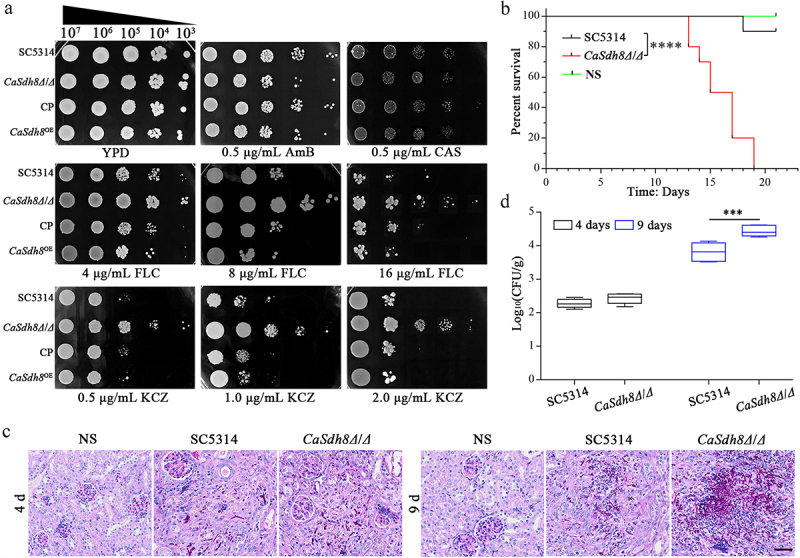
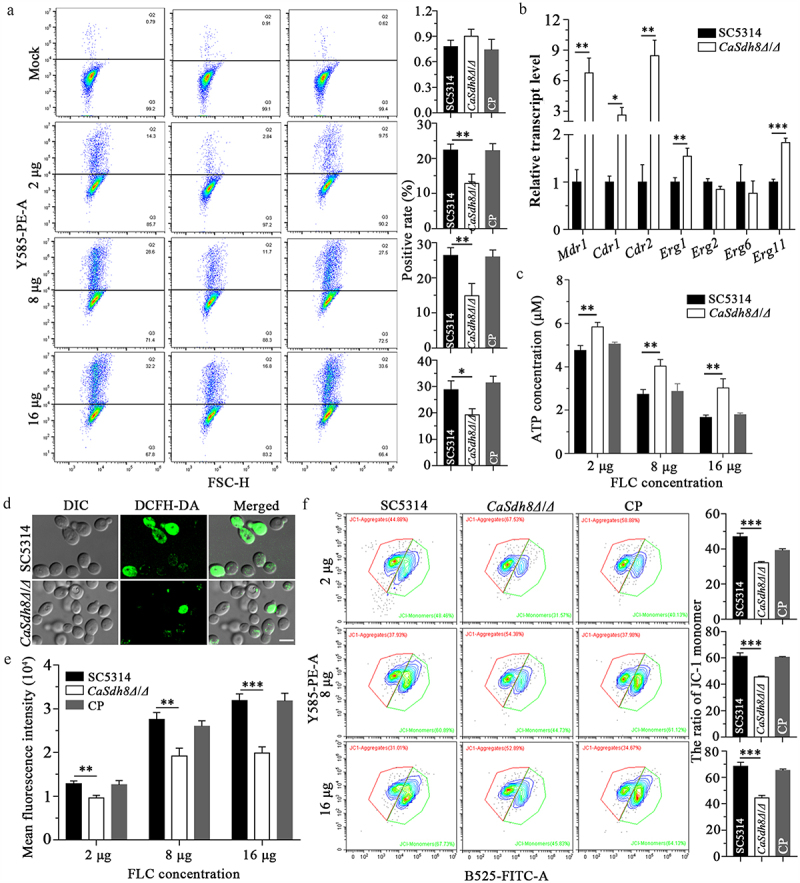
Candida albicans is the most common pathogen in systemic fungal diseases, exhibits a complex pathogenic mechanism, and is increasingly becoming drug tolerant. Therefore, it is particularly important to study the genes associated with virulence and resistance of C. albicans. Here, we identified a gene (orf19.1588) that encodes a conserved mitochondrial protein known as CaSDH8, upon deletion of CaSdh8, the deleted strain (Casdh8Δ/Δ) experienced impaired growth, hyphal development, and virulence. Casdh8Δ/Δ displayed a reduced capacity to utilize alternative carbon sources, along with detrimental alterations in reactive oxygen species (ROS), mitochondrial membrane potential (MMP) depolarization, and adenosine triphosphate (ATP) levels. Interestingly, Casdh8Δ/Δ demonstrated resistance to azole drugs, and under the influence of fluconazole, the cell membrane permeability and mitochondrial function of Casdh8Δ/Δ were less compromised than those of the wild type, indicating a reduction in the detrimental effects of fluconazole on Casdh8Δ/Δ. These findings highlight the significance of CaSDH8 as a crucial gene for the maintenance of cellular homoeostasis. Our study is the first to document the effects of the CaSDH8 gene on the virulence and azole resistance of C. albicans at both the molecular and animal levels, providing new clues and directions for the antifungal infection and the discovery of antifungal drug targets.
Keywords: CRISPR-Cas9; Candida albicans; SDH8; azole resistance; mitochondria; virulence.
Conflict of interest statement
No potential conflict of interest was reported by the author(s).
Figures
References
Publication types
MeSH terms
Substances
LinkOut - more resources
Full Text Sources
Other Literature Sources
Medical
