


Services for perinatal patients with opioid use disorder: a comprehensive Baltimore City-wide 2023 assessment
- PMID: 39407344
- PMCID: PMC11476604
- DOI: 10.1186/s13722-024-00507-0
Services for perinatal patients with opioid use disorder: a comprehensive Baltimore City-wide 2023 assessment
Abstract
Background: Overdose is a leading cause of maternal mortality; in response, maternal mortality review committees have recommended expanding substance use disorder (SUD) screening, improving collaboration between obstetric and SUD treatment providers, and reducing fragmentation in systems of care. We undertook an analysis of the perinatal SUD treatment landscape in Baltimore, Maryland in order to identify barriers to treatment engagement during pregnancy and the postpartum period and guide system improvement efforts.
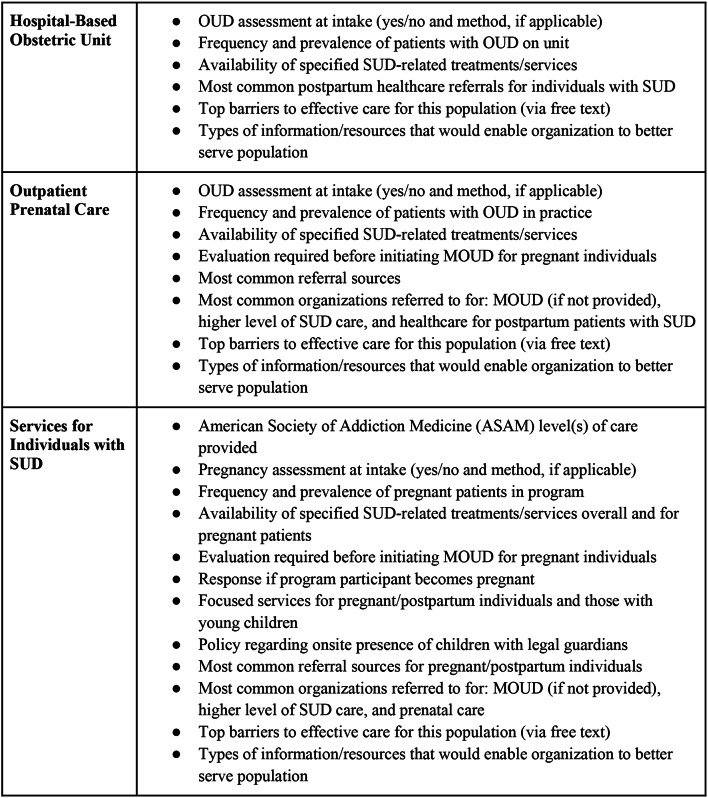
Methods: We conducted a survey of seven birthing hospitals, 31 prenatal care practices, and 108 SUD treatment providers in Baltimore from April-June 2023. Organizations were asked to quantify care for perinatal patients with opioid use disorder (OUD) as well as about screening, service availability, referral practices, and support needed to improve care.
Results: 61% of the 145 contacted organizations responded. Birthing hospitals reported caring for pregnant persons with OUD with greater frequency than prenatal care practices or SUD treatment programs. Most birthing hospitals and prenatal care practices reported screening for OUD at intake, but the minority reported using validated tools. Service availability varied by type of organization and type of service. In general, prenatal care practices offered the fewest number of SUD-related services. Most SUD treatment programs that offered buprenorphine or methadone to the general population also offered these medications to pregnant patients. Withdrawal management for comorbid alcohol/benzodiazepine use disorders during pregnancy was more limited. The majority of birthing hospitals and prenatal care practices reported offering neither direct naloxone distribution nor prescriptions. Few SUD treatment programs offered tailored services for perinatal patients or for parents of young children, and many programs do not permit children onsite. Respondents reported high levels of interest in education and consultative support on SUD treatment in pregnancy within obstetric settings and on pregnancy-related medical concerns within SUD programs.
Conclusions: This project provides a comprehensive picture of services available for treatment of perinatal OUD in a major US city. Results have served as a guide for ongoing citywide system improvement efforts by our project team and offer a model for other jurisdictions hoping to strengthen services for perinatal OUD and reduce maternal mortality.
Keywords: Health services; Maternal mortality; Opioid use disorder; Overdose; Pregnancy; Public health.
© 2024. The Author(s).
Conflict of interest statement
The authors declare no competing interests.
Figures
References
-
- Trost S, Beauregard J, Chandra G, Njie F, Berry J, Harvey A, et al. Pregnancy-related deaths: data from Maternal Mortality Review Committees in 36 US States, 2017–2019. Centers Disease Control Prev. 2022;16:2017–9.
-
- Kountanis JA, Roberts M, Admon LK, Smith R, Cropsey A, Bauer ME. Maternal deaths due to suicide and overdose in the state of Michigan from 2008 to 2018. Am J Obstet Gynecol MFM. 2023;5(2). - PubMed
-
- Maryland Maternal Mortality Review Program. Maryland Maternal Mortality Review: 2020 Annual Report [Internet]. 2021. https://health.maryland.gov/phpa/mch/Pages/mmr.aspx
MeSH terms
Substances
LinkOut - more resources
Full Text Sources
Medical
Miscellaneous
