


Chiropractic and Spinal Manipulation: A Review of Research Trends, Evidence Gaps, and Guideline Recommendations
- PMID: 39407729
- PMCID: PMC11476883
- DOI: 10.3390/jcm13195668
Chiropractic and Spinal Manipulation: A Review of Research Trends, Evidence Gaps, and Guideline Recommendations
Abstract
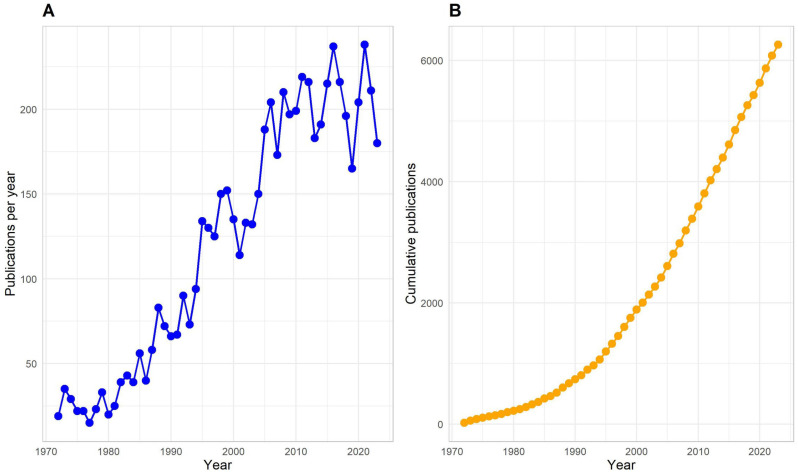
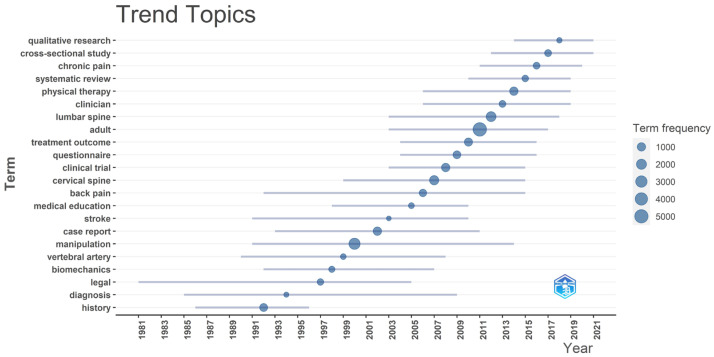
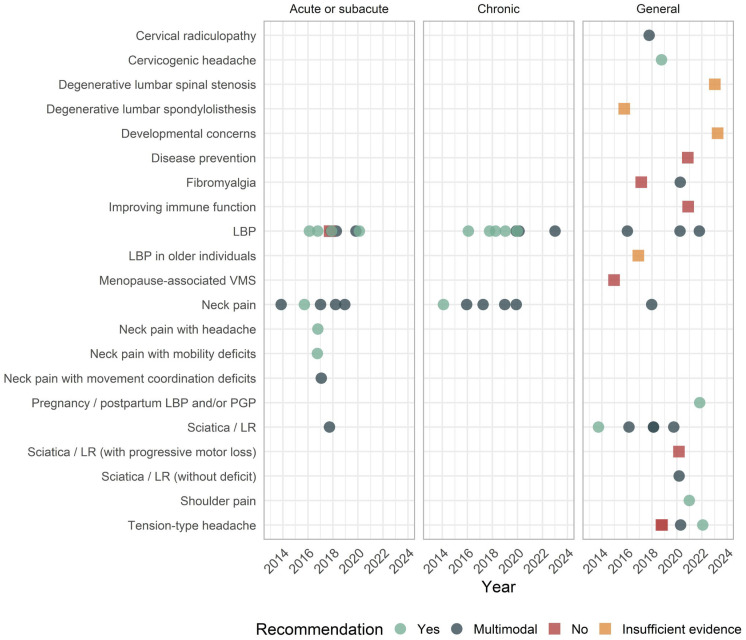
Chiropractors diagnose and manage musculoskeletal disorders, commonly using spinal manipulative therapy (SMT). Over the past half-century, the chiropractic profession has seen increased utilization in the United States following Medicare authorization for payment of chiropractic SMT in 1972. We reviewed chiropractic research trends since that year and recent clinical practice guideline (CPG) recommendations regarding SMT. We searched Scopus for articles associated with chiropractic (spanning 1972-2024), analyzing publication trends and keywords, and searched PubMed, Scopus, and Web of Science for CPGs addressing SMT use (spanning 2013-2024). We identified 6286 articles on chiropractic. The rate of publication trended upward. Keywords initially related to historical evolution, scope of practice, medicolegal, and regulatory aspects evolved to include randomized controlled trials and systematic reviews. We identified 33 CPGs, providing a total of 59 SMT-related recommendations. The recommendations primarily targeted low back pain (n = 21) and neck pain (n = 14); of these, 90% favored SMT for low back pain while 100% favored SMT for neck pain. Recent CPG recommendations favored SMT for tension-type and cervicogenic headaches. There has been substantial growth in the number and quality of chiropractic research articles over the past 50 years, resulting in multiple CPG recommendations favoring SMT. These findings reinforce the utility of SMT for spine-related disorders.
Keywords: bibliometrics; chiropractic; clinical practice guidelines; low back pain; review; spinal manipulation.
Conflict of interest statement
Robert J. Trager reports receiving royalties from authoring two texts on the topic of sciatica. The other authors have declared no competing interests.
Figures


References
-
- Harwood K.J., Pines J.M., Andrilla C.H.A., Frogner B.K. Where to Start? A Two Stage Residual Inclusion Approach to Estimating Influence of the Initial Provider on Health Care Utilization and Costs for Low Back Pain in the US. BMC Health Serv. Res. 2022;22:694. doi: 10.1186/s12913-022-08092-1. - DOI - PMC - PubMed
-
- Fenton J.J., Fang S.-Y., Ray M., Kennedy J., Padilla K., Amundson R., Elton D., Haldeman S., Lisi A.J., Sico J., et al. Longitudinal Care Patterns and Utilization among Patients with New-Onset Neck Pain by Initial Provider Specialty. Spine (Phila Pa 1976) 2023;48:1409–1418. doi: 10.1097/BRS.0000000000004781. - DOI - PubMed
-
- Beliveau P.J.H., Wong J.J., Sutton D.A., Simon N.B., Bussières A.E., Mior S.A., French S.D. The Chiropractic Profession: A Scoping Review of Utilization Rates, Reasons for Seeking Care, Patient Profiles, and Care Provided. Chiropr. Man. Ther. 2017;25:35. doi: 10.1186/s12998-017-0165-8. - DOI - PMC - PubMed
-
- Tindle H.A., Davis R.B., Phillips R.S., Eisenberg D.M. Trends in Use of Complementary and Alternative Medicine by US Adults: 1997–2002. Altern. Ther. Health Med. 2005;11:42–49. - PubMed
Publication types
LinkOut - more resources
Full Text Sources
Miscellaneous
