


In Silico Design of miniACE2 Decoys with In Vitro Enhanced Neutralization Activity against SARS-CoV-2, Encompassing Omicron Subvariants
- PMID: 39409131
- PMCID: PMC11476394
- DOI: 10.3390/ijms251910802
In Silico Design of miniACE2 Decoys with In Vitro Enhanced Neutralization Activity against SARS-CoV-2, Encompassing Omicron Subvariants
Abstract
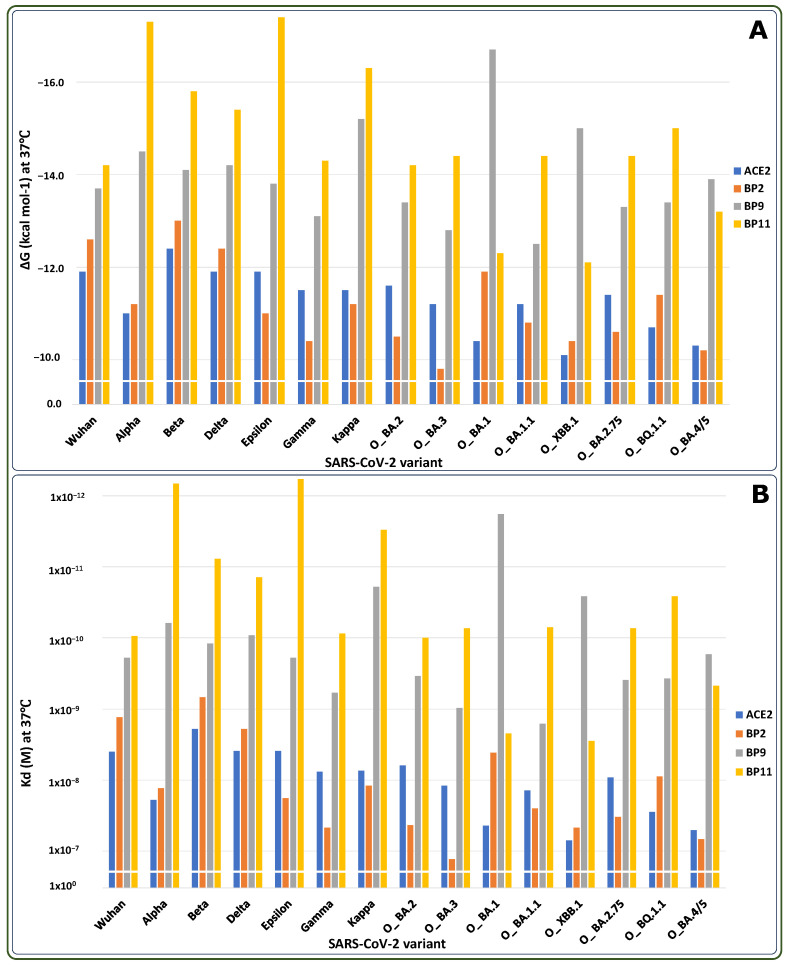
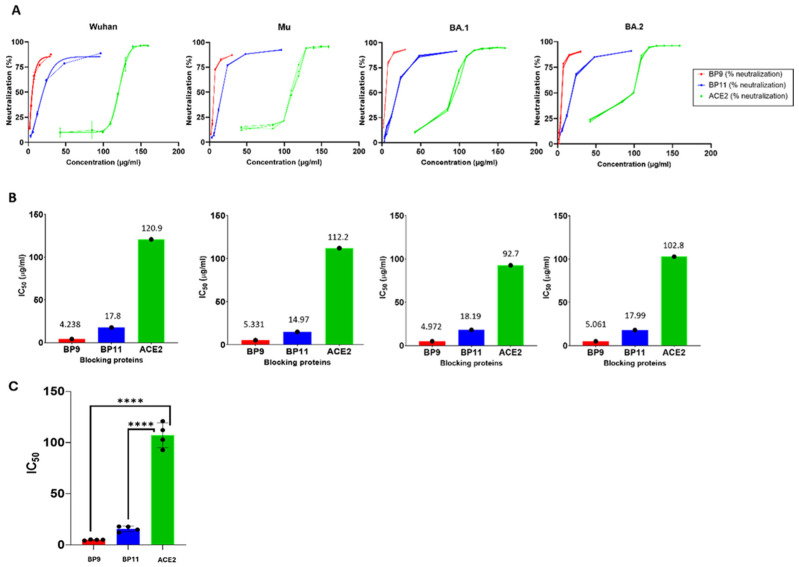
The COVID-19 pandemic has overwhelmed healthcare systems and triggered global economic downturns. While vaccines have reduced the lethality rate of SARS-CoV-2 to 0.9% as of October 2024, the continuous evolution of variants remains a significant public health challenge. Next-generation medical therapies offer hope in addressing this threat, especially for immunocompromised individuals who experience prolonged infections and severe illnesses, contributing to viral evolution. These cases increase the risk of new variants emerging. This study explores miniACE2 decoys as a novel strategy to counteract SARS-CoV-2 variants. Using in silico design and molecular dynamics, blocking proteins (BPs) were developed with stronger binding affinity for the receptor-binding domain of multiple variants than naturally soluble human ACE2. The BPs were expressed in E. coli and tested in vitro, showing promising neutralizing effects. Notably, miniACE2 BP9 exhibited an average IC50 of 4.9 µg/mL across several variants, including the Wuhan strain, Mu, Omicron BA.1, and BA.2 This low IC50 demonstrates the potent neutralizing ability of BP9, indicating its efficacy at low concentrations.Based on these findings, BP9 has emerged as a promising therapeutic candidate for combating SARS-CoV-2 and its evolving variants, thereby positioning it as a potential emergency biopharmaceutical.
Keywords: ACE2-decoys; SARS-CoV-2 variants evading monoclonal antibodies; basic science for translational medicine; in silico design of next-generation therapies for infectious diseases; miniACE2; next-generation treatments for SARS-CoV-2.
Conflict of interest statement
The funders had no role in the design of the study, interpretation of data, writing of the manuscript, or the decision to publish the results.
Figures
References
-
- Chen H., Guo J., Wang C., Luo F., Yu X., Zhang W., Li J., Zhao D., Xu D., Gong Q., et al. Clinical characteristics and intrauterine vertical transmission potential of COVID-19 infection in nine pregnant women: A retrospective review of medical records. Lancet. 2020;395:809–815. doi: 10.1016/S0140-6736(20)30360-3. - DOI - PMC - PubMed
-
- COVID-19 Cases|WHO COVID-19 Dashboard. [(accessed on 1 October 2024)]. Available online: https://data.who.int/dashboards/covid19/cases.
MeSH terms
Substances
Supplementary concepts
Grants and funding
LinkOut - more resources
Full Text Sources
Medical
Research Materials
Miscellaneous
