


Overview of the Design and Application of Photothermal Immunoassays
- PMID: 39409498
- PMCID: PMC11479306
- DOI: 10.3390/s24196458
Overview of the Design and Application of Photothermal Immunoassays
Abstract
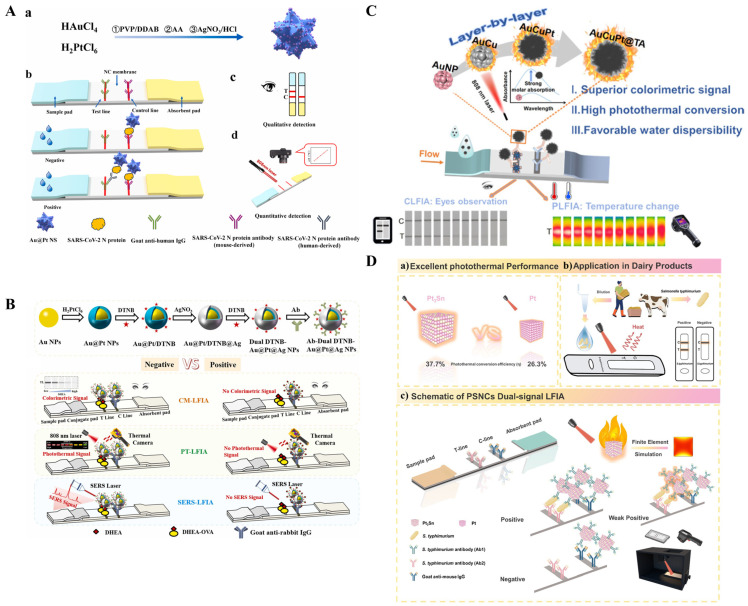
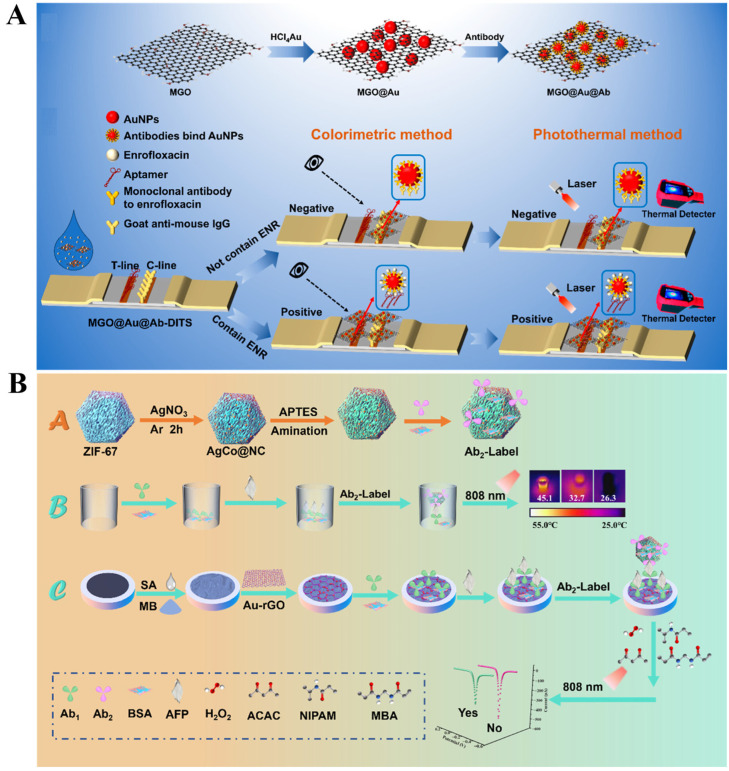
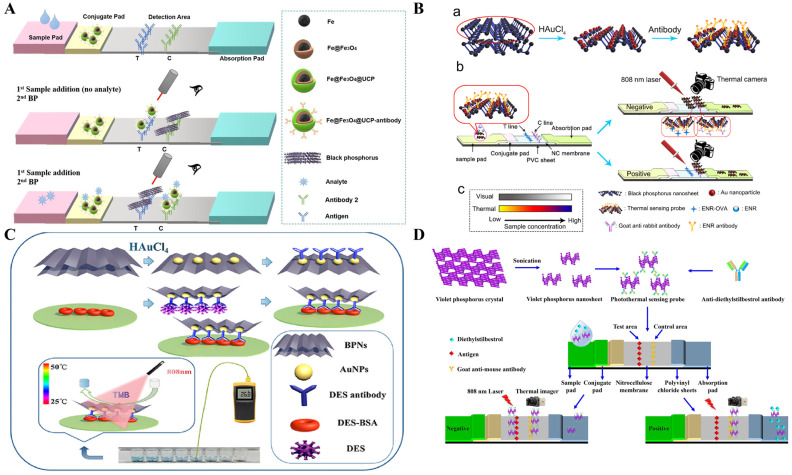
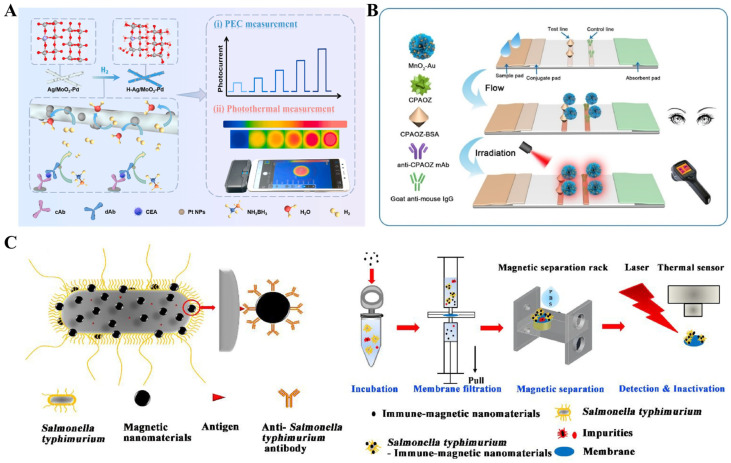
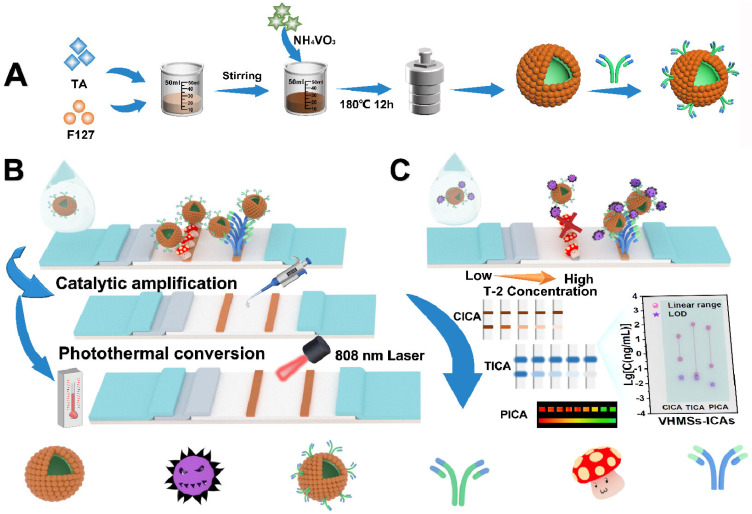
Developing powerful immunoassays for sensitive and real-time detection of targets has always been a challenging task. Due to their advantages of direct readout, controllable sensing, and low background interference, photothermal immunoassays have become a type of new technology that can be used for various applications such as disease diagnosis, environmental monitoring, and food safety. By modification with antibodies, photothermal materials can induce temperature changes by converting light energy into heat, thereby reporting specific target recognition events. This article reviews the design and application of photothermal immunoassays based on different photothermal materials, including noble metal nanomaterials, carbon-based nanomaterials, two-dimensional nanomaterials, metal oxide and sulfide nanomaterials, Prussian blue nanoparticles, small organic molecules, polymers, etc. It pays special attention to the role of photothermal materials and the working principle of various immunoassays. Additionally, the challenges and prospects for future development of photothermal immunoassays are briefly discussed.
Keywords: immunoassays; nanozymes; noble metal nanomaterials; photothermal.
Conflict of interest statement
The authors declare no conflicts of interest.
Figures

References
-
- Pan R., Li G., Liu S., Zhang X., Liu J., Su Z., Wu Y. Emerging nanolabels-based immunoassays: Principle and applications in food safety. TrAC-Trend. Anal. Chem. 2021;145:116462–116482. doi: 10.1016/j.trac.2021.116462. - DOI
Publication types
MeSH terms
Substances
Grants and funding
LinkOut - more resources
Full Text Sources
