


Protective Effects of Wild Sulla coronaria (Fabaceae) Flowers Phytocomplex in Human Dermal Fibroblasts Stimulated with Interleukin-1β
- PMID: 39409619
- PMCID: PMC11479213
- DOI: 10.3390/plants13192748
Protective Effects of Wild Sulla coronaria (Fabaceae) Flowers Phytocomplex in Human Dermal Fibroblasts Stimulated with Interleukin-1β
Abstract
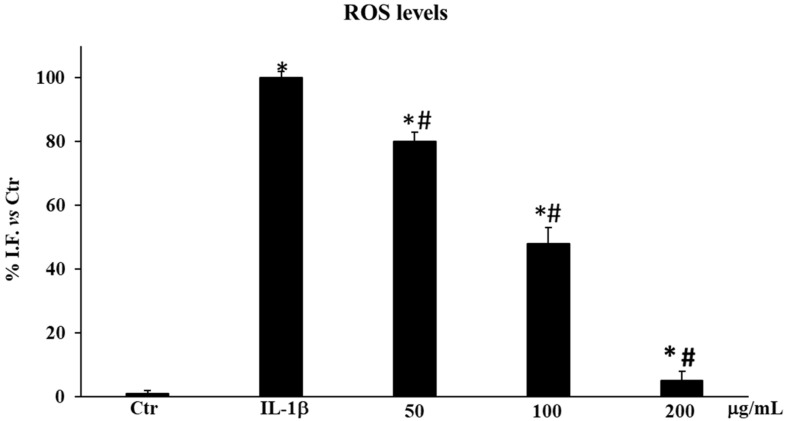
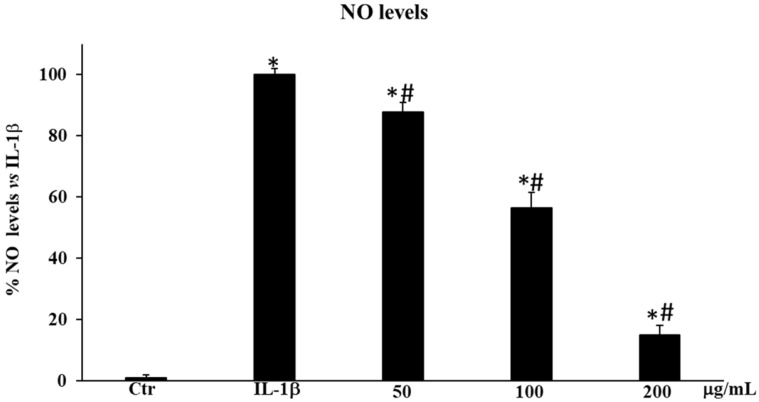
Sulla coronaria is indigenous to the Mediterranean region. It is grown as fodder in southern Italy because it contains various secondary metabolites with beneficial activities on animals. Recently, its potential use in cosmeceutical treatments for skin problems was reported. In this scenario, to contribute to a possible cosmeceutical application, we characterized the phytochemical profile of Sulla coronaria flowers' hydroalcoholic extract by HPLC-DAD, Folin-Ciocalteu, Aluminum Chloride methods, DPPH assay, and, for the first time, we evaluated the antioxidant and anti-inflammatory activities on dermal fibroblasts. The phytochemical analysis confirmed the significant content of phenolic compounds (TPC 69.8 ± 0.6 mg GAE/g extract, TFC 15.07 mg CE/g extract) and the remarkable presence of rutin, quercetin, and isorhamnetin derivatives that give to the phytocomplex a good antioxidant activity as highlighted by the DPPH assay (IC50 of 8.04 ± 0.5 µg/mL). Through the reduction in NO• and ROS levels in human dermal fibroblasts, the biological tests demonstrated both the safety of the extract and its ability to counteract the inflammatory state generated by Interleukin-1β exposure. Our findings indicate that the antioxidant activities of the phytocomplex are strictly related to the anti-inflammatory action of the Sulla coronaria flowers extract, confirming that this plant could be a valuable source of bioactive molecules for cosmeceutical and nutraceutical applications.
Keywords: Hedysarum coronarium; NO•; ROS; Sicilian vascular flora; flavonols; nitrites/nitrates; polyphenols; quercetin.
Conflict of interest statement
The authors declare no conflicts of interest.
Figures
References
-
- Choi B., Ohashi H. Generic criteria and an infrageneric system for Hedysarum and related genera (Papilionoideae-Leguminosae) Taxon. 2003;52:567–576. doi: 10.2307/3647455. - DOI
-
- Ruisi P., Siragusa M., Di Giorgio G., Graziano D., Amato G., Carimi F., Giambalvo D. Pheno-morphological, agronomic and genetic diversity among natural populations of sulla (Hedysarum coronarium L.) collected in Sicily, Italy. Genet. Resour. Crop Evol. 2011;58:245–257. doi: 10.1007/s10722-010-9565-5. - DOI
-
- Pignatti S. Flora d’Italia: In 4 Volumi. Volume 2: Flora d’Italia & Flora Digitale. 2nd ed. Edagricole-Edizioni Agricole di New Business Media srl; Milano, Italy: 2017.
-
- Fratianni F., Ombra M.N., D’Acierno A., Caputo L., Amato G., De Feo V., Coppola R., Nazzaro F. Polyphenols Content and In Vitro α-Glycosidase Activity of Different Italian Monofloral Honeys, and Their Effect on Selected Pathogenic and Probiotic Bacteria. Microorganisms. 2021;9:1694. doi: 10.3390/microorganisms9081694. - DOI - PMC - PubMed
Grants and funding
LinkOut - more resources
Full Text Sources
