


Chlorogenic Acid Plays an Important Role in Improving the Growth and Antioxidant Status and Weakening the Inflammatory Response of Largemouth Bass (Micropterus salmoides)
- PMID: 39409820
- PMCID: PMC11476275
- DOI: 10.3390/ani14192871
Chlorogenic Acid Plays an Important Role in Improving the Growth and Antioxidant Status and Weakening the Inflammatory Response of Largemouth Bass (Micropterus salmoides)
Abstract
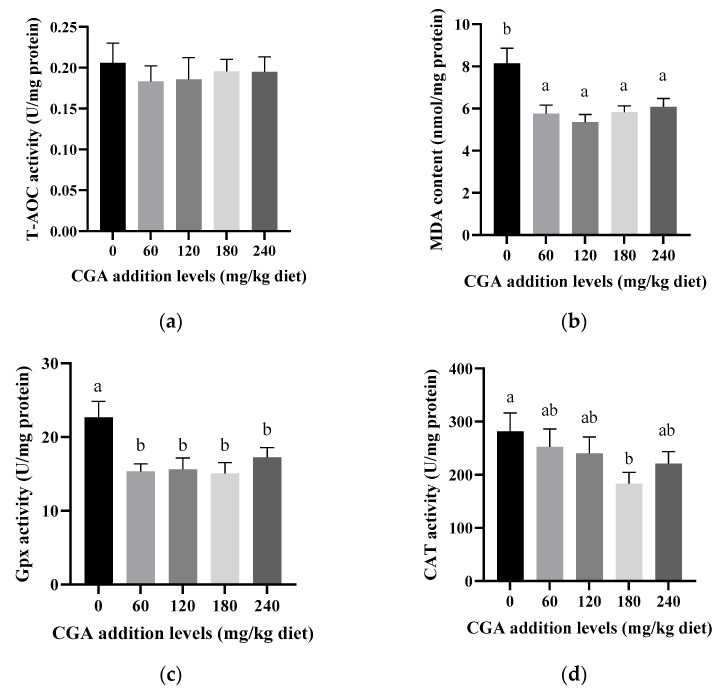
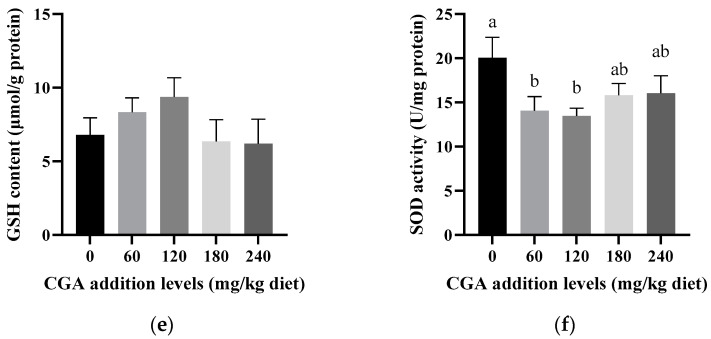
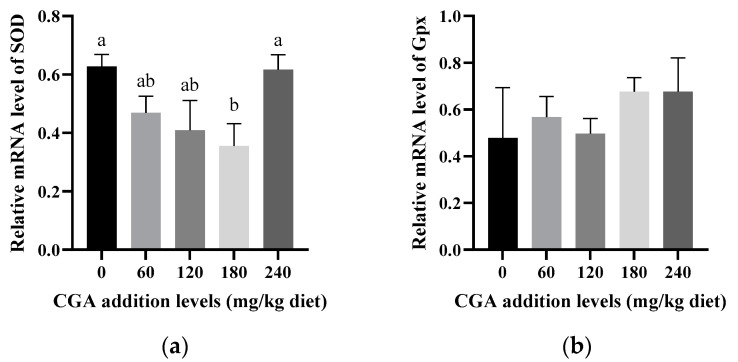
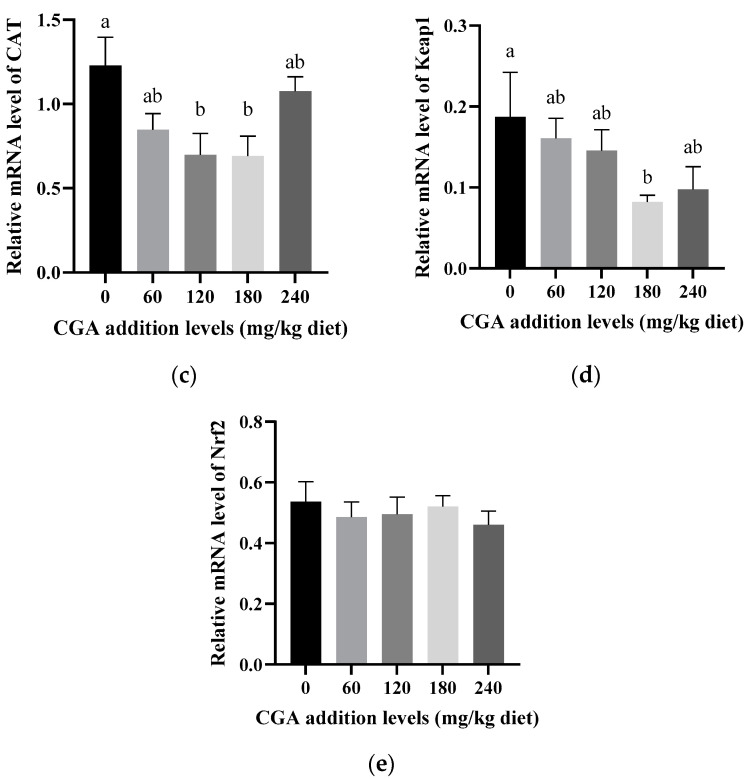
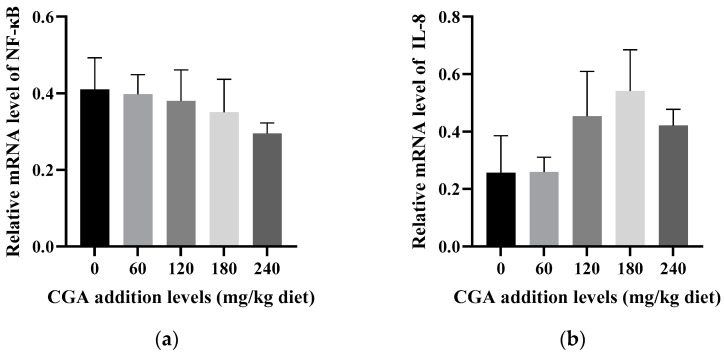
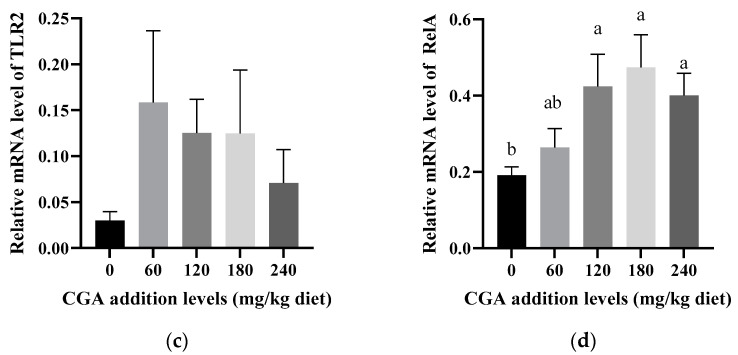
This experiment evaluated the function of chlorogenic acid (CGA) in the growth, health status, and inflammation of largemouth bass (Micropterus salmoides). Over eight weeks, CGA supplementation was designed at five levels: 0, 60, 120, 180, and 240 mg/kg. The 180 and 240 mg/kg CGA-supplemented groups showed significant improvements in the FBW, SGR, and WGR compared to the control group (0 mg/kg) (p < 0.05). All the CGA-supplemented groups exhibited a significant reduction in the FCR (p < 0.05), with the 180 mg/kg CGA group showing the lowest FCR. Nonetheless, there were no appreciable differences in the plasma concentrations of TP, ALT, or AST among the treatments (p > 0.05). Compared to the control group, the 180 mg/kg CGA group exhibited significantly lower TC and TG levels (p < 0.05). The ALP levels showed no significant differences from the control group (p > 0.05). In terms of antioxidant parameters, CGA supplementation considerably reduced the MDA content (p < 0.05) and increased the GSH levels, while decreasing the CAT, SOD, and GPx activity levels Meanwhile, CGA supplementation resulted in reduced mRNA levels of SOD, CAT, Nrf2, Keap1, and NF-κB compared to the control group. In contrast, the mRNA levels of GPx, IL-8, TLR2, and RelA were elevated in the liver. Our findings indicated that CGA supplementation improved the growth performance and antioxidant status and weakened the inflammatory response of largemouth bass. These findings suggest that CGA could be a valuable dietary supplement for enhancing the health and growth of this species.
Keywords: eco-friendly alternatives; growth performance; hepatic antioxidant; hepatic gene expression; largemouth bass; natural feed additive.
Conflict of interest statement
The authors Lu Zhang and Haifeng Mi are employed by Tongwei Agricultural Development Co., Ltd. The remaining authors declare that this research was conducted in the absence of any commercial or financial relationships that could be construed as potential conflicts of interest. Lu Zhang made important contributions to writing—review and editing and project administration. Haifeng Mi made important contributions to the methodology and data curation.
Figures
References
-
- The State of World Fisheries and Aquaculture 2022. FAO; Rome, Italy: 2022.
-
- Hoseinifar S.H., Sun Y.-Z., Caipang C.M. Short-Chain Fatty Acids as Feed Supplements for Sustainable Aquaculture: An Updated View. Aquac. Res. 2017;48:1380–1391. doi: 10.1111/are.13239. - DOI
-
- Dawood M.A.O., Koshio S. Recent Advances in the Role of Probiotics and Prebiotics in Carp Aquaculture: A Review. Aquaculture. 2016;454:243–251. doi: 10.1016/j.aquaculture.2015.12.033. - DOI
Grants and funding
LinkOut - more resources
Full Text Sources
Research Materials
Miscellaneous
