


Validation of a Passive Solar Drying System Using Pineapple
- PMID: 39410115
- PMCID: PMC11475935
- DOI: 10.3390/foods13193081
Validation of a Passive Solar Drying System Using Pineapple
Abstract
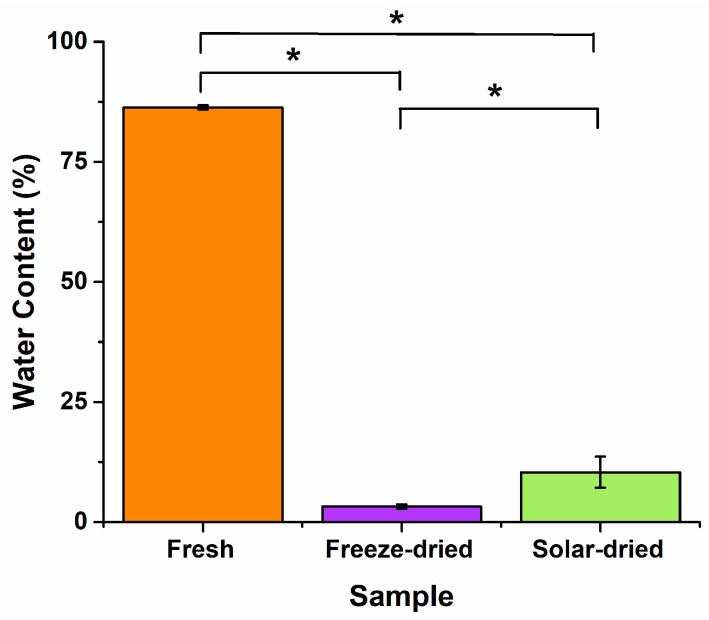
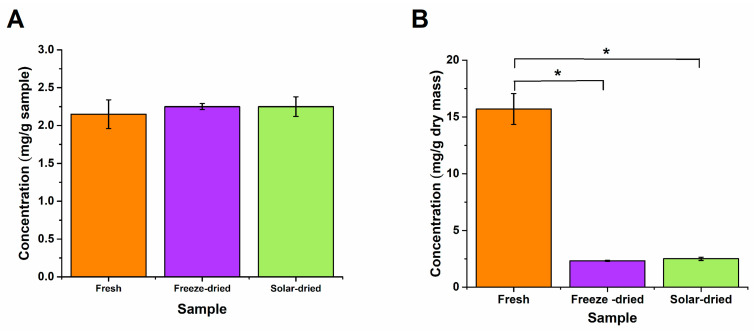
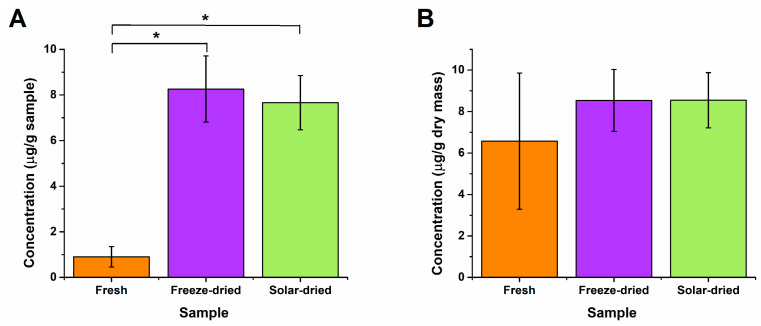
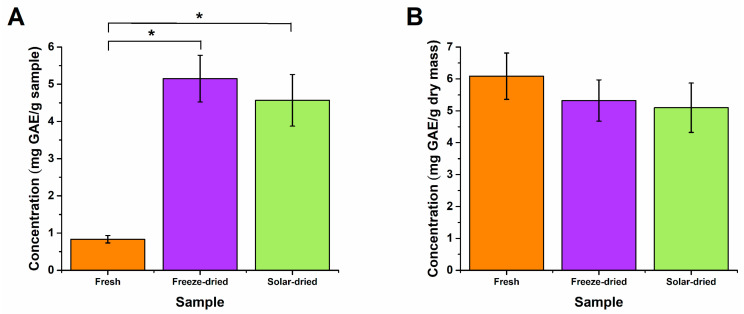
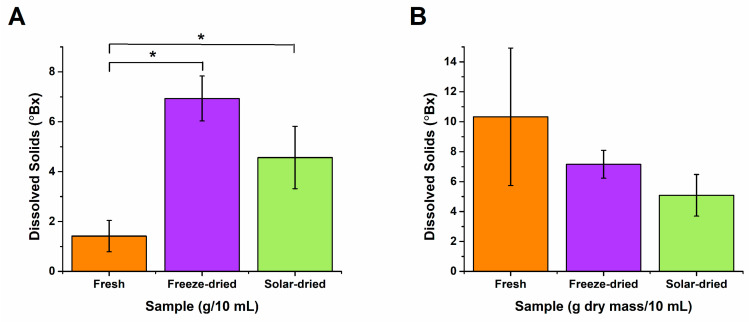
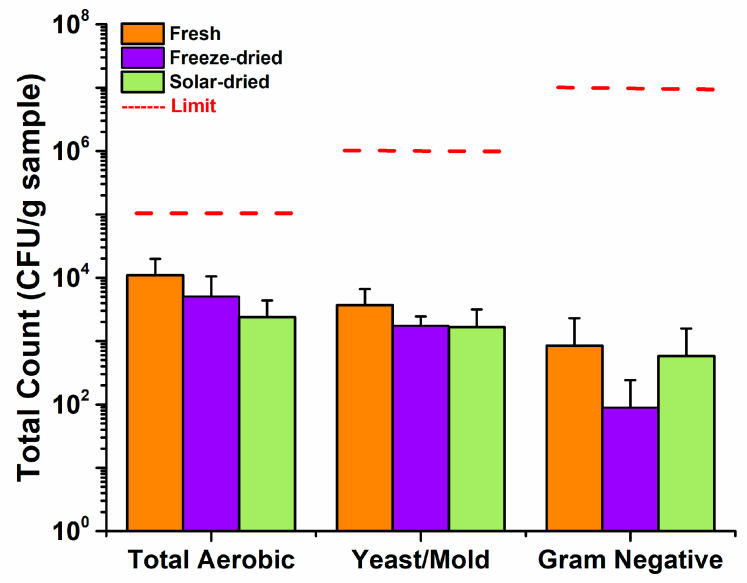
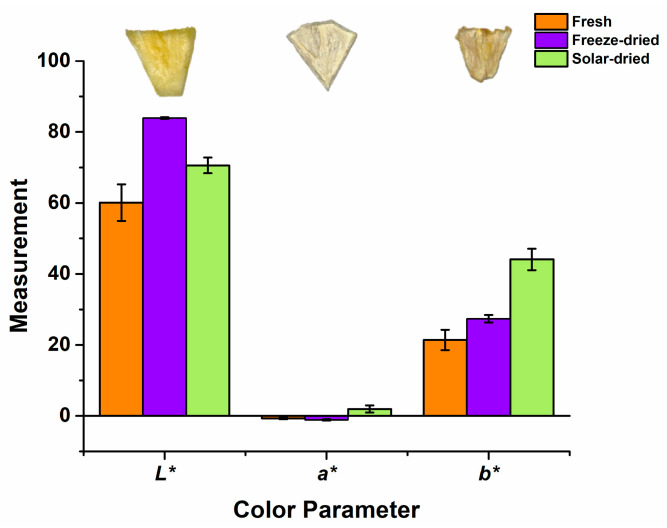
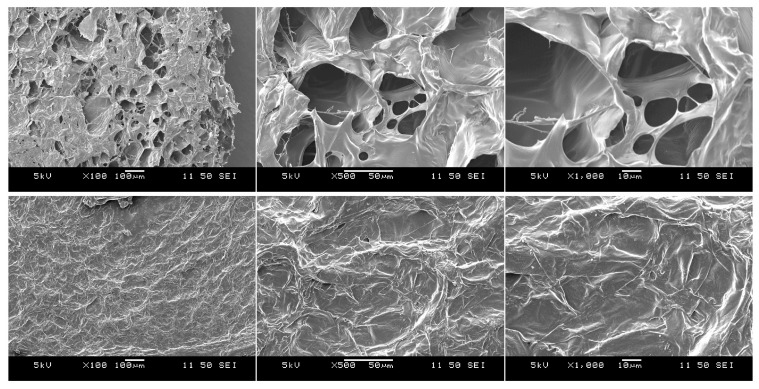
Wasted produce is a pertinent issue in agriculture, with billions of tons of produce going to waste even before it hits markets. Specifically, in Sub-Saharan Africa (SSA), nearly half of all produce is lost before market. To combat this, the Agricycle® passive solar drier was designed to provide a cost-effective method of drying fruit for preservation. Using a psychrometric chamber to simulate the SSA environment, vitamin C, total phenolic contents, and iron tests were conducted, along with microbial content determination, water content determination, dissolved solids testing, and color and microstructure analyses to validate passive solar drying, comparing the results to freeze-dried samples. Nutritional contents were comparable between fresh, freeze-dried, and solar-dried samples, with a loss in vitamin C (statistically significant), total phenolic contents, and dissolved solids during solar drying. The microbial analysis for solar-dried samples was below standard limits, and the water content in the solar-dried samples was ~10% w.b. (<20% w.b.) compared to ~3% w.b. of the freeze-dried samples. Although having comparable vitamin C, total phenolic contents, and iron values, freeze-dried and solar dried samples showed very different colors and microstructures based on colorimetry and SEM imaging. In conclusion, the Agricycle® passive solar drier is a promising alternative approach for food preservation.
Keywords: drying; freeze-drying; pineapple; preservation; solar drying.
Conflict of interest statement
The authors declare no conflicts of interest.
Figures
References
-
- United Nations Environment Programme Why the Global Fight to Tackle Food Waste Has Only Just Begun. 2022. [(accessed on 23 September 2024)]. Available online: https://www.unep.org/news-and-stories/story/why-global-fight-tackle-food....
-
- Zereyesus Y.A., Cardell L. Global food insecurity grows in 2022 amid backdrop of higher prices, Black Sea Conflict. [(accessed on 23 September 2024)];Amber Waves Econ. Food Farming Nat. Resour. Rural. Am. 2022 2022 Available online: https://www.ers.usda.gov/amber-waves/2022/november/global-food-insecurit...
-
- Feng S., Bi J., Laaksonen T., Laurén P., Yi J. Texture of freeze-dried intact and restructured fruits: Formation mechanisms and control technologies. Trends Food Sci. Technol. 2024;143:104267. doi: 10.1016/j.tifs.2023.104267. - DOI
-
- Ingham J., Kanungo M., Beauchamp B., Korbut M., Swedish M., Navin M., Zhang W. Validation of solar dehydrator for food drying applications: A Granny Smith apple study. J. Chem. Eng. Res. Updates. 2022;9:13–21. doi: 10.15377/2409-983X.2022.09.2. - DOI
Grants and funding
LinkOut - more resources
Full Text Sources
Research Materials
