


Physical Activity in young female outpatients with BORderline personality Disorder (PABORD): a study protocol for a randomized controlled trial (RCT)
- PMID: 39415283
- PMCID: PMC11484461
- DOI: 10.1186/s13063-024-08525-8
Physical Activity in young female outpatients with BORderline personality Disorder (PABORD): a study protocol for a randomized controlled trial (RCT)
Abstract
Background: Current treatments for mental disorders, like pharmacotherapy or psychological approaches, do not lead to full remission in all individuals. Physical activity (PA) is effective at improving psycho-physical health in major depressive and anxiety disorders. However, the efficacy of PA as an adjunctive treatment for borderline personality disorder (BPD) has not been studied. To date, there are no approved pharmacological treatments for this severe condition and limited accessibility to effective psychotherapeutic interventions. This study tests the efficacy of a structured PA programme as an additional treatment for BPD outpatients.
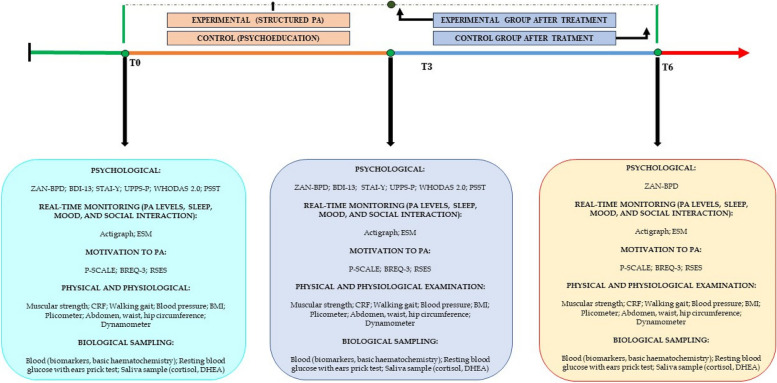
Methods: The PABORD is a randomised controlled trial for female outpatients (18-40 years) with a BPD diagnosis. The intervention group (n = 32) will participate in a 12-week structured PA programme supervised by a sport medicine physician and preceded by three psychoeducation sessions on healthy eating habits. The control group (n = 32) will receive a 12-week psychoeducation programme on PA, diet, and health risks of a sedentary lifestyle for a total of 8 sessions. The study aims to determine if the PA intervention is superior to the control in reducing BPD symptoms. Secondary aims include improving PA levels and physical and psychological health. Assessments will be conducted at baseline, post-intervention, and 3 months post-intervention.
Discussion: The structured PA programme is expected to outperform the control group in terms of health and PA outcomes at the end of the intervention. Repeated assessments will also help to identify psychosocial factors that influence PA maintenance. Findings will support the potential widespread implementation of PA programmes for BPD treatment.
Trial registration: ClinicalTrials.gov NCT06461104. Registered on 6 June 2024 {2a}.
Keywords: Accelerometer; Borderline personality disorder; Experience sampling method; Female outpatients; General functioning; Physical activity; Physical activity motivation; Premenstrual symptoms.
© 2024. The Author(s).
Conflict of interest statement
The authors declare they have no competing interests.
Figures

References
-
- Naci H, Salcher-Konrad M, Dias S, Blum MR, Sahoo SA, Nunan D, et al. How does exercise treatment compare with antihypertensive medications? A network meta-analysis of 391 randomised controlled trials assessing exercise and medication effects on systolic blood pressure. Br J Sports Med. 2019;53(14):859–69. - PubMed
-
- Mellow ML, Dumuid D, Thacker JS, Dorrian J, Smith AE. Building your best day for healthy brain aging-The neuroprotective effects of optimal time use. Maturitas. 2019;125:33–40. - PubMed
-
- McKeon G, Curtis J, Rosenbaum S. Promoting physical activity for mental health: an updated evidence review and practical guide. Curr Opin Psychiatry. 2022;35(4):270–6. - PubMed
