


Identification of tauopathy-associated lipid signatures in Alzheimer's disease mouse brain using label-free chemical imaging
- PMID: 39420210
- PMCID: PMC11487145
- DOI: 10.1038/s42003-024-07034-3
Identification of tauopathy-associated lipid signatures in Alzheimer's disease mouse brain using label-free chemical imaging
Abstract
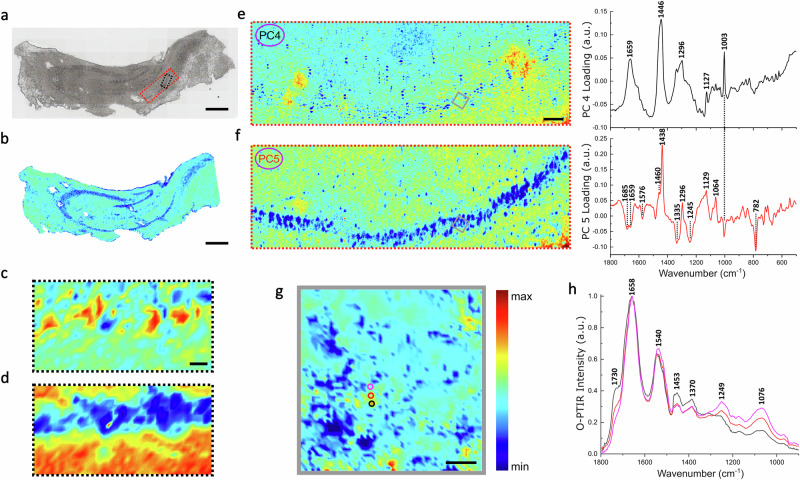
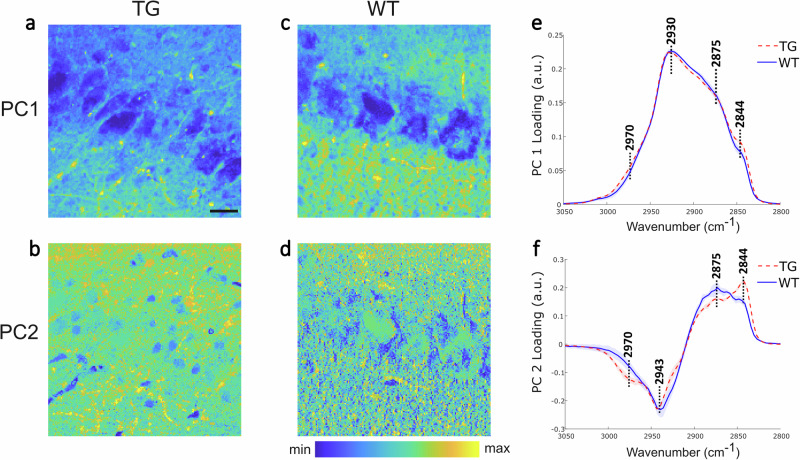
There is cumulative evidence that lipid metabolism plays a key role in the pathogenesis of various neurodegenerative disorders including Alzheimer's disease (AD). Visualising lipid content in a non-destructive label-free manner can aid in elucidating the AD phenotypes towards a better understanding of the disease. In this study, we combined multiple optical molecular-specific methods, Fourier transform infrared (FTIR) spectroscopic imaging, synchrotron radiation-infrared (SR-IR) microscopy, Raman and stimulated Raman scattering (SRS) microscopy, and optical-photothermal infrared (O-PTIR) microscopy with multivariate data analysis, to investigate the biochemistry of brain hippocampus in situ using a mouse model of tauopathy (rTg4510). We observed a significant difference in the morphology and lipid content between transgenic (TG) and wild type (WT) samples. Immunohistochemical staining revealed some degree of microglia co-localisation with elevated lipids in the brain. These results provide new evidence of tauopathy-related dysfunction in a preclinical study at a subcellular level.
© 2024. The Author(s).
Conflict of interest statement
The authors declare no competing interests.
Figures




References
-
- World Health Organization, https://www.who.int/news-room/fact-sheets/detail/dementia (2023).
-
- Daroff, R. B. & Aminoff, M. J. Encyclopedia of The Neurological Sciences (Academic press, 2014).
MeSH terms
Substances
Grants and funding
LinkOut - more resources
Full Text Sources
Medical
Research Materials
Miscellaneous
