


The Michigan Collaborative for Type 2 Diabetes (MCT2D): Development and implementation of a statewide collaborative quality initiative
- PMID: 39420291
- PMCID: PMC11487891
- DOI: 10.1186/s12913-024-11520-z
The Michigan Collaborative for Type 2 Diabetes (MCT2D): Development and implementation of a statewide collaborative quality initiative
Abstract
Background: Type 2 diabetes (T2D) is one of the most prevalent chronic diseases worldwide and a leading cause of cardiorenal disease and mortality. Only one-third of individuals with T2D receive care as recommended by the American Diabetes Association's clinical practice guidelines. Effective strategies are needed to accelerate the implementation of guideline concordant T2D care.
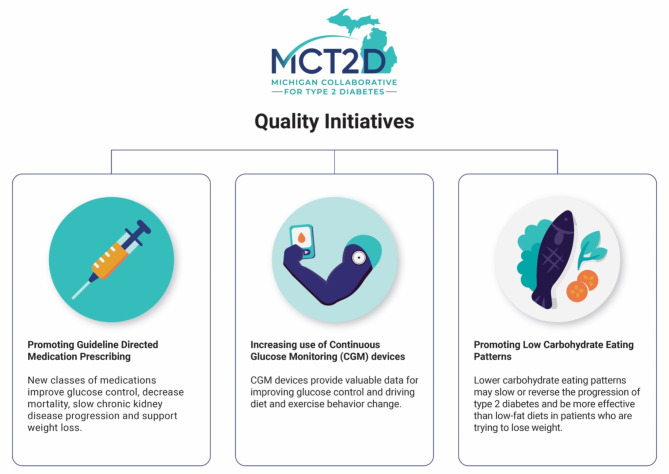
Methods: The Michigan Collaborative for Type 2 Diabetes (MCT2D) is a statewide population health collaborative quality initiative (CQI) developed to improve the care of all people with T2D in Michigan. MCT2D has developed a learning health system with physician organizations and their constituent practices to support quality improvement initiatives focused on (1) improving use of guideline-directed pharmacotherapy to improve cardiorenal outcomes, (2) increasing evidence-based use of continuous glucose monitoring, and (3) supporting use of lower carbohydrate eating patterns.
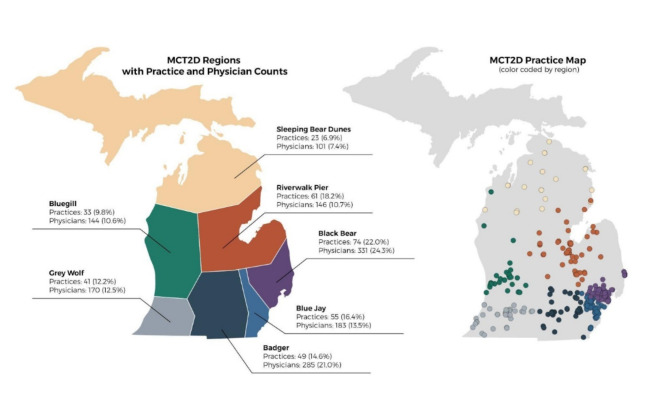
Results: Between 2021 and 2022, MCT2D recruited 28 of the 40 Michigan-based physician organizations participating in Blue Cross' Physician Group Incentive Program with 336 constituent practices and 1357 physicians in primary care (304), endocrinology (21) and nephrology (11). In January 2022, baseline data included a sample of 96,140 unique individuals with T2D. The baseline HbA1c was ≤ 7.0% for 66.3% of patients (n = 32,787), while 14.9% of patients had a most recent HbA1c ≥ 8.0% (n = 7,393). The most recent body mass index (BMI) was ≥ 30.0 for 64.8% of patients (n = 38,516).
Discussion: MCT2D has organized a statewide collaborative to recruit and engage a diverse and large set of physician organizations and their constituent practices. This is a promising opportunity to accelerate adoption of guideline-concordant care for people with T2D and may be a model for other state or regional collaboratives. Future directions include specific evidence-based interventions targeted at reducing diabetes-linked comorbidities and associated healthcare costs as well as strategies focused on T2D prevention among at-risk populations.
Keywords: Collaborative; Primary care; Quality Improvement; Resources; Type 2 diabetes; Value-based reimbursement.
© 2024. The Author(s).
Conflict of interest statement
Lauren Oshman: Stock holdings in the following companies that may be involved in producing products relevant to Type 2 Diabetes care: Procter Gamble, Johnson Johnson, Merck, Abbvie, Eli Lilly, Abbott, Dupont. Rodica Pop-Busui: Consultant: Novo Nordisk, Lexicon Pharmaceuticals, Roche, Nevro Inc, Procter and Gamble.
Figures
References
-
- Centers for Disease Control. Prevalence of Both Diagnosed and Undiagnosed Diabetes. 2022. https://www.cdc.gov/diabetes/data/statistics-report/index.html
-
- Prevalence of Prediabetes Among Adults | Diabetes | CDC, September. 21, 2022. Accessed July 13, 2023. https://www.cdc.gov/diabetes/data/statistics-report/prevalence-of-predia...
-
- Obesity is a Common, Serious, and Costly Disease. Centers for Disease Control and Prevention. July 20, 2022. Accessed July 13. 2023. https://www.cdc.gov/obesity/data/adult.html
MeSH terms
Grants and funding
LinkOut - more resources
Full Text Sources
Medical
