


Factor analysis of traditional Chinese medicine symptoms for identification of syndrome patterns associated with idiopathic short stature in children
- PMID: 39421489
- PMCID: PMC11483086
- DOI: 10.4103/tcmj.tcmj_277_23
Factor analysis of traditional Chinese medicine symptoms for identification of syndrome patterns associated with idiopathic short stature in children
Abstract
Objectives: Diagnosing idiopathic short stature (ISS) in Traditional Chinese Medicine (TCM) remains challenging partly because the symptoms and syndrome patterns vary among ISS patients and studies. We aimed to use factor analysis of TCM symptoms to identify syndrome patterns associated with ISS in children on the basis of TCM theory.
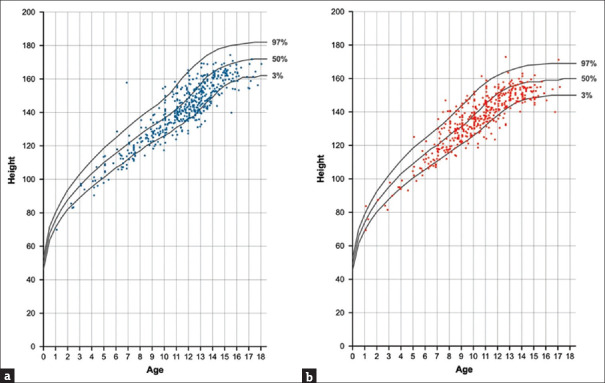
Materials and methods: A cross-sectional study was conducted at Taipei Tzu Chi Hospital, New Taipei City, Taiwan, from October 1, 2014, to February 28, 2016. The study included 957 individuals who were newly diagnosed with ISS through simple random sampling. The outcome measures comprised 34 TCM symptoms related to children's growth, and these symptoms were assessed using a five-level self-report questionnaire, which was completed by children and their parents. A factor analysis was conducted for the extraction of underlying factors.
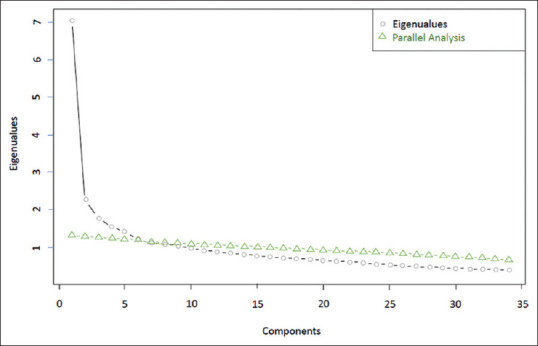
Results: A total of 26 symptoms had factor loadings higher than the exact threshold value (0.4), and five factors were extracted. Factor 1, comprising seven symptoms, was interpreted as "yin deficiency and fire hyperactivity of kidney syndrome." Factor 2, which included eight symptoms, was interpreted as "phlegm dampness stagnation of spleen syndrome." Factor 4, which included five symptoms, was interpreted as "liver qi invading the spleen syndrome." Factor 5, which included four symptoms, was interpreted as "spleen-stomach weakness syndrome." Factor 3, which included four symptoms, was uninterpretable. Factors 1-5 accounted for 10%, 9%, 8%, 7%, and 6% of the total variance.
Conclusion: Four major TCM syndrome patterns, namely, "yin deficiency and fire hyperactivity of kidney syndrome," "phlegm dampness stagnation of spleen syndrome," "Liver qi invading the spleen syndrome," and "spleen-stomach weakness syndrome" were identified and accounted for 40% of the total variance of the 34 TCM symptoms surveyed in children with ISS. Our findings may facilitate the diagnosis of ISS and the optimization of treatment strategies.
Keywords: Children; Idiopathic short stature; Symptoms; Syndrome patterns; Traditional Chinese Medicine.
Copyright: © 2024 Tzu Chi Medical Journal.
Conflict of interest statement
There are no conflicts of interest.
Figures
References
-
- Cohen P, Rogol AD, Deal CL, Saenger P, Reiter EO, Ross JL, et al. Consensus statement on the diagnosis and treatment of children with idiopathic short stature: A summary of the Growth Hormone research society, the Lawson Wilkins Pediatric Endocrine Society, and the European Society for Paediatric endocrinology workshop. J Clin Endocrinol Metab. 2008;93:4210–7. - PubMed
-
- Cohen LE. Idiopathic short stature: A clinical review. JAMA. 2014;311:1787–96. - PubMed
-
- Wit JM, Clayton PE, Rogol AD, Savage MO, Saenger PH, Cohen P. Idiopathic short stature: Definition, epidemiology, and diagnostic evaluation. Growth Horm IGF Res. 2008;18:89–110. - PubMed
-
- Yang CW, Chang YH, Chu CH, Chu SY. The etiology of short stature in children in Eastern Taiwan: A retrospective study. Tzu Chi Med J. 2010;22:87–9.
LinkOut - more resources
Full Text Sources