


Dalbavancin-resistant Staphylococcus epidermidis in vivo selection following a prosthetic joint infection: phenotypic and genomic characterization
- PMID: 39429235
- PMCID: PMC11487905
- DOI: 10.1093/jacamr/dlae163
Dalbavancin-resistant Staphylococcus epidermidis in vivo selection following a prosthetic joint infection: phenotypic and genomic characterization
Abstract
Background: Dalbavancin is a lipoglycopeptide antibiotic with a wide spectrum of activity against Gram-positive bacteria, including MDR isolates. Its pharmacokinetic properties and administration patterns could be useful for the treatment of bone and joint infections, especially prosthetic joint infections (PJIs).
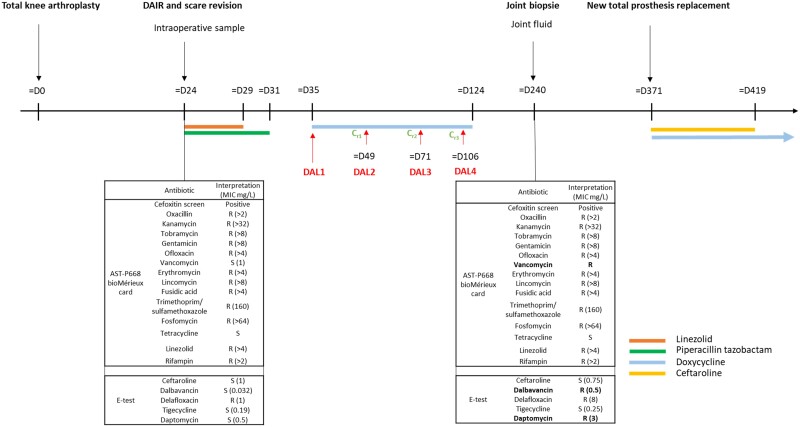
Introduction: We report the case of an 80-year-old man who experienced an acute periprosthetic joint infection of his right total knee arthroplasty (TKA). A DAIR procedure was done with tissue sampling, which allowed identification of a linezolid-resistant MDR S. epidermidis (LR-MDRSE) strain. The patient was then treated with dalbavancin (four injections).
Methods: We studied the phenotypic and genomic evolution of the strains and plasma through concentrations of dalbavancin at different points in time.
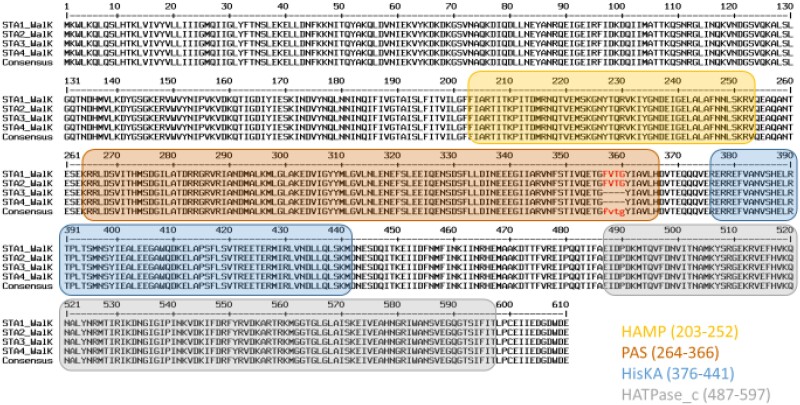
Results: After four injections (1500 mg IV) of dalbavancin over a 6 month period, the dalbavancin MIC increased 4-fold. Calculated fAUC0-24/MIC ratios were 945, 1239 and 766.5, respectively, at Days 49, 71 and 106, assuming an MIC of 0.032 mg/L. The PFGE dendrogram revealed 97% similarity among all the isolates. These results suggest acquisition by the S. epidermidis strain of dalbavancin resistance when the patient underwent dalbavancin treatment. A 4-amino-acid deletion in the walK gene coinciding with the emergence of phenotypic resistance was revealed by WGS without any other relevant indels.
Conclusions: Despite dalbavancin treatment with pharmacokinetic management, emerging dalbavancin resistance in S. epidermidis was observed, resulting in treatment failure. This outcome led to a prosthesis revision and long-term suppressive antibiotic therapy, with no recurrence of PJI after an 18 month follow-up.
© The Author(s) 2024. Published by Oxford University Press on behalf of British Society for Antimicrobial Chemotherapy.
Figures
References
LinkOut - more resources
Full Text Sources