


Characterization of four novel bacteriophages targeting multi-drug resistant Klebsiella pneumoniae strains of sequence type 147 and 307
- PMID: 39431055
- PMCID: PMC11486747
- DOI: 10.3389/fcimb.2024.1473668
Characterization of four novel bacteriophages targeting multi-drug resistant Klebsiella pneumoniae strains of sequence type 147 and 307
Abstract
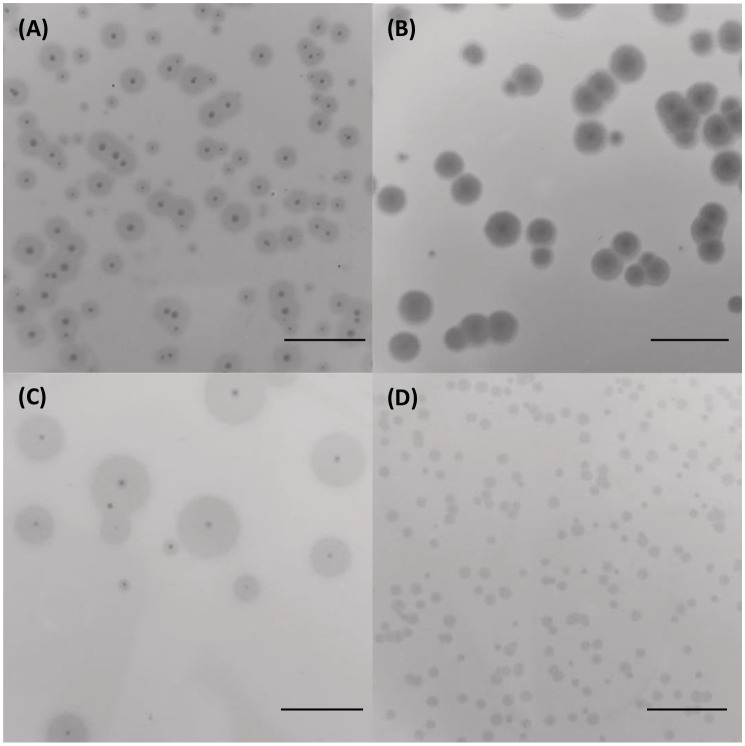
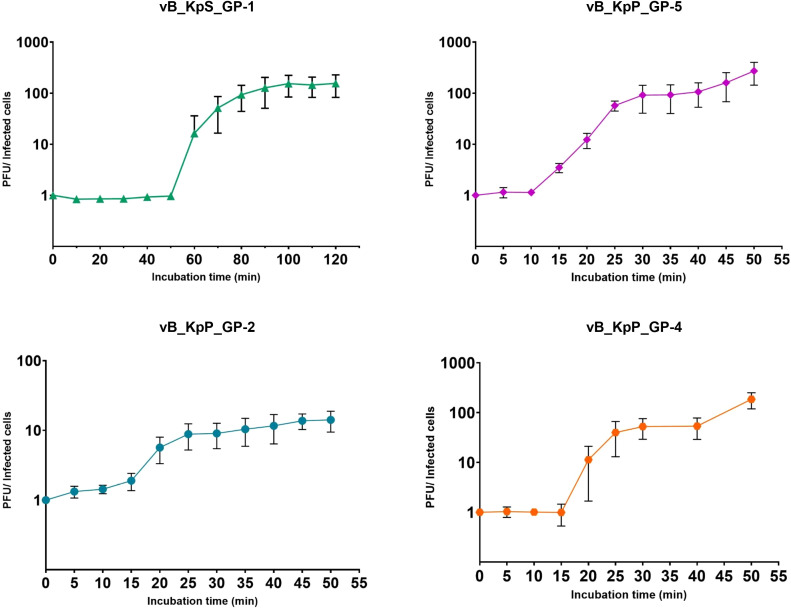
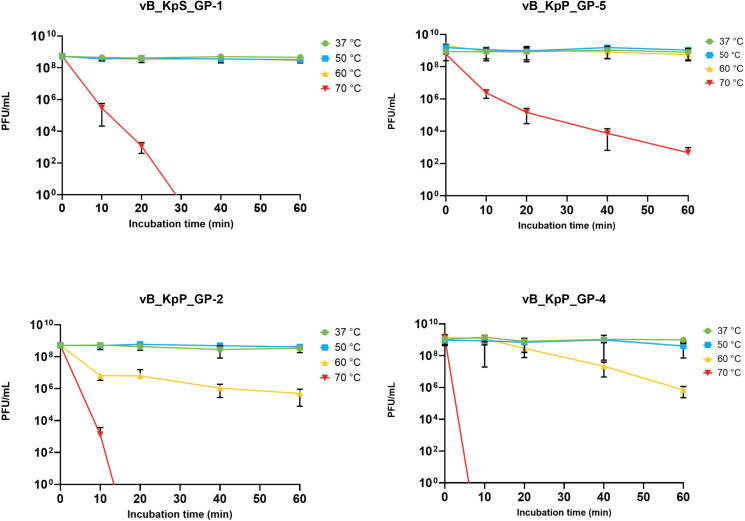
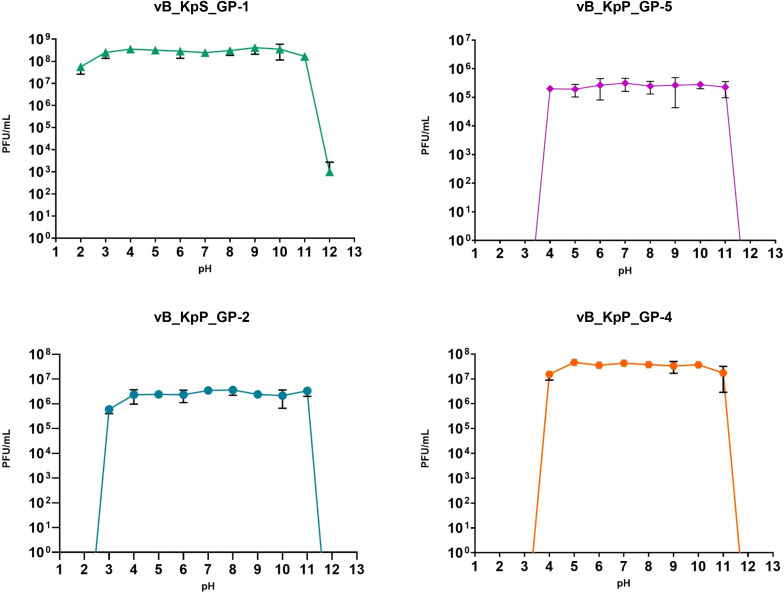
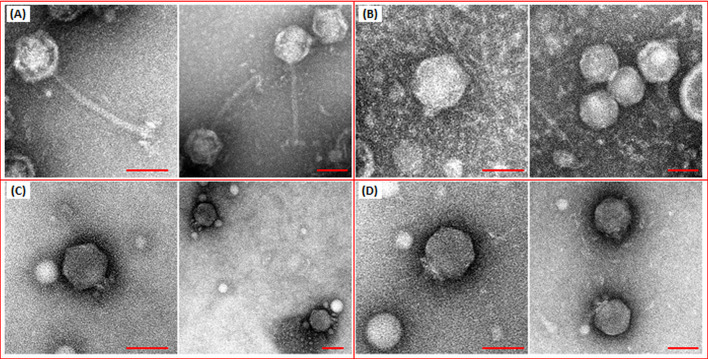
The global dissemination of multi-drug resistant (MDR) pathogenic bacteria requires the rapid research and development of alternative therapies that can support or replace conventional antibiotics. Among MDR pathogens, carbapenem-resistant Klebsiella pneumoniae (CR-Kp) are of particular concern due to their extensive resistance profiles, global dissemination in hospital environments, and their major role in some life-threatening infections. Phages, or some of their components, are recognized as one of the potential alternatives that might be helpful to treat bacterial infections. In this study, we have isolated and characterized four lytic bacteriophages targeting K. pneumoniae strains of Sequence Type (ST) 307 or ST147, two predominant high-risk clones of CR-Kp. Phages, designated vB_KpS_GP-1, vB_KpP_GP-2, vB_KpP_GP-4, and vB_KpP_GP-5, were isolated from sewage wastewater samples. The vB_KpS_GP-1 phage was a siphovirus unable to establish lysogeny with its host, while the other three were podoviruses. While 85.7% of K. pneumoniae strains of ST307 were selectively lysed by the phages vB_KpS_GP-1 or vB_KpP_GP-5, the other two phages were able to lyse all the tested strains of ST147 (n = 12). Phages were stable over a broad pH and temperature range and were characterized by burst sizes of 10-100 plaque forming units and latency periods of 10-50 minutes. Genome sequencing confirmed the absence of antibiotic resistance genes, virulence factors or toxins and revealed that two phages were likely members of new genera. Given their strictly lytic nature and high selectivity towards two of the major high-risk clones of K. pneumoniae, cocktails of these phages could represent promising candidates for further evaluation in in vivo experimental models of K. pneumoniae infection.
Keywords: Klebsiella pneumoniae; Klebsiella pneumoniae ST147; Klebsiella pneumoniae ST307; carbapenem-resistance; multi-drug resistance; phage; phage-therapy.
Copyright © 2024 Ponsecchi, Olimpieri, Poerio, Antonelli, Coppi, Di Lallo, Gentile, Paccagnini, Lupetti, Lubello, Rossolini, Fraziano and D’Andrea.
Conflict of interest statement
The authors declare that the research was conducted in the absence of any commercial or financial relationships that could be construed as a potential conflict of interest. The author(s) declared that they were an editorial board member of Frontiers, at the time of submission. This had no impact on the peer review process and the final decision. The handling editor PG declared a past co-authorship with the authors GMR, AA, MC and MMD.
Figures
References
-
- Cannatelli A., D’Andrea M. M., Giani T., Di Pilato V., Arena F., Ambretti S., et al. . (2013). In vivo emergence of colistin resistance in Klebsiella pneumoniae producing KPC-type carbapenemases mediated by insertional inactivation of the PhoQ/PhoP mgrB regulator. Antimicrob. Agents Chemother. 57, 5521–5526. doi: 10.1128/aac.01480-13 - DOI - PMC - PubMed
-
- Centers for Disease Control and Prevention . (2019). Antibiotic Resistance Threats in the United States 2019 Vol. 2019 (Atlanta, GA: Centers for Disease Control and Prevention; ). doi: 10.15620/cdc:82532 - DOI
MeSH terms
Substances
LinkOut - more resources
Full Text Sources
Research Materials
Miscellaneous
